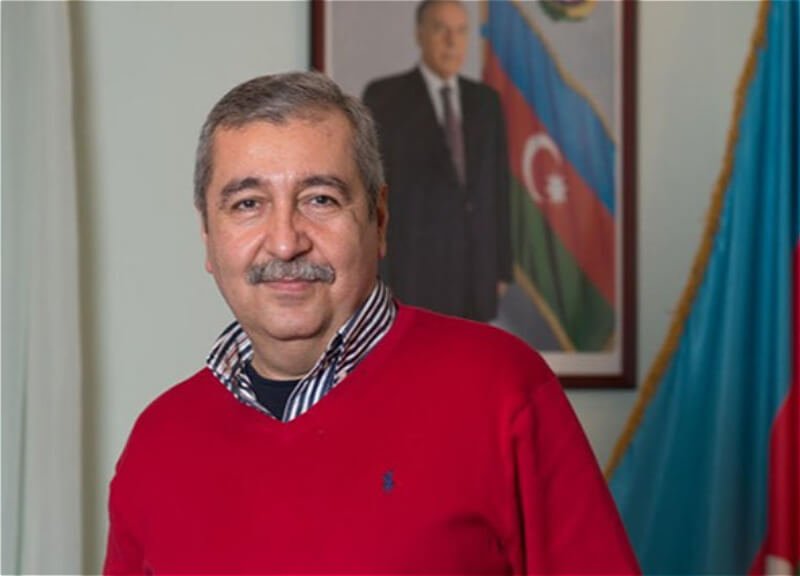
BAKU — September 2, 2025
In an interview on the YouTube program Modern Conversation, former Azerbaijani ambassador to Moldova and Georgia Namik Aliyev described the formal closure of the OSCE Minsk Group as the “death certificate” of a body that had long ceased to function. Aliyev, now professor of international relations at the Academy of Public Administration under the President of Azerbaijan, said the group effectively buried itself by prolonging the conflict instead of applying the principles it was meant to uphold.
“The Minsk Group signed its own death warrant”
Aliyev argued that the group had violated the OSCE’s founding norms — territorial integrity, the inviolability of borders, and basic UN principles. By monopolizing the peace process while ignoring four binding UN Security Council resolutions, he said, the co-chairs ensured the conflict dragged on for three decades.
“I once called it a corpse without a death certificate,” Aliyev recalled. “Now the certificate has been issued. The Minsk Group signed its own death warrant by trying to freeze the conflict and pursuing its own interests.”
According to Aliyev, the group had no legitimacy left after Azerbaijan launched its 2020 operation to liberate occupied territories under Article 51 of the UN Charter. “By then it had no authority, no credibility, no means to influence events. It was simply dead,” he said.
Victory and the peace process
Aliyev linked the group’s demise to Azerbaijan’s military victory in the 44-day Patriotic War and the restoration of full sovereignty in 2023. He framed the peace talks with Armenia as another diplomatic achievement:
“The victorious side could have pursued the aggressor into its own capital, but instead Azerbaijan chose to propose peace. It offered five principles drawn directly from the UN Charter and the Helsinki Final Act. Armenia resisted, but how could it object to commitments it had already signed? Step by step, Baku convinced Yerevan to accept them.”
The professor described the gradual reduction of disputes — from 17 contested points to only two, eventually reaching a paraf agreement. “The entire process was about persuading Armenia to follow international law,” he said. “That is the paradox. Azerbaijan had to remind its neighbor to respect the very norms of the international system.”
Azerbaijan at the SCO
Turning to the Shanghai Cooperation Organization summit in Tianjin, Aliyev said Azerbaijan once again demonstrated its weight on the Eurasian map. “Baku proved its role as a leading transport and logistics hub,” he said, citing the Middle Corridor, the Baku–Tbilisi–Kars railway, and the North–South route. Azerbaijan, he added, has expanded capacity by pushing forward digitalization of transport systems.
Baku sought SCO observer status, but India blocked the request — a move Aliyev attributed to India’s friction with Pakistan, Azerbaijan’s close ally. “This does not weaken our ties with Pakistan. On the contrary, it confirms their sincerity,” he said. He noted that Pakistan in turn blocked Armenia’s application for observer status.
Pakistan–Armenia thaw, with Baku’s blessing
Aliyev described the unexpected decision by Pakistan and Armenia to establish diplomatic relations as another byproduct of Azerbaijan’s diplomacy.
“For decades Pakistan refused to recognize Armenia in protest at its occupation of Azerbaijani territory,” he said.
“Now, after Azerbaijan and Armenia have paraf’d a peace agreement, Islamabad is normalizing too. This is not against Azerbaijan’s interests — it is a step taken with Baku’s blessing.”
Aliyev emphasized that recognition merely opens channels of communication. “It creates possibilities for dialogue, nothing more. It does not contradict the brotherly relations between Azerbaijan and Pakistan,” he said.
Looking ahead
Aliyev concluded that both the Minsk Group’s dissolution and the SCO summit outcomes mark the consolidation of Azerbaijan’s diplomatic successes. “We are witnessing the consequences of victory in the Patriotic War, the restoration of sovereignty, and now a peace framework built on international law,” he said. “Azerbaijan is the key link of the Middle Corridor and the leading state of the South Caucasus.”