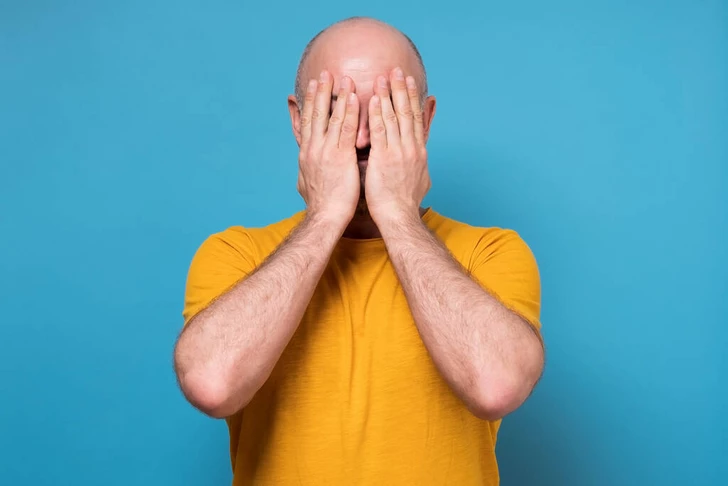
According to the Ministry of Health’s latest report for 2024, 8,376 people in Azerbaijan have been diagnosed with mental and behavioral disorders unrelated to substance use. Strikingly, nearly three-quarters of these cases—6,219 patients or 74.2%—are men, compared to just 2,157 women (25.8%).
The gender imbalance has raised urgent questions: Why are men disproportionately affected by mental health issues?
Psychologist Tariel Faziloglu offers a provocative explanation rooted in both neuroscience and societal expectations. According to him, the male and female brains are fundamentally different in how they process interpersonal dynamics.
“The structure of the female brain allows for broader perception and multi-channel communication,” Faziloglu said. “Meanwhile, men tend to process emotional and social information through a single center, which limits their communicative flexibility.”
This difference, he argues, becomes especially pronounced during conflict.
“Women are generally more adept at argumentation. Even if a man is technically right, he may find himself unable to defend his position effectively. That internal disconnect—knowing you’re right but failing to prove it—builds up immense psychological pressure,” Faziloglu noted. “Over time, that pressure can lead to emotional burnout, breakdowns, and ultimately, chronic mental health conditions.”
Social Expectations: The Silent Burden
Beyond biology, social pressures play a critical role, Faziloglu emphasized.
“In almost every cultural context, the primary responsibility still falls on men,” he said. “Despite the rise of gender equality, the weight of expectation on men remains extremely high. The most harmful form of violence is psychological—and nearly all men face it in one form or another.”
He pointed to demographic data as indirect evidence: women far outnumber men in the country’s elderly population, which he interprets as a sign that men are not only more susceptible to psychological stress but also have shorter life expectancies as a result.
As mental health becomes an increasingly visible public issue in Azerbaijan, these findings highlight the urgent need to address gendered stigma and provide targeted psychological support for men—who, as the data shows, may be silently bearing the brunt of societal pressures.