Baku — As Europe accelerates its green transition, diesel vehicles are increasingly being pushed off the roads. Countries such as Norway, the Netherlands, and France have already announced plans to completely phase out diesel car sales in the coming years. In the UK, a full ban on new petrol and diesel cars will take effect in 2030. Germany has gone further in some cities, introducing partial bans to cut air pollution.
The trend is clear: diesel is on its way out. But in Azerbaijan, where hundreds of thousands of such vehicles remain in circulation, the picture looks very different.
According to 2024 data, Azerbaijan has over 1.7 million registered vehicles, including approximately 420,000 diesel-powered cars. For now, officials say there are no plans to impose restrictions on diesel.
“Diesel engines remain essential in Azerbaijan, particularly for freight transport, agriculture, and heavy machinery,” auto market analyst Eldeniz Ceferov explained to Khazar TV. “Unlike Europe, where public transportation and electric infrastructure are more advanced, Azerbaijan still heavily relies on diesel in key sectors of the economy.”
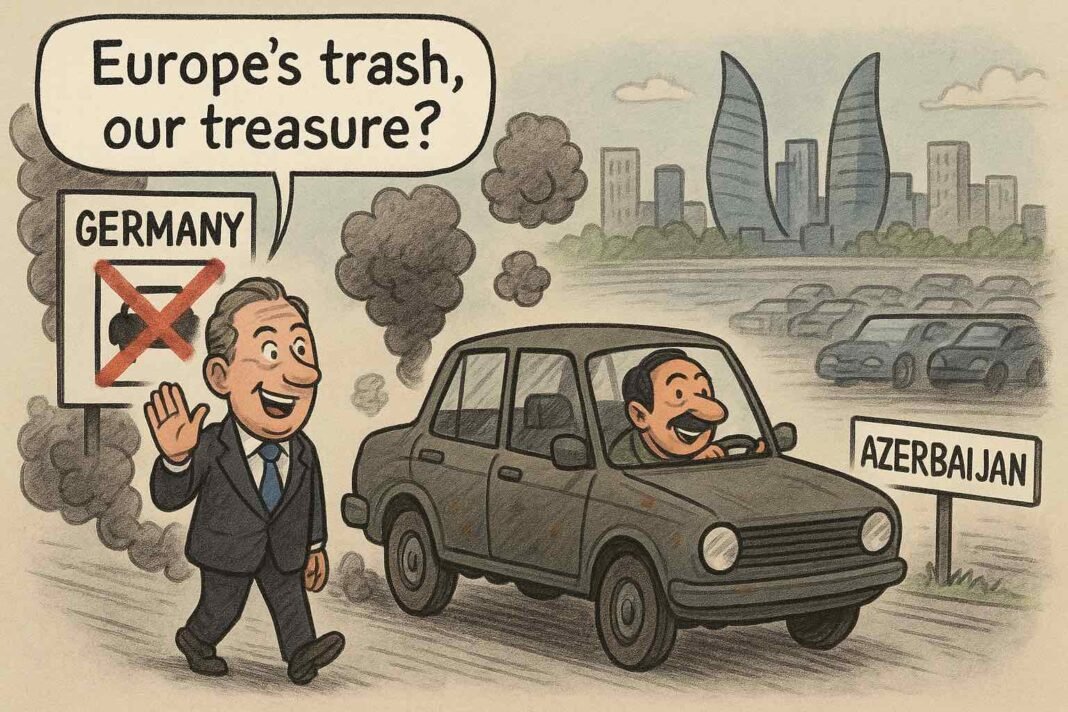
Yet international shifts are already having ripple effects. As Western countries ban or restrict diesel cars, their resale values plummet. Germany alone currently has more than 50,000 diesel cars waiting for export — many of which are expected to be sold at low prices to post-Soviet markets, including Azerbaijan.
For local buyers, this could mean short-term opportunities. Cheaper imports from Europe may flood the Azerbaijani market, making diesel cars more accessible. But experts warn this could delay the country’s transition to cleaner technologies and saddle it with vehicles that Europe no longer wants.
Environmental groups stress that while diesel may seem attractive for its efficiency, it comes at a cost: higher particulate emissions and air pollution in cities already struggling with smog and congestion.
The key question for Azerbaijan is not whether diesel will decline — but when. For now, the country sits on the receiving end of Europe’s diesel exit, facing both opportunities for cheap imports and the long-term challenge of modernizing its fleet.

