Azerbaijan.US
The South Caucasus has historically been a region of heightened geopolitical sensitivity, shaped by its geography, history, transport corridors, energy resources and strategic neighborhood. These factors continue to attract sustained interest from external powers, often turning the region into an arena of overlapping and competing influences.
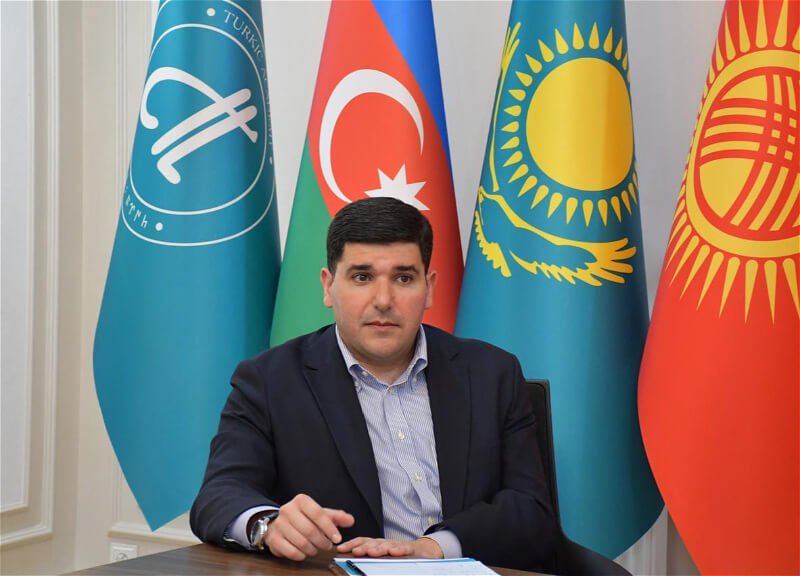
In an analytical post published on his Telegram channel mneniyefm, Farhad Mammadov, Chairman of the Center for South Caucasus Studies, examined how external competition affects the peace process between Azerbaijan and Armenia and how regional states can manage this influence.
According to Mammadov, competition in the South Caucasus unfolds across several dimensions – geopolitical, economic and military-political – and involves both neighboring states and global powers.
The immediate regional neighbors – Turkey, Russia and Iran – are engaged in what he describes as “competitive partnership.” While these states maintain active bilateral relations and communication channels, the South Caucasus remains one of the areas where their interests intersect and, at times, clash. This competition spans geopolitics, security and economics, yet is managed through pragmatic engagement rather than open confrontation.
Beyond the region, the European Union and Russia continue their geopolitical and economic rivalry, which, given the long-term nature of their confrontation, is expected to intensify. The United States and Russia are also locked in strategic competition, although Mammadov notes that under President Donald Trump, this relationship could evolve from direct confrontation toward a more pragmatic competitive partnership.
In the Middle East dimension, U.S.-Iran and Israel-Iran relations are defined by sharp geopolitical and military tensions. However, despite the intensity of these conflicts, the South Caucasus has so far remained outside the direct theater of confrontation.
Mammadov also highlights less obvious but still relevant rivalries. India and Pakistan, while geographically distant, have become increasingly involved in the militarization of both Azerbaijan and Armenia and use their positions in international organizations to advance competing agendas. China and the United States compete globally in geopolitics and economics, and while the South Caucasus is not a primary arena for this rivalry, their presence in the region is gradually becoming more noticeable.
European intra-alliance rivalries also play a role. France and Greece, in competition with Turkey in the Eastern Mediterranean, periodically attempt to extend their balancing efforts into the South Caucasus, including through engagement with Armenia. Meanwhile, Israel–Turkey relations, shaped by broader Middle Eastern tensions, also intermittently affect regional dynamics, particularly in relation to Azerbaijan.
Against this backdrop, Mammadov argues that progress toward peace between Azerbaijan and Armenia could fundamentally reshape the region. A stable peace would create new opportunities but could also intensify competition among external actors seeking to adapt to a post-conflict environment. While some external players support the peace agenda, others view ongoing tensions as the only viable mechanism for advancing their interests.
Mammadov emphasizes that while it is impossible to prevent external actors from projecting power into the region, it is possible to manage that influence. Azerbaijan and Georgia, he notes, have accumulated significant experience in aligning external engagement with their national interests rather than allowing themselves to become instruments of larger rivalries.
He argues that the next critical step is to establish similar frameworks between Azerbaijan and Armenia, and eventually at a broader regional level. This would involve defining clear rules of engagement and principles of interaction that external actors would be compelled to respect.
In this context, Mammadov points to the TRIPP project as a model case. Azerbaijan and Armenia, in a bilateral format, agreed to involve the United States in a specific project aimed at unblocking regional communications. If successful, TRIPP could replicate the strategic impact once achieved by Azerbaijan’s “Contract of the Century” in the energy sector.
Mammadov concludes that while external powers may seek to deepen their rivalry and use regional states as proxies, such outcomes should not be permitted. Regardless of their size or influence, external actors must operate within frameworks defined by the countries of the South Caucasus themselves.