Azerbaijan.US
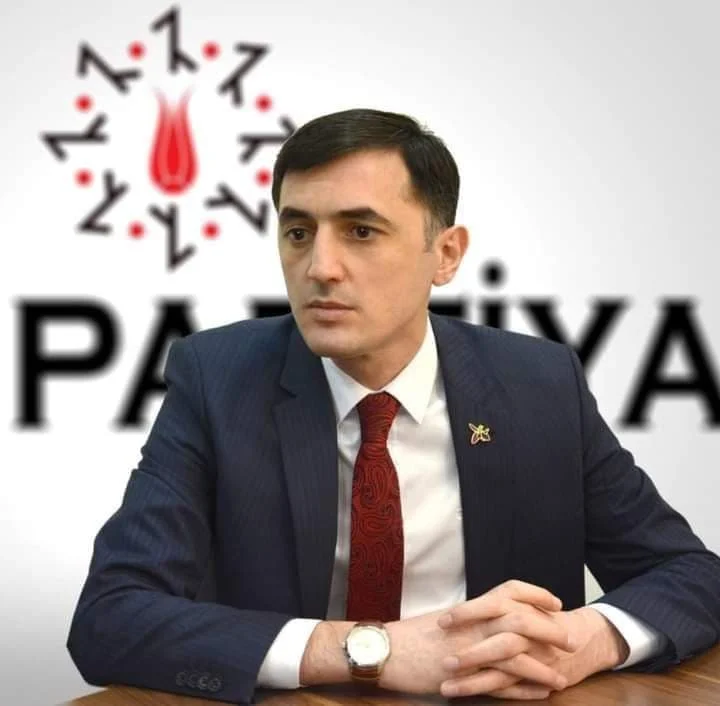
A sharp public debate has reignited in Azerbaijan after Tural Abbasli, chairman of the AG Party (White Party), delivered a scathing critique of government officials during a live broadcast on Media Türk TV.
Speaking on air, Abbasli drew a stark contrast between the visible wealth of many officials and the growing number of people living without shelter in Baku. According to him, thousands are left to survive winter nights on the streets, exposed to cold, rain, and snow, while meaningful support systems remain largely absent.
“There are elderly care homes and a limited number of shelters for women, but where are the facilities for the homeless overall?” Abbasli asked. “Why don’t we see temporary shelters, emergency accommodation, or even basic food distribution points in the city?”
Against this backdrop, he pointed to the conspicuous lifestyles of many public officials. Luxury vehicles worth hundreds of thousands, designer clothing, and expensive gadgets are frequently on display – despite officially modest salaries.
Abbasli questioned how such lifestyles are sustained, noting that some local executive officials reportedly own dozens of properties. Even conservative estimates, he argued, suggest assets worth several million manats, with little public explanation of their origin.
The problem, Abbasli stressed, is systemic rather than individual. In his view, public office is increasingly treated as a privilege rather than a responsibility.
He recalled that President Ilham Aliyev has repeatedly warned officials, held closed-door meetings, and dismissed several local executives in recent months. However, Abbasli argued that frequent removals only underline deeper flaws in governance.
“When officials are appointed and dismissed within weeks, it is not proof of accountability,” he said. “It is proof that the кадровый механизм – the personnel selection system – is broken.”
A central theme of his criticism was nepotism. According to Abbasli, professional competence is often overshadowed by personal loyalty, family ties, and informal networks.
“Knowing several foreign languages does not make someone a good administrator if they do not understand the language of their own people – their problems, their daily realities,” he said.
Abbasli linked these governance failures to visible consequences: flooded tunnels after rainfall, a paralyzed city during snowfall, power outages caused by mild winds, unemployment in the regions, youth migration, declining birth rates, rising divorce figures, and education losing priority in policymaking.
He also addressed the broader debate on morality and regulation in public life, warning that vague legal definitions could lead to selective enforcement and abuse. Laws, he argued, must be precise and transparent to prevent misuse.
Concluding his remarks, Abbasli emphasized that the issue is not values or culture, but governance itself.
“The real problem is not society,” he said. “It is a system where power is detached from the people, and public service is replaced by consumption.”

