Yerevan, September 30, 2025
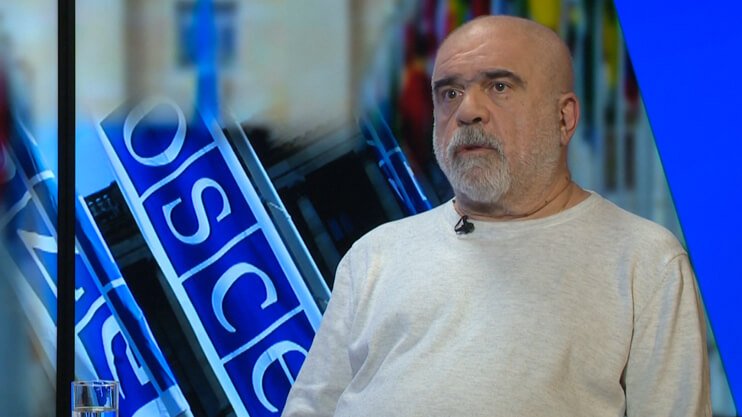
Armenia’s leading Caucasus analyst Alexander Iskandaryan says Moldova’s parliamentary vote offers a textbook case of how identity cleavages, diaspora voting, and fragmented opposition can lock a country into a near-permanent 50/50 split-even when one camp wins enough to govern alone.
Speaking on CivilNet, the director of the Caucasus Institute argued that President Maia Sandu’s party (PAS) was structurally favored: strong European backing, a fragmented opposition spanning pro-Russian, unionist and protest brands, and a campaign environment where “the state is still the state.” He stressed that in Moldova, the presidency is politically dominant despite parliamentarism on paper.
Iskandaryan’s sharpest point is about who votes and where. With more than 300 polling stations abroad-but only two in Russia-Moldova’s decisively pro-EU diaspora in Italy and elsewhere exerted outsize influence, while Russian-based voters were effectively sidelined. Add Transnistria’s restricted access to polling and you get a map where Europe-leaning urban centers and emigrant communities outweigh countryside strongholds of pro-Russian parties.
The deeper driver, he says, isn’t left–right ideology but ethno-linguistic voting. Gagauzia, Russian-speaking regions, and parts of the north behave as identity blocs, while Chișinău’s youth vote a different way. When electorates vote identity first, persuasion politics has limited reach; generational turnover and new textbooks matter less than migration economics and language proximity to Southern Europe. Result: the “decisive” win still reflects a country split almost down the middle.
He notes another surprise: the collapse of centrism. A centrist “just-be-competent” offer underperformed, while a TikTok-driven upstart pierced parliament-evidence that social media can mint quick flare-ups that reshuffle lists without changing fundamentals.
For Armenia, the parallels are limited. Yerevan lacks Moldova’s hard identity reservoirs—no Gagauzia, no Transnistria-style enclave voting, no mass ethno-linguistic cleavages. That means less map-locked polarization, but not less drama.
Across the non-authoritarian post-Soviet space, Iskandaryan says, elections are staged as existential referendums-“every vote is an apocalypse”-because elites mobilize around survival narratives rather than routine alternation of power.
On security, the Moldovan case also explains why tensions stayed low-intensity: overlapping identities across the Dniester and an unwillingness (and incapacity) to militarize the conflict beyond containment.
Even at the start of the Ukraine war-when some in Kyiv reportedly urged economic strangulation of Transnistria-Chișinău held back, partly because “they’re our people; most have our passports.”
Takeaways for Armenia ahead of 2026:
Coalition math beats noise. Consolidating one’s base matters more than multiplying micro-brands.
Platforms are volatile. TikTok can amplify outsiders, but won’t fix structural divides.
Don’t import labels. “Pro-EU vs. pro-Russia” in Yerevan is an internal discursive frame; neither Brussels nor Moscow currently offers Armenia a ready-made strategic berth.
Normalize the stakes. If politics remains framed as civilization choice every cycle, society never exits crisis mode.