Azerbaijan.US
The path Azerbaijan has taken over the past five years stands out as a rare case in modern international politics. The country has not only achieved a decisive military victory but has also succeeded in fully consolidating that victory through diplomacy – a combination that remains exceptional in post–World War II conflicts.
Between 2020 and 2025, developments in and around Karabakh reshaped the geopolitical landscape of the South Caucasus and demonstrated how international law can function in practice when backed by political resolve and military capability. United Nations Security Council resolutions that had remained unenforced for nearly three decades were implemented by Azerbaijan itself, culminating in the full restoration of its territorial integrity.
In this sense, the Karabakh case represents one of the few examples of a complete and unconditional victory in a modern conflict.
War as a Strategic Turning Point
In September–November 2020, Azerbaijani forces liberated most of the territories that had been under occupation for nearly 30 years in just 44 days. The outcome was driven by detailed operational planning, effective command-and-control, and the capture of key strategic heights and transport routes.
The war was halted on November 10, 2020, following the signing of a trilateral statement. Speaking later about that decision, President Ilham Aliyev explained that prolonging the fighting would have resulted in significantly higher casualties, making the ceasefire a necessary step under the circumstances.
Peacekeepers and the Limits of the Status Quo
Under the ceasefire agreement, a Russian peacekeeping contingent was deployed to parts of Karabakh. Its mandate focused on maintaining security and preventing renewed escalation. However, in practice, the mission soon faced credibility issues.
Armed provocations and incidents in late 2020 and 2021 highlighted Azerbaijan’s refusal to tolerate unregulated zones or parallel power structures within its internationally recognized borders. These actions underscored Baku’s position that sovereignty would not be compromised under the guise of peacekeeping.
From Post-War Control to Antiterror Measures
In the years following the 2020 war, Azerbaijan continued to reinforce its control on the ground. Operations in eastern Zangezur, the Farukh direction, and the 2022 “Revenge” operation sent a consistent message: no part of the country would remain outside state authority.
The September 2022 response to Armenian border provocations further consolidated Azerbaijan’s security posture and reshaped the balance along the frontier.
Prague and the Recognition of Reality
Despite its military defeat, Armenia initially avoided formally recognizing Azerbaijan’s territorial integrity. That position changed in October 2022 at the Prague meeting, where Yerevan acknowledged Azerbaijan’s sovereignty within its internationally recognized borders.
The decision was not voluntary but rather the result of sustained military and diplomatic pressure. It also effectively removed the long-debated issue of a separate “status” for Karabakh from the international agenda.
The Failure of the “Vardanyan Card”
Attempts to preserve external leverage in Karabakh through the appointment of Russian-Armenian businessman Ruben Vardanyan proved unsuccessful. Environmental protests, tighter control over the Lachin road, and the establishment of a border checkpoint halted illegal economic activity and undermined efforts to prolong the separatist project.
The 2023 Antiterror Operation
In September 2023, Azerbaijan conducted a short antiterror operation that brought the process to its conclusion. Within less than 24 hours, illegal armed formations laid down their weapons.
The operation was notable not only for its speed but also for the emphasis placed on minimizing risks to civilians. Days later, the self-proclaimed separatist entity announced its dissolution, marking the definitive end of separatism on Azerbaijani territory.
Legal Accountability as a Continuation of Victory
The detention and prosecution of former separatist leaders followed the military phase. Charges range from war crimes to violent attempts against the constitutional order.
Importantly, the process has been framed as a legal, not political, reckoning – focusing on individual criminal responsibility rather than collective or ethnic blame. Observers have described this approach as a form of a modern, rules-based accountability model.
Washington Agreements: Political Finalization
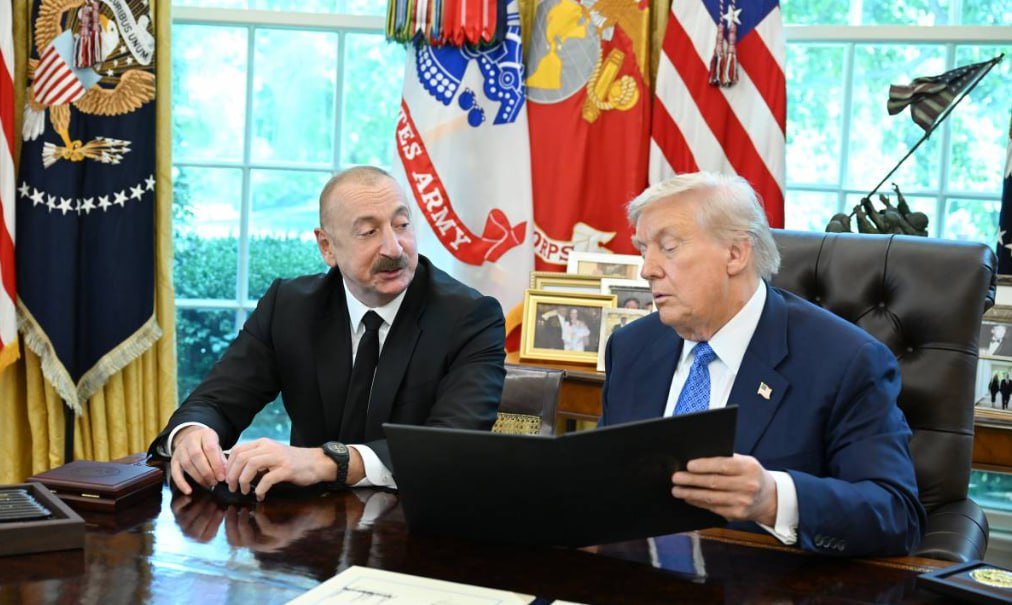
August 2025 marked the diplomatic conclusion of the conflict. Agreements reached in Washington and the initialing of a peace framework gave the Karabakh victory its final political and international endorsement.
For Azerbaijan, this step transformed battlefield success into a fully recognized geopolitical outcome.
The Formula of Absolute Victory
Most contemporary conflicts end in frozen disputes or incomplete settlements. Karabakh stands as an exception.
The restoration of sovereignty, elimination of parallel authorities, formal recognition by the opposing side, and international political consolidation together define what can be described as an absolute victory.
This outcome was driven by a combination of strategic leadership, military effectiveness, and sustained public consolidation – a model rarely achieved in modern conflict resolution./Biizm.media