Azerbaijan’s public debate over the arrest of Popular Front Party chairman Ali Karimli has expanded into a broader discussion about political culture, responsibility, and the limits of opposition strategy.
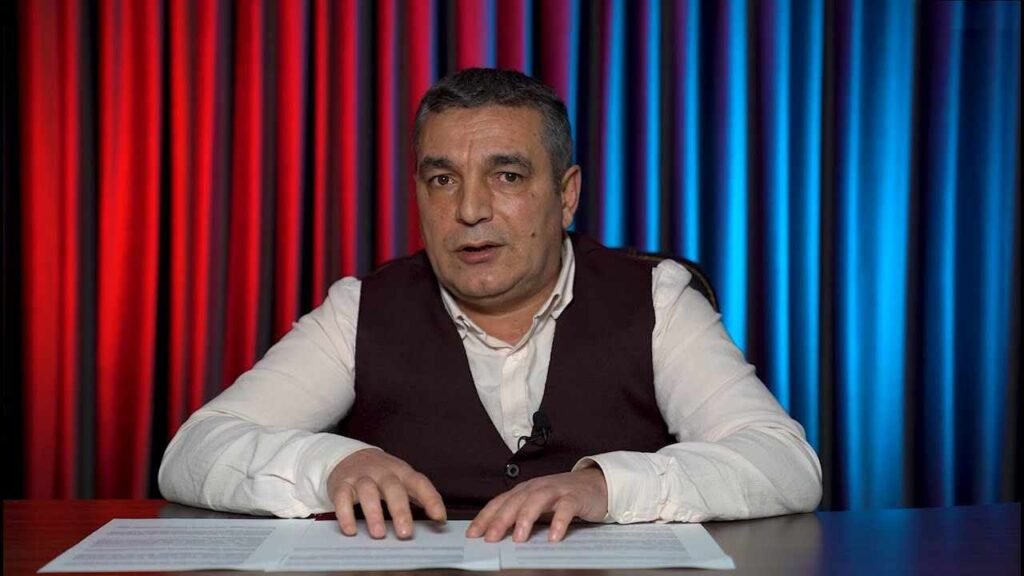
One of the voices weighing in is Natig Jafarli, head of the REAL Party, who argues that political statements must carry meaning – and that the opposition should avoid what he calls “ritualistic demands” that cannot be enforced.
In a detailed commentary shared on social networks and later cited by VestiBaku, Jafarli noted that several groups had criticized him and REAL for not issuing a sharply worded declaration after Karimli’s detention. He responded that the principle of presumption of innocence applies to any individual – political sympathies aside.
“I defend principles, not personalities,” he wrote.
“Even someone whose views I do not share has legal rights, and those rights must be respected. At this stage, Karimli is a suspect in an ongoing investigation. Until the court presents hard evidence, political accusations remain political.”
Jafarli stressed that discussions about Karimli’s alleged ties to former presidential administration chief Ramiz Mehdiyev have circulated for years, appearing in publications, interviews, and memoirs. But he noted that political rumors are not legal proof:
“The government’s responsibility is to offer legal assessment, not political interpretation – and that requires evidence.”
“Demands That Lead Nowhere”
The REAL leader was particularly critical of the traditional opposition’s use of strong political terminology without the ability to act on it.
Jafarli pointed to recent statements by established opposition parties calling for Karimli’s immediate release, describing them as “demands” that have lost both weight and credibility:
“A demand must be followed by action if it is ignored.
If there is no mechanism to enforce a demand, then it becomes simply a piece of paper.
For years it has been like this – demands are issued, nothing follows, and the word itself loses meaning.”
He added that REAL deliberately avoids using the term “demand” unless it has the institutional capacity to influence outcomes.
On Calls to Close Political Parties
Jafarli also criticized remarks from several pro-government figures suggesting that parties such as the PFP or Musavat should be shut down:
“These statements are legally wrong. Individuals may violate the law, but political parties are institutions – they cannot be punished for the alleged actions of specific members.”
He drew a comparison with members of the ruling YAP party who have been convicted of various crimes over the years:
“If one follows the same logic, then any party with convicted members would have to be closed. Responsibility must remain individual, not institutional.”
Pluralism as a Condition for Stability
Jafarli concluded by emphasizing that political pluralism is an essential condition for a functioning modern state:
“Without ideological diversity and political competition, no society can develop.
After all, one of the key lessons of the post-Soviet collapse is that the absence of pluralism leads to stagnation.”
His remarks come at a moment when Azerbaijani politics is experiencing renewed turbulence following high-profile arrests connected to the broader criminal case involving former top official Ramiz Mehdiyev.