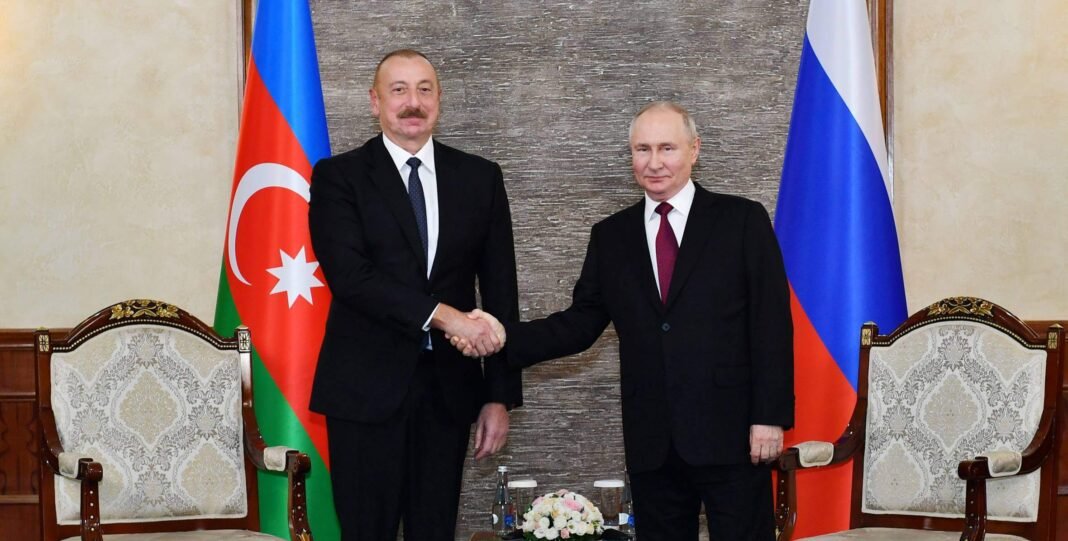
A new episode of Echo Baku on YouTube featured independent analyst, who offered a detailed assessment of Azerbaijan-Russia relations, the unresolved aircraft incident, and the Armenia peace process, arguing that Baku and Moscow have entered a stage of “neutralization, not normalization.”
From tension to neutrality
Isazade noted that President Ilham Aliyev’s congratulatory phone call to Vladimir Putin on the latter’s birthday should not be interpreted as a sign of reconciliation.
“It’s not warming; it’s neutralization. Relations are moving from very cold to neutral, but not yet warm,” he said.
He recalled that earlier protocol gestures-such as Putin’s greeting to Vice President Mehriban Aliyeva and brief encounters during international events-serve only to “defuse tension” rather than reset relations.
According to the analyst, a possible meeting in Dushanbe on the sidelines of the upcoming CIS summit could mark another symbolic step, but “talk of a thaw is premature.”
Unanswered questions and no apology expected
The expert emphasized that Azerbaijan still has not received clear answers from Moscow on several key issues – the downing of the Azerbaijani aircraft, the Iskander missile fragments found in Shusha, and the role of Russian peacekeepers during past operations.
Isazade made clear that no public apology from Vladimir Putin should be expected:
“In all the years of his rule, I don’t recall a single case where Putin has apologized for anything,” he said.
Instead, the analyst added, Baku is more interested in practical outcomes – punishment of those responsible and payment of compensation – than in symbolic gestures. He noted that claims of compensation already being paid are misleading, since “these were insurance payouts, not payments from the Russian state.”
Economy continues quietly
Despite political strain, economic cooperation never stopped, Isazade said, citing examples of ongoing intergovernmental meetings and energy transit talks involving Russia, Iran, and Azerbaijan. He stressed, however, that Baku will avoid actions that could be seen as sanction evasion, as the country seeks to expand energy cooperation with the European Union.
Public mood and long memory
Isazade argued that the Azerbaijani public’s attitude toward Russia remains cautious and shaped by historical trauma – from January 20, 1990, to Khojaly and the first Karabakh war. He pointed out that the younger, Western-trained military elite and growing cooperation with Turkey and the EU make a full return to past “warm” relations unlikely.
“With a large and dangerous neighbor, it’s better not to quarrel – but friendship as before is also unlikely,” he said.
On the Armenia peace process
Discussing Yerevan’s objections to the term “Zangezur Corridor,” Isazade said the phrase has been over-politicized:
“A corridor is just a route. Calling it a corridor doesn’t mean extraterritorial claims.”
He noted that mutual mistrust remains the main obstacle: each side fears the other will open only its preferred route. The most realistic outcome, he said, is a simultaneous opening of both the Nakhchivan route and the Ijevan–Gazakh link.
While Armenia delays decisions due to internal politics and constitutional hurdles, the technical completion of transport links will in any case take years.
“A peace treaty is paper signed by two leaders; real peace must mature in the public consciousness,” Isazade concluded.

