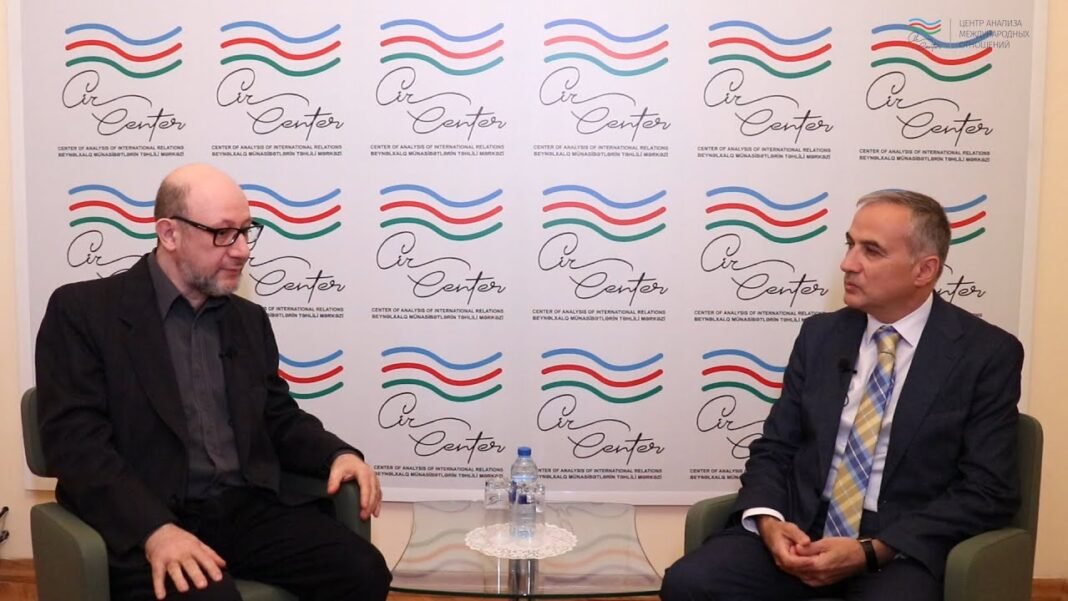
Washington/Baku/Yerevan/Tbilisi
On Düz Danışaq (YouTube), journalist Ismayil Jalilov and analyst Albert Isakov held a two-hour conversation about the psychology of the Armenia–Azerbaijan conflict, its myths, and what it would take to build lasting peace.
“Real Armenia” vs. mythologized history
Isakov pointed to a new Armenian government paper known as Document 9104, which seeks to pivot cultural policy away from militant nationalism toward a more pragmatic “Real Armenia.”
“It’s an attempt to redirect an entire worldview-from a mythologized, maximalist past to concrete reality,” Isakov explained.
“Cutting state funds from war-glorifying projects won’t change everything overnight, but it alters incentives.”
Jalilov called the debate significant: “At least Armenia is openly arguing about what kind of culture it wants to fund. In Azerbaijan, public discussion on reconciliation is still almost silent.”
The machinery of dehumanization
Both men described how children were raised with simplified, enemy-centered narratives.
“This is how you manufacture the enemy: strip away anything human, leave only black and white,” Jalilov said.
Isakov added that in Armenia, the Apostolic Church often reinforced nationalist myths, presenting Armenians as an eternally martyred people. Jalilov countered that Azerbaijan had also experienced reactive radicalization, with religion pulled into national identity during the war.
Pashinyan’s contradictions
The sharpest exchange came over Prime Minister Nikol Pashinyan’s rhetoric. Jalilov showed footage of Pashinyan kneeling before “martyrs” and asked how this reconciles with his earlier slogan “Karabakh is Armenia, period” and his later recognition that “Karabakh is Azerbaijan.”
“If Karabakh is Azerbaijan today, what were those soldiers doing there yesterday?” Isakov asked.
“Are they heroes, defenders-or fallen occupiers? Pashinyan now reframes their deaths as the passage to ‘Real Armenia.’ To me that sounds like cynicism.”
Jalilov noted the broader paradox: “The same man who sent conscripts to die in Karabakh now calls them martyrs who showed the way to peace. How do societies live with that contradiction?”
The call for dialogue in Azerbaijan
The conversation ended with a challenge to Jalilov’s own audience. While Armenians debate new cultural guidelines, he said, Azerbaijan risks waiting passively for official cues.
“Generations grew up seeing Armenians as enemies,” Jalilov warned.
“If peace is to last, we must imagine a future identity that isn’t built on hate. And that discussion has to begin in Azerbaijani, inside our own society-not only in government or in exile.”