Azerbaijan.US
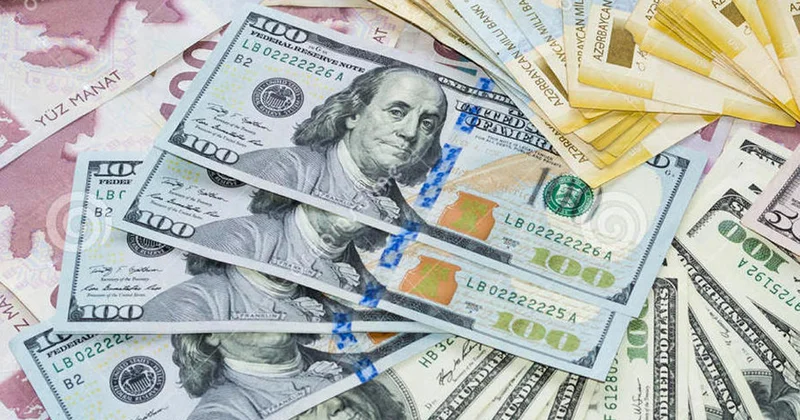
As of Dec. 1, 2025, the velocity of Azerbaijan’s national currency, the manat, stood at 3.38, according to the Central Bank of Azerbaijan (CBA). The indicator declined by 0.07 points (2%) compared with Nov. 1 and by 0.19 points (5.3%) year-on-year. At the same time, banks have shown a moderate increase in demand for U.S. dollars.
These trends have prompted renewed discussion over whether Azerbaijan could face devaluation risks in 2026.
Commenting on the outlook, Vugar Bayramov, a member of the Milli Majlis Committee on Economic Policy, Industry and Entrepreneurship, said the manat’s exchange rate remains closely tied to the state of the balance of payments.
“A positive balance of payments is crucial for overall macroeconomic stability,” Bayramov said, noting that the Central Bank takes into account foreign currency inflows, as well as supply and demand conditions in the foreign exchange market, when shaping exchange-rate policy.
Looking ahead to 2026, Bayramov pointed out that the U.S. dollar may continue to strengthen against a basket of currencies on global markets, largely due to relative stability in the U.S. economy.
However, he stressed that Azerbaijan does not operate under a free-floating exchange rate regime. Instead, the country follows a regulated, de facto fixed exchange rate framework, which significantly limits the likelihood of sharp currency fluctuations.
According to Bayramov, the manat’s performance in 2026 will depend primarily on the Central Bank’s policy stance.
“The Central Bank’s decisions will continue to play a decisive role,” he said. “Key benchmarks will include the balance of payments, global oil prices, and the volume of foreign currency inflows into the country.”
Overall, he added, the Central Bank’s position is expected to remain the key stabilizing factor for the manat throughout 2026.