Azerbaijan.US
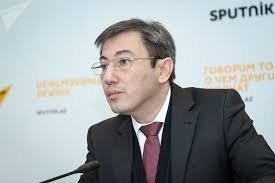
The ongoing unrest in Iran is widely discussed abroad, but much of that discussion, according to Azerbaijani political analyst Ilgar Velizade, is built on false assumptions.
Speaking to Daily Europe Online, Velizade said the dominant narrative framing Iran’s protests as a classic revolutionary movement with a clear opposition leader and predictable outcome does not reflect reality.
In his assessment, the core driver of the protests is not ideology or political organization but accumulated social and economic pressure.
Years of sanctions, high inflation, declining living standards, and the erosion of the informal social contract between the state and society have created widespread frustration. Political demands emerge later, often chaotically, and without a unified agenda.
Velizade stressed that attempts to apply Western political templates to Iran are fundamentally misleading. Unlike color revolutions or regime-change scenarios seen elsewhere, Iran lacks a consolidated opposition structure capable of converting protest energy into an alternative system of governance. What exists instead is fragmentation – within society, among political factions, and even inside the ruling elite.
He was particularly critical of efforts to present Reza Pahlavi as a viable leader for Iran’s opposition. According to Velizade, Pahlavi has no real political base inside the country, no coherent program for Iran’s future, and no credibility among large segments of the population. The idea of restoring monarchy, he noted, has little resonance within Iranian society, and even Pahlavi himself appears to acknowledge that such a scenario is unrealistic.
“From the outside, he may look like a convenient unifying symbol,” Velizade said. “But inside Iran, this figure does not translate into leadership.”
The analyst also addressed the ethnic dimension of the protests, which is frequently exaggerated in foreign media. While Iran is a multiethnic state and regional grievances do exist, Velizade argued that most ethnic movements are not seeking secession. Their demands focus instead on greater autonomy, cultural recognition, and economic fairness within the existing state framework.
This applies, he emphasized, to Iran’s Azerbaijani population in particular. Far from viewing themselves as outsiders, Iranian Azerbaijanis are deeply embedded in the country’s political, economic, and historical fabric.
“Iran, in its current form, cannot exist without the Azerbaijani factor,” Velizade said, dismissing narratives that portray ethnic fragmentation as an imminent threat to the state’s survival.
Commenting on Azerbaijan’s cautious public stance, Velizade described Baku’s approach as pragmatic rather than passive. Public declarations in support of protests, he argued, have little practical impact on internal Iranian dynamics and can instead contribute to regional instability. In a worst-case scenario, destabilization in Iran could trigger refugee flows and security risks affecting all neighboring states.
He noted that similar caution can be observed in the positions of other regional and global actors, including Turkey, Russia, and China, all of whom recognize that chaos in Iran would have far-reaching consequences well beyond its borders.
Velizade concluded that Iran is entering a prolonged period of internal transformation rather than approaching a decisive turning point. Each wave of protest weakens existing structures but fails to generate a clear alternative. External attempts to accelerate or direct this process, he warned, risk turning a complex internal crisis into a regional disaster.