Azerbaijan.US
Iran is facing a deep and complex political crisis, but portraying current events as a straightforward revolutionary movement with a clear alternative leadership is misleading.
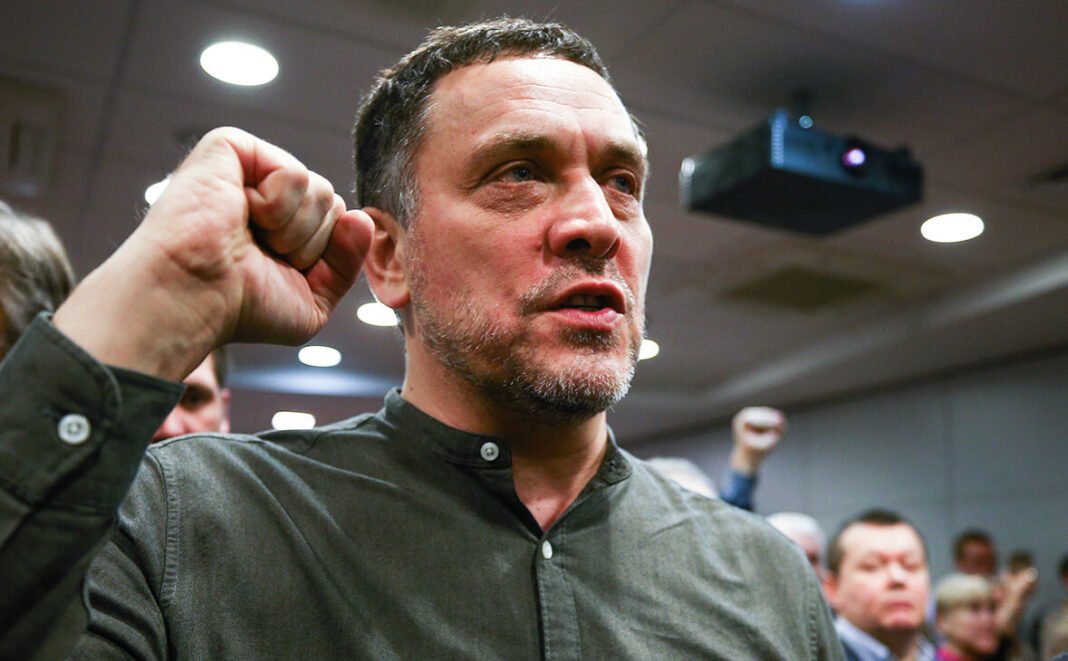
This view was expressed by Russian political commentator and journalist Maxim Shevchenko during an interview on the Live Nail program.
According to Shevchenko, protests in Iran are real and serious, yet they lack unified leadership and a coherent political center. He dismissed claims that Reza Pahlavi, the son of Iran’s last shah, could emerge as a national leader of the protest movement, calling such narratives detached from Iran’s social reality.
Shevchenko emphasized that Iran is not a mono-ethnic Persian state but a multiethnic country composed of Azerbaijanis (Turkic-speaking communities), Persians, Kurds, Arabs, Baluchis, Turkmen, and others. He argued that reducing Iran to a “Persian nation-state” ignores its historical and social foundations and distorts the internal balance of power.
Special attention was given to Iran’s Azerbaijani population, which Shevchenko described as a historically central component of Iranian statehood. He noted that major ruling dynasties such as the Safavids and Qajars were of Turkic-Azerbaijani origin and played a defining role in shaping Iran as a unified political entity.
In contrast, Shevchenko characterized the Pahlavi dynasty as an externally imposed project associated with forced assimilation, Persian nationalism, and Western-primarily British and later American-interests tied to control over Iran’s oil sector. In his view, a return of the Pahlavi model would be unacceptable to large segments of Iranian society and could accelerate fragmentation rather than stability.
Shevchenko identified the death of former Iranian president Ebrahim Raisi as a key trigger of the current elite crisis. He suggested that Raisi had been widely seen as a potential successor to the Supreme Leader and as a balancing figure between Iran’s clerical establishment and the Islamic Revolutionary Guard Corps (IRGC). His death, Shevchenko argued, created a serious vacuum within the ruling system.
As the crisis deepens, Shevchenko said, the IRGC could play an increasingly decisive role due to its control over security structures, economic assets, and large social networks. He predicted that large-scale unrest would ultimately be suppressed by force, given the current balance of power inside the country.
Turning to regional implications, Shevchenko warned that the collapse or fragmentation of Iran would have far-reaching consequences well beyond its borders. In particular, he said, instability in Iran would directly affect the South Caucasus and the Caspian region, disrupting security, energy infrastructure, and transport corridors.
“For Azerbaijan and its neighbors, the most dangerous scenario is not reform or gradual transformation in Iran, but chaos,” Shevchenko said, arguing that a stable and territorially intact Iran remains a key pillar of regional balance.
He concluded that external narratives promoting rapid regime change underestimate the complexity of Iranian society and risk pushing the region toward prolonged instability rather than constructive political evolution.

