Yerevan / Baku
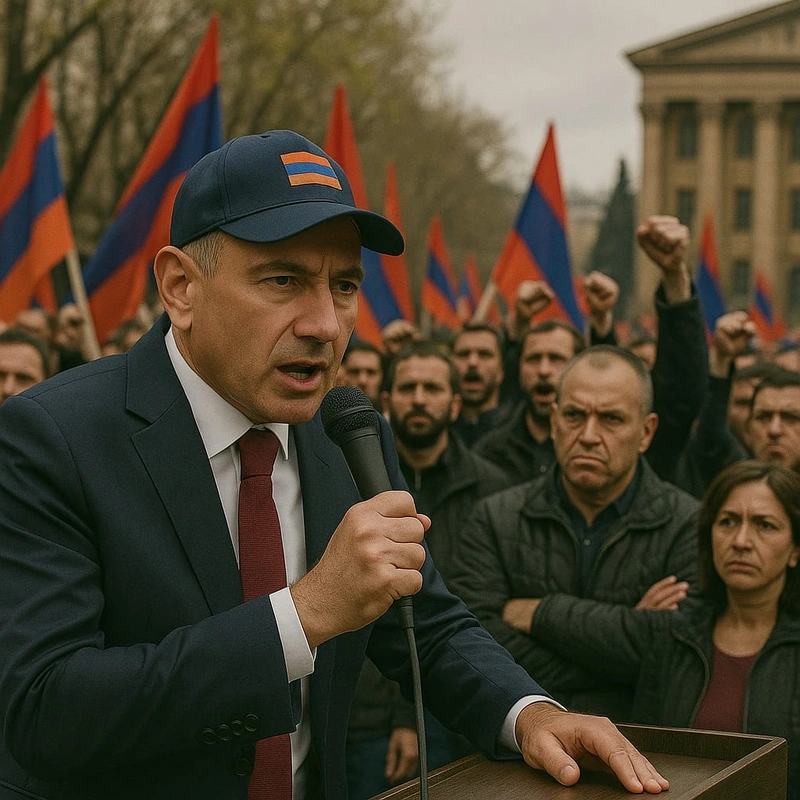
As talk of constitutional reform gains momentum in Armenia, political tensions in Yerevan are escalating. Prime Minister Nikol Paşinyan, facing fierce backlash from opposition parties and the Armenian Apostolic Church, is responding with increasingly forceful measures. While the government presents the proposed constitutional amendments as a necessary step toward peace with Azerbaijan and Turkey, critics say they are also being used to marginalize opponents and consolidate power ahead of upcoming elections.
The opposition has seized on the reform process as a platform to challenge the government, accusing Paşinyan of authoritarianism. In response, authorities have arrested opposition figures, including clergy members, in what the government has described as “preventive action” against destabilization.
Are the Reforms About Peace—or Power?
Speaking to the press, Arzuxan Alizade, deputy chair of the Azerbaijani parliament’s Human Rights Committee, said the constitutional changes are essential for normalizing relations with Baku and Ankara—particularly the removal of territorial claims from Armenia’s founding legal document.
“Paşinyan understands that peace with Azerbaijan is impossible without amending the constitution to eliminate territorial claims,” Əlizadə said. “This realization is pushing him to act decisively, even if it means neutralizing those who stand in the way.”
He noted that previous attempts by Paşinyan to promote constitutional reform were met with intense resistance from nationalist factions, leading to a temporary pause in the process. Now, with parliamentary elections expected next year, the Armenian leader appears determined to clear the political field.
The Church Becomes a New Battleground
With traditional political rivals weakened and disconnected from the electorate, Paşinyan’s fiercest challenge now appears to come from the Armenian Apostolic Church. According to Əlizadə, the prime minister has declared a kind of “political war” against the church, which has increasingly aligned itself with nationalist and revanchist circles.
“He sees the church as the last stronghold of serious opposition,” Əlizadə added. “By taking action now, Paşinyan is trying to eliminate any major threats before the next elections.”
Geopolitical Pressures Mount
Paşinyan’s urgency is compounded by shifting regional dynamics. With Russia weakened by the prolonged war in Ukraine, and Europe offering only lukewarm and inconsistent support, Armenia finds itself at a crossroads.
“Even Paşinyan knows that Russia’s influence is waning, and Europe is unlikely to back him unconditionally,” Əlizadə said. “The only realistic way for Armenia to survive economically and politically is by normalizing relations with Azerbaijan and Turkey.”
That normalization, he stressed, cannot happen without constitutional reform, particularly the removal of references to Armenian claims on internationally recognized Azerbaijani territories.
A Referendum on the Horizon?
According to Alizade, Paşinyan appears to be preparing the ground for a referendum on constitutional amendments following the 2025 elections. The goal: sign a historic peace agreement with Azerbaijan and unlock economic opportunities for Armenia.
“This is not just political maneuvering,” he said. “It’s about the survival of the Armenian state. Without peace, and without reform, Armenia’s already crumbling economy will collapse further.”
What Comes Next?
While Paşinyan’s supporters argue that he is making difficult but necessary choices in pursuit of peace, his critics view the crackdown on opposition and the church as a dangerous slide toward authoritarianism. Either way, the constitutional reform debate is shaping up to be the defining political issue in Armenia’s immediate future—one that will determine not only its foreign policy but the very nature of its domestic politics.
As one senior Azerbaijani official put it:
“If Armenia truly wants peace, it must first rewrite the rules it has long used to justify conflict.”

