Azerbaijan.US
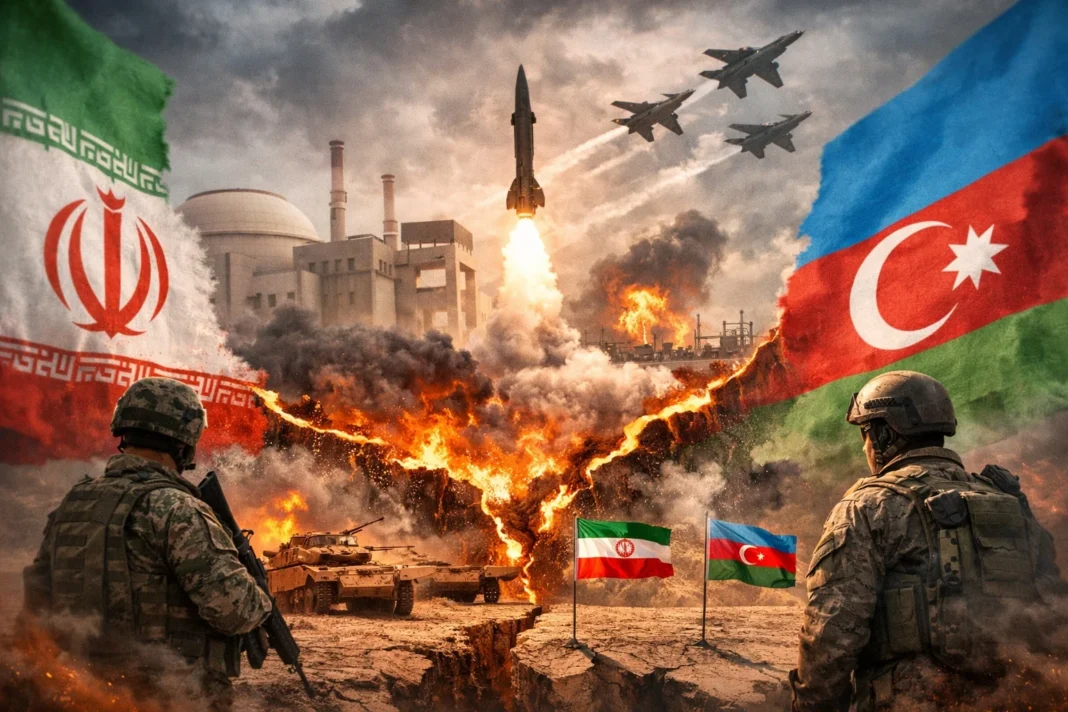
As tensions around Iran continue to escalate, Azerbaijan has moved early to clarify its position – both to regional actors and to global powers watching the situation closely.
Recent high-level contacts between Baku and Tehran were not symbolic diplomacy, but a calculated effort to prevent misinterpretation if the crisis turns into open confrontation.
President Ilham Aliyev’s phone call with Iranian President Masoud Pezeshkian, followed by discussions between Foreign Minister Jeyhun Bayramov and his Iranian counterpart Abbas Araghchi, came at a moment when speculation about a potential U.S. or Israeli strike on Iran has intensified. For Baku, timing mattered.
The core message delivered through these channels was clear and consistent. Azerbaijan opposes any form of external military intervention against Iran. It supports Iran’s territorial integrity. And, most critically, it will not allow its territory to be used by any third country for military actions against Iran.
This position is not merely a gesture toward Tehran. It is rooted in Azerbaijan’s own national security calculations. In the event of a large-scale conflict, regional dynamics could shift rapidly, creating pressure points far beyond the immediate battlefield. History shows that during periods of crisis, accusations and conspiracy narratives tend to spread quickly – often targeting neighboring states regardless of facts on the ground.
By restating its stance in advance, Baku is effectively preempting such narratives. The absence of foreign military bases on Azerbaijani territory reinforces this message. Azerbaijan is not a launchpad, nor does it seek to become entangled in military scenarios shaped by external actors.
At the same time, officials in Baku understand that regional crises rarely remain contained. A strike on Iran could trigger retaliatory actions against U.S. military infrastructure in the Middle East, particularly in the Gulf. Such a development would widen the conflict, strain relations between Iran and Arab states, and further destabilize an already fragile security environment.
For Azerbaijan, the priority is clear: avoid being drawn into a conflict that contradicts its strategic interests. Baku’s opposition to war and foreign intervention is not a rhetorical position, but a practical one. Still, policymakers acknowledge that events could evolve faster than diplomacy can manage, narrowing the space for neutrality.
In this sense, Azerbaijan’s early signaling is both defensive and preventive. By drawing its red lines before any escalation occurs, Baku aims to protect its sovereignty, reduce the risk of miscalculation, and preserve room for maneuver in an increasingly volatile regional landscape.