Baku, September 25, 2025
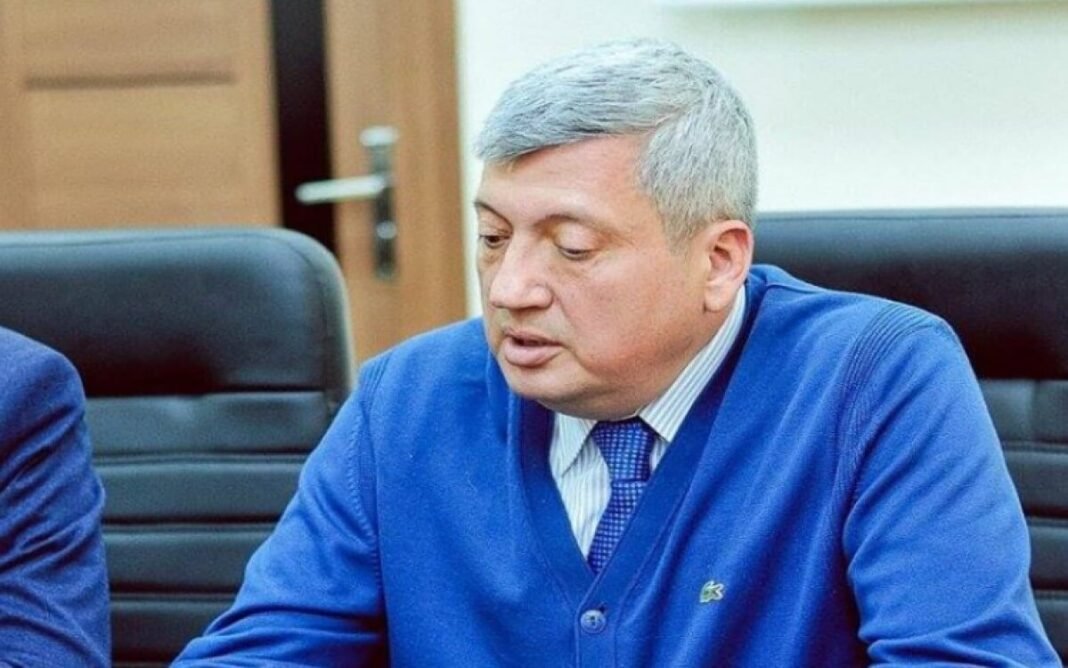
Former Azerbaijani foreign minister Tofig Zulfugarov says Azerbaijan is attending this year’s UN General Assembly “in a fundamentally new role”-as a state that has implemented UN Security Council resolutions and restored its territorial integrity-arguing that Baku no longer seeks mediation or asks the UN “for anything.”
Speaking on the Echo Baku YouTube channel, Zulfugarov framed the 5-year mark since the 44-day war (September 27) and last year’s September 19–20 operation as “historic milestones” that closed the chapter on the conflict. He noted that both Armenia and Azerbaijan have formally asked the OSCE to wind down all Karabakh-related structures, including the Minsk Group co-chairmanship, the Personal Representative mechanism, and the High-Level Planning Group.
“Azerbaijan appears at the General Assembly not as a petitioner,” he said. “We fulfilled UNSC resolutions and restored our rights under the UN Charter.”
Zulfugarov also commented on visuals from the UN high-level week showing U.S. President Donald Trump publicly greeting President Ilham Aliyev, calling the moment symbolically important but “secondary” to the strategic shift: “Our foreign policy professionals know whom to trust and when. What matters is that Azerbaijan has turned the page.”
How the 2020 outcome happened, in his view
He argued Moscow and Yerevan expected a short war that would be frozen again, but Azerbaijan’s tactics-early suppression of Armenian air defenses, precision fires directed by special operations groups, and deep raids that cut the Lachin road-upended those calculations.
Turkey’s clear deterrent signal against any third-party military entry was a “serious factor” that narrowed the space for outside intervention, he said.
Zulfugarov dismissed narratives that “someone gifted” Baku its victories: “Azerbaijani soldiers, officers and commanders won this war.”
Why November 9, 2020 happened-and 2023 finished it
Addressing the 2020 trilateral statement, Zulfugarov suggested Baku faced a choice “between bad and very bad,” alleging a coordinated Franco-Russian media-political push poised to recast the conflict’s endgame as “genocide.” He called the 2023 one-day operation a limited counter-terrorism action that ended the armed formations and closed the file.
On Russia, the OSCE and “conflict management”
Zulfugarov argued that multiple powers-not only Russia-used “conflict-management” logics across the post-Soviet space, with regional and Western actors alike “pulling strings” for their interests. The ultimate result, он сказал, was the opposite of Moscow’s intended influence: neighbors grew more distant. He urged moving beyond “imperial” habits toward practical, interest-based neighborly relations.
Post-conflict agenda: direct talks, no intermediaries
With the OSCE track set aside, Zulfugarov said Baku is focused on direct post-conflict normalization: border delimitation, transport links (where the debate has shifted from Karabakh to Zangazur, he noted), and long-term regional stability-without international “gatekeepers.”
In Zulfugarov’s telling, Azerbaijan arrives at UNGA80 not to relitigate past resolutions, but to act as an equal stakeholder on broader global issues-having, as he put it, “closed that page for good.”