BAKU, September 10, 2025
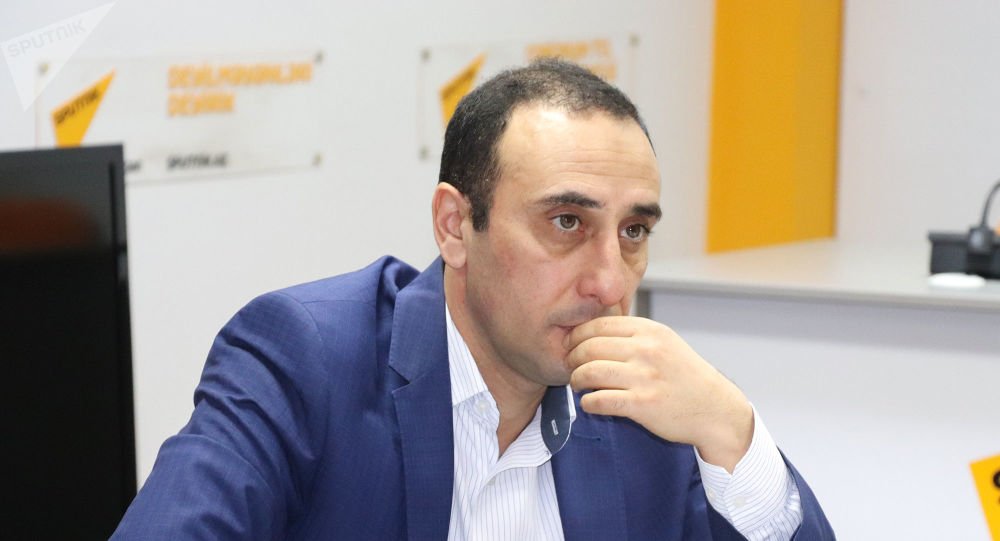
Speaking on the Novosti Kavkaza YouTube channel, historian and political analyst Rizvan Huseynov described the emerging order around the Caspian as a “new normal.”
His assessment reflects how Azerbaijan’s ties with Russia have cooled to a transactional minimum, while the South Caucasus and Central Asia undergo a deeper realignment driven by logistics, trade, and Turkic integration.
According to Huseynov, the once warm political rapport between Moscow and Baku has settled into a cold but functional partnership. Energy flows and transit agreements remain intact, yet the trust that defined earlier decades is gone. He noted that the future of these relations depends in part on whether Russia provides a full, credible accounting for the downed Azerbaijani airliner by the end of this year. Until that happens, Azerbaijan is unlikely to move closer.
Moscow has tried to soften its regional isolation by reviving the “3+3” format with Turkey, Iran, and the three South Caucasus states. But Huseynov argued that this framework masks Russia’s weakened hand.
Instead of producing breakthroughs, it allows Moscow to hide behind Ankara or Tehran while it struggles with strained relations not only with Azerbaijan but also with Armenia and Georgia.
The conversation shifted to the broader Caspian space. Huseynov described it as no longer a closed sea for five littoral states but the backbone of a continental trade system. Turkey, he said, has positioned itself as the forward edge of this transformation, linking NATO to the Belt and Road and securing influence from the Eastern Mediterranean to the South Caucasus. Iran, by contrast, has chosen pragmatism: after years of confrontation, it is now coordinating with Baku to preserve its resources and even sees value in Azerbaijan’s channels in Washington.
Kazakhstan, still cautious because of its geographic dependence on Russia and China, has slowed its public moves, but Uzbekistan has emerged as the breakout player. With sweeping economic reforms and industrial ambitions, Tashkent is becoming both a transit hub and a production base east of the Caspian. Turkmenistan’s recent decision to commit to Trans-Caspian projects marks another turning point, giving landlocked Uzbekistan a steadier maritime outlet and strengthening the corridor’s resilience.
Huseynov likened this system to a “four-stroke engine” of Turkic integration: Turkey, Azerbaijan, Kazakhstan, and Uzbekistan providing the rhythm, with Turkmenistan now plugging gaps when others pause. The aim is not simply to race goods across Eurasia but to build reliability – cutting delays, digitizing customs, and ensuring alternative routes when bottlenecks appear.
The analyst also touched on language and law, pointing to how terms like “occupation” have become politically toxic in post-Soviet debates. In international law, he stressed, the word is neutral; in regional politics, it becomes a weapon. Azerbaijan, he said, insists on precision – both to preserve historical truth and to keep focus on the future being built in steel and data.
Finally, Huseynov revisited President Ilham Aliyev’s recent call for reform of the UN Security Council. Like Turkey’s Recep Tayyip Erdoğan, who once wrote a book arguing “the world is bigger than five,” Aliyev is pressing for changes that reflect today’s economic and political balance.
Without reform, Huseynov warned, power will continue to drift toward alternative platforms such as BRICS and the Shanghai Cooperation Organization.
The message from his Novosti Kavkaza appearance was clear: Azerbaijan has no intention of stepping back. By driving infrastructure, shaping new coalitions, and insisting on accountability, Baku is turning the Greater Caspian from a disputed shoreline into the main artery of Eurasian trade.