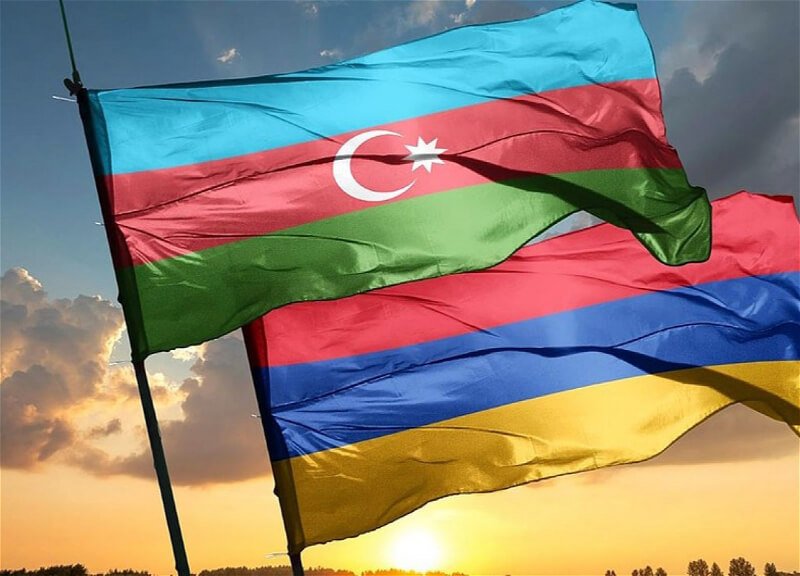
On a rare joint broadcast that flipped seamlessly between the Azerbaijani and Armenian studios of the new Press Clubs TV platform, two veteran analysts argued that the South Caucasus peace track has shifted from diplomatic slogans to nuts-and-bolts implementation- and that civil society must now keep pace or risk being left behind.
Moderated by media figure Boris Novosardyan, the program reunited Azerbaijani policy analyst Farhad Mammadov and Armenian political scientist Oreg Kochinyan for the first “Line of Contact” episode after a long hiatus. The premise: take stock of a frenetic few months marked by high-level meetings from Abu Dhabi to Washington, a joint U.S.-witnessed declaration on August 8, and the first public exchanges between civic groups in Yerevan and Baku.
Mammadov opened by defending the value of a public, transparent dialogue – not the usual off-the-record roundtables that yield a single photo and little else. “Here, dozens of experts speak weekly in the open,” he said. “We know the other side’s arguments, they know ours; we waste less time rediscovering positions and involve a broader audience that now recognizes faces and content.”
Kochinyan agreed—and pressed the point further: the political track has outrun the expert track. “Since Abu Dhabi, negotiations sprinted ahead at unprecedented speed,” he said. “Many analysts lost the pulse. That gap must close. Platforms like this are where new ideas can be aired, stress-tested, and – if they land – handed to officials already moving.”
From principles to rail gauges
The most concrete proof, the guests said, is the way discussion has moved from “whether” to “how” – especially on unblocking transport, energy and digital links. Beyond the U.S.-witnessed step in August, Mammadov cited a widening, practical agenda: modernizing Nakhchivan’s rail, attracting financing, and sequencing works so that early traffic can move even while flagship projects – like Armenia’s east–west leg of the TRIPP route – are built.
Rail, he stressed, is the costliest and slowest piece: “Laying asphalt is one thing; rebuilding rails with heavy-freight subgrade, signaling, and electrification is another.” On Nakhchivan, he broke the task into three parts – linking to the Armenian border near Ordubad, refurbishing the corridor along the Araz toward Sadarak, and then branching either west to Kars (a new line still 4–5 years out) or north into Armenia via a short connector near Yeraskh.
“If we plan on a realistic 2–2½-year horizon, the first outbound freight will likely go through that northern hook,” he said, arguing that parallel fronts of work reduce calendar risk.
Kochinyan, for his part, urged doubling the workfront from Armenia’s side as well: mend Yeraskh–Sadarak now, while TRIPP advances through Meghri and beyond. “Open two construction axes and you cut time. You also give carriers choices – and carriers choose on three things: security guarantees, tariffs, and bureaucracy. Get those right, and flows come.”
On who pays, Mammadov sketched three levers – direct investment, concessional loans from international financial institutions, and grants – and a political constraint: rail infrastructure is a state monopoly in Azerbaijan, which makes pure private equity unlikely. That points to credit-plus-grant packages from the EU and other partners already eyeing the corridor, in tandem with Baku’s own outlays on the liberated-territories segment toward the Armenian border.
Why some forums go unattended
Not all stages are worth standing on, Mammadov argued, explaining Baku’s absence from the Euronest session in Yerevan. The issue, he said, is not Yerevan per se but the European Parliament’s record on resolutions perceived in Baku as dismissive of Azerbaijan’s sovereignty.
“Could our MPs have flown to Armenia? Yes. But would the debates and statements have helped – or harmed – the fragile momentum?” For the European Political Community summit slated for Yerevan next May, he floated foreign-minister–level participation as a flexible, low-risk format: the EPC adopts no binding texts, he noted, which reduces the chance of diplomatic whiplash.
‘Make the process irreversible’
Both guests mapped risks. At home, Kochinyan sees two live currents in Armenia: organized political actors who reject the peace line outright; and a broader reservoir of public mistrust toward any deal after decades of conflict. With parliamentary elections due in 2026, the war-or-peace question will be decisive, he said. Externally, he named Moscow’s incentives and wider global turbulence as persistent headwinds. The remedy, in his view: fix the idea that Armenia and Azerbaijan are in the same boat on this track – if one capsizes, the other does too.
Mammadov’s list overlaps: a loss of tempo, and the possibility that leaders committed to the peace agenda could lose power before the process crosses a point of no return. “The near-term task,” he said, “is to flood both societies with facts about what has been agreed and what is being built – so we reach the stage where reversal is no longer realistic.”
Civilians in the loop
The show also recorded small firsts that resonate symbolically: Kochinyan described the shock – and curiosity – at Yerevan’s airport when a plane with “Azerbaijan” splashed across its fuselage landed openly. He confirmed the next civic meeting will be in Baku, with future sessions alternating. The goal is to co-design workable projects – not just talk- then hand them off to officials already synchronizing rail, roads, and digital systems along a corridor that, if completed as envisioned, would stitch Nakhchivan to Azerbaijan’s mainland and onwards to Turkey and Europe.
For a region saturated in zero-sum thinking, the message was deliberately unromantic: keep the welders welding, the lawyers lawyering, the treasurers financing—and the public informed. The politics will follow the progress.
Press Clubs TV is a joint Armenian–Azerbaijani media platform launched by the press clubs of Baku and Yerevan. “Line of Contact” is its weekly expert forum.