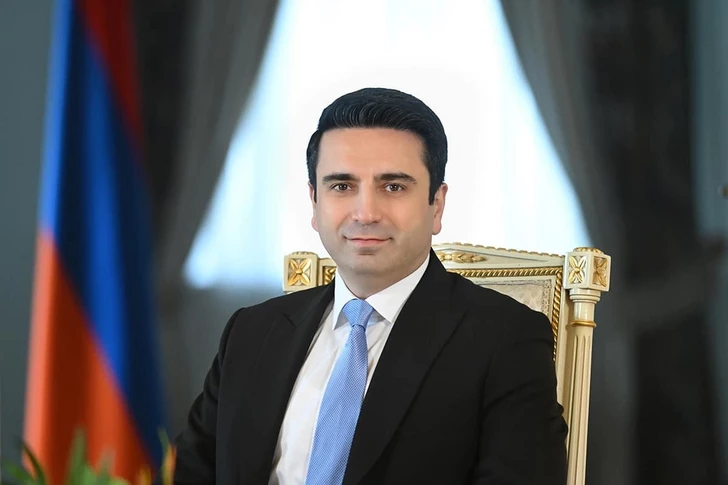
Baku/Yerevan — August 12, 2025 — When Armenian Parliament Speaker Alen Simonyan posted a heartfelt message to the country’s youth, praising the newly signed peace agreement with Azerbaijan, it read like a hopeful call for a new chapter.
“Your generation will be the greatest builders and guardians of lasting peace,” he wrote on Facebook, promising a future free from “limitations, uncertainty, and fear.”
But 550 kilometers away in Baku, the same words are being read very differently — not as a generic peace appeal, but as an indirect admission that Azerbaijan has decisively shaped the terms of the accord.
The Armenian Framing: A Promise to the Future
For Yerevan’s political leadership, the August 8 Washington agreement, paraffined in the presence of U.S. President Donald Trump, is being sold domestically as an opportunity for Armenia’s renewal.
Simonyan spoke of strengthening the economy, investing in education, and bolstering national security. Prime Minister Nikol Pashinyan has also emphasized the “balanced” nature of the deal, framing it as a mutual compromise that could finally stabilize the South Caucasus.
In Armenian media, the narrative leans toward peace dividends — infrastructure projects, increased foreign investment, and a generation of young Armenians growing up without the shadow of war.
The Azerbaijani Framing: A Strategic Victory
Across the border, the tone is far less sentimental and far more triumphant.
Azerbaijani analysts point out that the agreement enshrines principles President Ilham Aliyev has insisted on for years: recognition of Azerbaijan’s territorial integrity, the opening of transport links, and the prohibition of foreign interference in domestic affairs.
Political scientist Ilgar Velizade called the deal “a historic moment when Armenia’s political framework is defined by Azerbaijan’s red lines.”
The symbolism is not lost on Baku that even Pashinyan — who once declared “Karabakh is Armenia” — has now signed a document that effectively renounces that claim.
A Shift in Regional Power Dynamics
For Azerbaijan, the peace deal is also a geopolitical statement. The U.S.-brokered accord sidelines Russia from the central mediation role it has long sought in the South Caucasus. Analysts in Baku see it as confirmation that the region’s new security architecture will be shaped by a combination of U.S., Turkish, and Chinese engagement — not by Moscow’s dictates.
Meanwhile, in Yerevan, officials walk a careful line. While the agreement was signed under American auspices, Armenian leaders are avoiding overt anti-Russian rhetoric, mindful of economic and security ties that still bind the two countries.
Public Reactions: Generational Divide
In Armenia, younger voices appear more open to the accord, focusing on the prospects for travel, trade, and integration into global markets. Older generations and diaspora groups remain skeptical, seeing the concessions as too steep.
In Azerbaijan, the mood is more unified. The peace is widely portrayed as a validation of military and diplomatic strategies since the 2020 war, and as proof that persistence — combined with economic leverage — can yield results without yielding territory.
Looking Ahead
Both governments face the same practical challenge: turning a signed document into a lived reality. The agreement’s credibility will hinge on how quickly transport corridors open, border demarcations proceed, and political rhetoric on both sides shifts from victory narratives to genuine cooperation.
Whether the Washington accord becomes the foundation of a lasting peace or just another chapter in a cycle of fragile truces will depend on more than speeches — it will depend on political will, mutual trust, and the willingness of both Yerevan and Baku to accept that the South Caucasus is entering a new strategic era.

