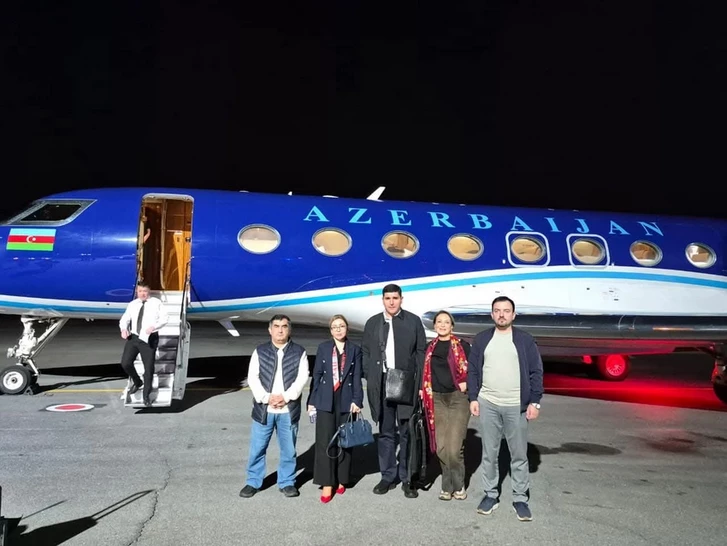
On Novosti Kavkaza’s YouTube channel, Azerbaijani analyst Farhad Mammadov described a carefully choreographed yet quietly significant visit by an Azerbaijani civil-society delegation to Yerevan, framing it as a natural outgrowth of the Washington and Abu Dhabi peace tracks.
Speaking from Baku, he said the trip-conducted without third-party facilitators-signaled a new phase in contact between the two countries, with discussions held behind closed doors and shaped exclusively by the participants themselves.
The symbolism was amplified by what he called the first AZAL civilian landing at Yerevan’s Zvartnots Airport, an arrangement made possible with official logistical support and, in his words, a small piece of history he even documented with a boarding pass.
Mammadov stressed that today’s process is fundamentally bilateral. The principles of a peace agenda, discussed earlier in Abu Dhabi and “confirmed” in Washington with U.S. participation, now run through a lattice of direct channels: presidential and prime-ministerial exchanges on the margins of international events, daily administrative contacts, structured talks between foreign ministers, coordination among security services on missing persons, and vice-premier-level engagement on border and connectivity issues.
He portrayed the Yerevan visit as an attempt to complement this state-to-state architecture with a practical civic dimension-moving from dialogue to outcomes and adding texture to a process that, he argued, should be visible and comprehensible to both societies.
Public sentiment, he admitted, remains complicated. In both Armenia and Azerbaijan, outright aggression has diminished, but distrust is still high.
Mammadov argued that ignoring skeptics is a mistake: durable peace requires confronting doubts about borders, rhetoric, and guarantees, and translating them into concrete steps that ordinary citizens can feel.
He cautioned against “total pacifism,” suggesting that an honest rendering of complexity is healthier than performative harmony. The goal is to build a peace that reflects lived realities rather than recited slogans.
Against this backdrop he called Azerbaijan’s recent move to allow Armenian transit a quiet breakthrough-one of several taboo-breaking developments that have accumulated in recent weeks alongside meetings of prime ministers in Tbilisi and parliamentary speakers in Switzerland.
The economic logic of such steps, he said, matters as much as their symbolism; they create constituencies for normalisation and gradually thicken the fabric of routine interaction. External actors may appear in this picture, but only by joint consent, which Mammadov cast as a mark of increased regional sovereignty rather than dependency.
Looking ahead, he tied the pace and shape of a final peace settlement to Armenia’s domestic politics. The peace text, he noted, has been paraphé at a high level, and technical sequencing-whether around a constitutional referendum or parliamentary ratification-can be designed. But the single most important variable, in his view, is Armenia’s parliamentary election calendar.
The next five to six months should be used to deepen and widen practical cooperation, he said, because the outcome of that vote could either consolidate the current track or derail it entirely. In this framing, timing is not an abstraction: every tangible step taken now enlarges the zone of the possible later.
Mammadov repeatedly returned to the sociology of memory. Different generations carry different images-war casualties and mass protests for some, reconstruction and cityscapes for others.
For children growing up in today’s Azerbaijan, he said, the map is whole and the experience of rebuilt streets and new infrastructure is concrete; for their parents, the indelible photographs of past tragedies still define the mental landscape. Policy and communication must account for these parallel timelines if peace is to be more than a diplomatic document.
The Yerevan meetings themselves blended substance and symbolism. According to Mammadov, the group spent long hours in dense discussions and met with Armenia’s Security Council secretary, a gesture he read as a sign that the government takes this track seriously.
There were also moments of normal life-strolls through central Yerevan and a visit to the Matenadaran manuscript museum-reminders that contact, however modest, helps to recalibrate expectations.
None of this, he insisted, negates the costs of the conflict or the depth of grievance. It is precisely because those memories persist that the work must start now, before events and outside players reassert their own momentum.
In the end, Mammadov’s message was stripped of euphoria but steeped in purpose. The peace process is bilateral, iterative, and increasingly practical. Transit is open; officials are talking; civil actors are testing what can be done without scripts.
The calendar is tight, the politics are delicate, and the skeptics are vocal. But for the first time in many years, he suggested, the architecture exists to turn dialogue into decisions-and decisions into habits.