Baku, September 18, 2025
By Azerbaijan.US Editorial Board
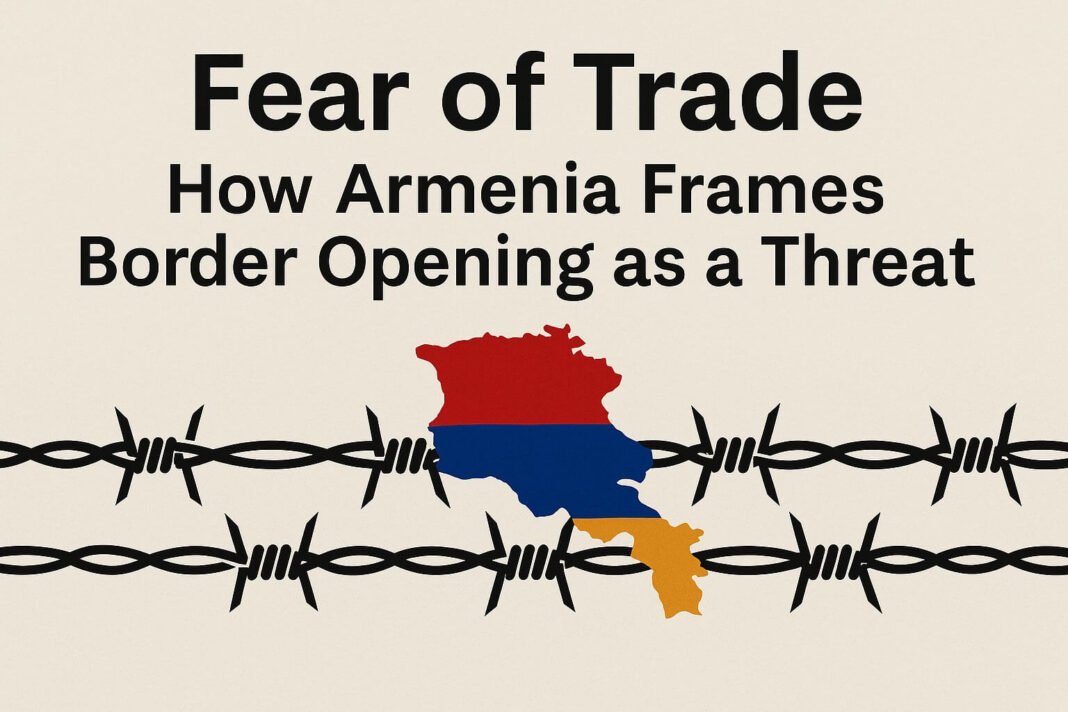
In Armenia, debate over the possible opening of borders with Turkey and Azerbaijan is increasingly shaped by fear-driven scenarios rather than realistic assessments of regional economics.
Economist Razmik Terteryan, speaking to Sputnik Armenia, claimed that the most serious challenge would not be agricultural imports but tourism.
He argued that Turkey, a country attracting more than 60 million visitors annually, could “fully capture” Armenia’s tourism market by investing in hotels and infrastructure.
In his words, Turkish investors might even extend into housing, manufacturing, and public tenders, eventually reshaping Armenia’s economy.
Terteryan went further, warning of demographic change. He suggested that Turkey or Azerbaijan could bring in foreign workers from Muslim-majority countries, leading over time to mixed marriages and, in his view, a larger Muslim population in Armenia.
His prescription was striking: impose special licensing rules and restrictions on Turkish and Azerbaijani businesses while offering “greater privileges” to Russian, Iranian, Chinese, and European companies.
The commentary reflects a broader pattern inside Yerevan’s political discourse – portraying regional trade as a zero-sum threat rather than an opportunity.
Even the parliamentary speaker’s optimistic remark that Armenians and Azerbaijanis would begin trading “five minutes” after a peace deal was dismissed by Terteryan as unrealistic, insisting that both psychological and legal barriers could take years to overcome.
Such narratives echo Armenia’s longstanding habit of justifying economic isolation as a form of “protection.”
Instead of recognizing the benefits of open markets, the rhetoric casts neighbors as existential dangers, while turning once again to outside patrons for supposed economic salvation.
This defensive posture highlights a deeper truth: for Armenia’s leadership, border opening is less about integration and prosperity than about maintaining control over a fearful narrative.
This editorial reflects the position of the Azerbaijan.US Editorial Board, which calls for fairness, dignity, and accountability in social practices across Azerbaijan.