Azerbaijan.US
Declining water levels in the Caspian Sea are increasingly affecting fish stocks in Azerbaijan, leading to reduced supply on local markets and rising prices for consumers, industry representatives say.
Over the past several years, the Caspian Sea has experienced a steady drop in water levels, a trend scientists link to climate change, reduced river inflows, and higher evaporation rates. While the environmental impact has been widely discussed, its consequences for food supply are now becoming more visible.
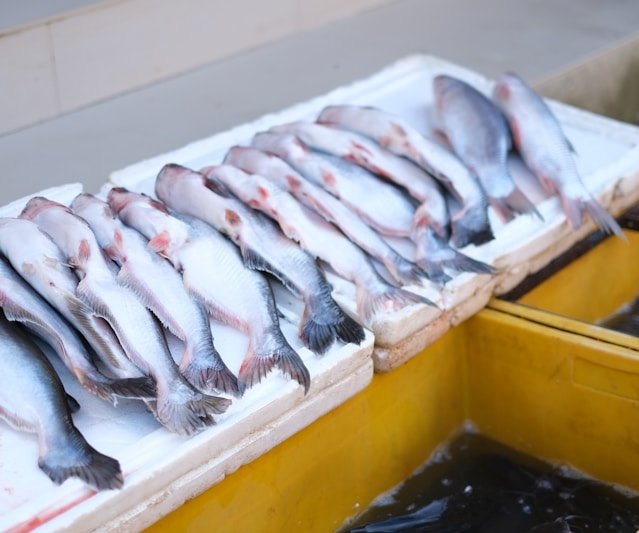
Fish vendors and buyers report that the assortment of locally sourced fish has shrunk noticeably compared to previous years. Traditional Caspian species are becoming harder to find, forcing markets to rely more heavily on imported and farmed fish.
Consumers say prices have risen accordingly. Fish that previously sold for 15-16 manats per kilogram now commonly reaches 18-20 manats, with some varieties priced even higher. Sellers note that price increases are driven not only by lower local catches, but also by disruptions and reduced volumes in imports from neighboring countries.
Market traders say deliveries that once arrived daily now come far less frequently, tightening supply and amplifying price volatility. Imported fish from Iran, Turkey, Russia, and Norway continues to fill part of the gap, but availability has become less predictable in recent months.
According to Zaur Salmanli, head of Azerbaijan’s Fish Producers and Processors Association, several Caspian species – including sturgeon and beluga – are facing the risk of near-disappearance. As a result, much of the fish sold on the market today is either imported or produced through aquaculture.
Environmental experts point to the combined effect of falling sea levels and declining water volumes in rivers crucial for spawning. Over the past three to four years, fish stocks in both the Caspian Sea and inland waters have declined multiple times, reducing natural reproduction rates.
The Ministry of Agriculture of Azerbaijan says measures are being taken to stabilize supply and protect fish resources. In 2025, authorities released hundreds of thousands of young sturgeon and other valuable species into natural waters, along with millions of kutum and Caspian salmon juveniles.
Officials also highlight ongoing efforts to expand aquaculture, establish new fish farms, introduce modern production technologies, and strengthen enforcement against illegal fishing. The government says these measures are intended to ensure that domestic demand for fish products can be met despite environmental pressures.
However, analysts warn that without long-term ecological stabilization of the Caspian Sea, market pressures may persist. Reduced fish availability, higher dependence on imports, and rising prices could become a structural issue rather than a temporary fluctuation.
As climate-related challenges intensify across the region, Azerbaijan’s experience illustrates how environmental change can directly translate into food supply risks, affecting both producers and consumers.