Yerevan, September 28, 2025
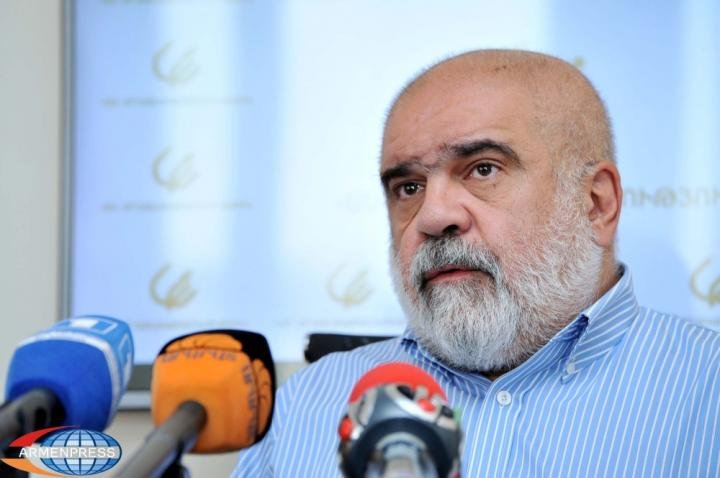
In a wide-ranging interview with Echo Baku, Armenian political scientist Alexander Iskandaryan rejected the notion that a single phrase sparked the 2020 war, arguing instead that Azerbaijan’s years-long military buildup, Turkey’s deep involvement, and global distraction set the stage.
According to Iskandaryan, the war was not the result of Nikol Pashinyan’s slogan “Artsakh is Armenia. Period.” but of deliberate preparation.
Stay Ahead with Azerbaijan.usGet exclusive translations, top stories, and analysis — straight to your inbox.
“Real wars are built, not blurted,” he said, noting Azerbaijan’s military reforms, Turkish training programs, arms purchases, and shifting rhetoric since the mid-2000s.
By the summer of 2020, he added, tensions had escalated through deadly border clashes and nationalist rallies in Baku.
Meanwhile, major powers were consumed by the U.S. elections, Brexit, COVID-19, and Russian frictions with both Ukraine and Belarus – leaving the South Caucasus low on the global agenda.
Turkey, he stressed, acted as enabler rather than proxy: “It was Azerbaijani soldiers fighting on the ground. But planning support, officer training, joint exercises, and military supplies came from Ankara.”
Even the F-16s stationed in Ganja were less about bombing missions than signaling deterrence to any third party – especially Russia.
The larger consequence, Iskandaryan told Echo Baku, is the collapse of Moscow’s traditional leverage. For decades, Russia’s influence derived from the unresolved Karabakh question, which kept both Armenia and Azerbaijan dependent on Moscow’s mediation. The disappearance of Karabakh as a functioning political entity in 2023 erased that instrument.
“Azerbaijan behaves this way with Moscow simply because it can,” he said, pointing to Baku’s sharper tone toward Russia after recent incidents.
Domestically, the war reshaped Ilham Aliyev’s standing. Iskandaryan argued that victory allowed the president to step out of his father’s shadow and achieve something even Heydar Aliyev could not. “Any negotiated compromise would have been read as weakness at home. The maximalist outcome was the only politically clean one,” he observed.
More broadly, Iskandaryan described the war as a historic precedent: for the first time, a non-post-Soviet power decisively influenced the outcome of a conflict inside the former USSR, and its ally won. That, he suggested, is more important than any conspiracy theory about secret Russo-Turkish swaps.
“Phone calls don’t stop wars anymore. Coalitions do.”
Source: Echo Baku (in Russian). Full video here

