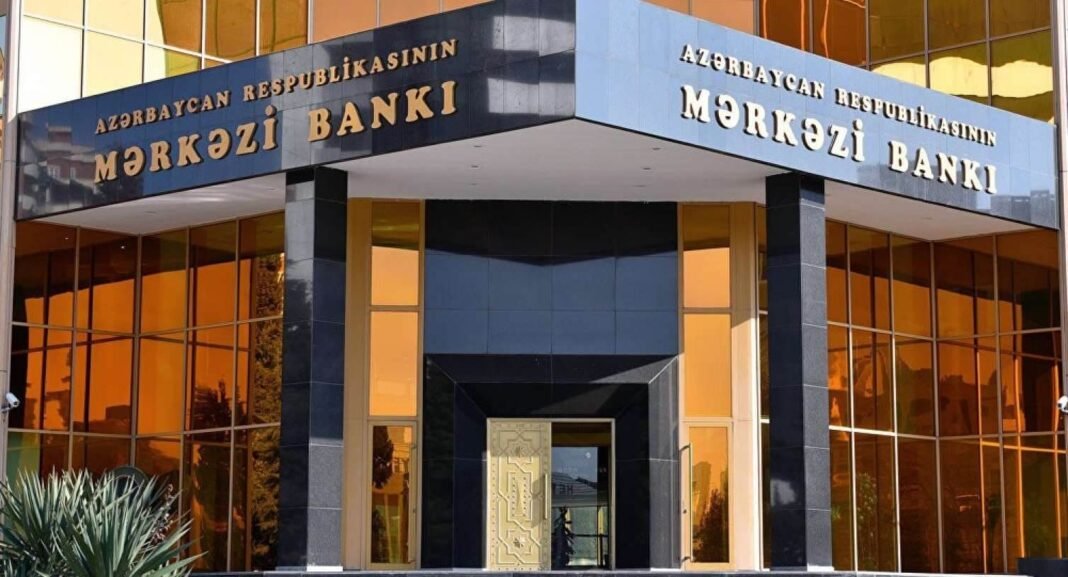
The Central Bank of Azerbaijan (CBA) lowered all parameters of its interest rate corridor on Tuesday, cutting the refinancing rate by 0.25 percentage points to 6.75 percent. The lower bound of the corridor now stands at 5.75 percent, while the upper bound has dropped to 7.75 percent.
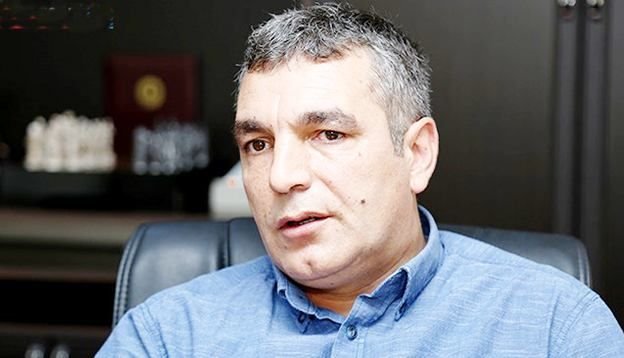
For economist Natig Jafarli, the announcement contained nothing unexpected. In a detailed commentary, he argued that although communication at the CBA has improved, making decisions easier to anticipate, the impact of such moves on the real economy remains negligible.
“Rate changes don’t work in Azerbaijan”
According to Jafarli, Azerbaijan’s monetary transmission mechanism is fundamentally broken.
“We have a very primitive economic system with weak market institutions,” he wrote. “That’s why changes in the refinancing rate barely affect the economy.”
He noted that Azerbaijan’s manat remains tightly pegged to the U.S. dollar, which means that the CBA often mirrors decisions taken by the U.S. Federal Reserve rather than responding to domestic economic conditions.
Historical data: rates moved, but lending didn’t
Jafarli pointed to several examples from the past decade to show that the cost of borrowing in Azerbaijan is largely disconnected from the CBA’s benchmark rate:
In 2014, the refinancing rate was 3.5%, yet consumer and business loans carried 14–24% interest.
After devaluations in 2016-17, the CBA lifted the rate to 15%, but lending rates increased only marginally to 18-28%.
Even when the rate fell back to around 9% in 2019, loan rates barely moved.
The economist described the dynamic bluntly:
“The policy rate changed nearly fivefold, but credit rates moved only 4-5%. The transmission simply does not work.”
Why lower rates won’t lead to cheaper loans
For lending costs to decrease meaningfully, he argues, banks would also need to cut deposit rates. But with banks offering 9-10% interest to attract deposits, a sudden drop to 3–4% is unrealistic.
“If banks reduce deposit rates, people will simply stop saving in manats and move into foreign currency,” Jafarli noted. “And even if loans magically fell to 3–5%, most borrowers would use that money to buy imports – which would put immediate pressure on the manat again.”
“A model hanging on two pipelines”
Jafarli concluded that without structural reform, monetary policy cannot play its intended role.
“To make monetary tools effective, the primitive economic model must change first,” he said. “The current system – hanging on two oil and gas pipelines and driven by budget spending – has already rotted from within.”