Azerbaijan.US
A renewed debate has emerged in Azerbaijan over the role of language in state communication, highlighting broader questions of identity, public trust, and post-Soviet legacies.
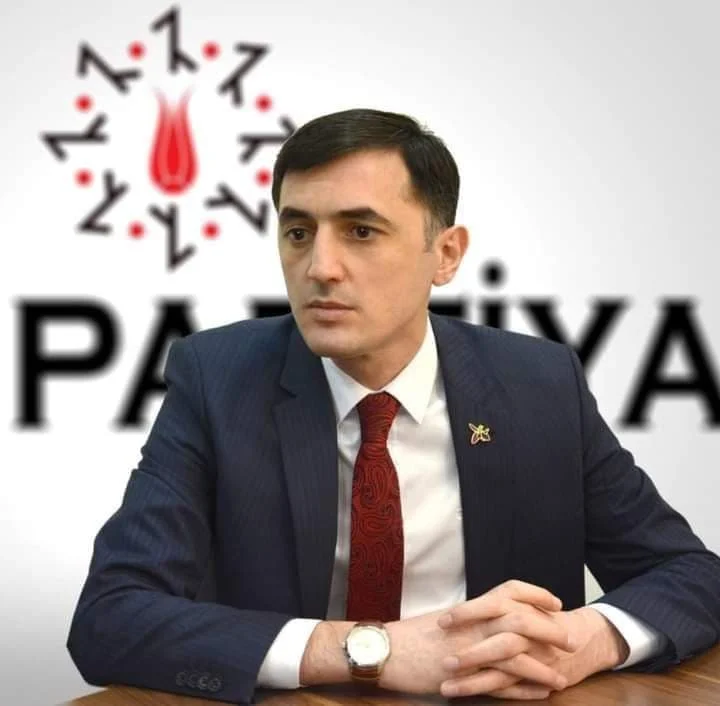
The discussion was triggered by comments from political figure Tural Abbasli, who criticized the use of Russian-language content in official and semi-official public messaging. While his remarks were sharp in tone, they touched on a sensitive issue that resonates beyond domestic politics.
Abbasli argued that the frequent use of Russian in government-linked advertising and public outreach creates the perception that it holds a privileged status, despite Azerbaijani being the country’s sole state language. According to him, this practice weakens the connection between institutions and the broader population, most of whom primarily consume information in Azerbaijani.
Language policy analysts note that the issue is not about restricting private language use, but about how the state presents itself to citizens. In multilingual societies, official language choice often carries symbolic weight, signaling whose voices are prioritized and how inclusive governance is perceived to be.
In Azerbaijan, the debate is particularly sensitive due to historical experience. Russian served as a dominant administrative and elite language during the Soviet period, and its continued visibility in official contexts is often viewed by critics as an unresolved legacy of that era rather than a purely practical choice.
Abbasli also linked the language question to broader governance concerns, arguing that excessive centralization and limited political pluralism contribute to a growing gap between decision-makers and society. While such claims reflect an opposition perspective, experts agree that communication style and language accessibility can directly affect public trust in institutions.
Importantly, the controversy does not center on banning or marginalizing the Russian language itself. Russian remains widely spoken in urban areas and continues to play a role in cultural and professional life. The core issue, analysts say, is whether state institutions should prioritize the official language more consistently when addressing the public.
Similar debates have taken place across the post-Soviet space, where language choice often intersects with questions of sovereignty, identity, and geopolitical orientation. In this sense, Azerbaijan’s discussion reflects a broader regional trend rather than an isolated dispute.
Observers note that clearer standards for state communication – emphasizing inclusivity while reaffirming the role of the official language – could help depoliticize the issue and reduce social friction. As the debate continues, it underscores how language, even decades after independence, remains a powerful political and symbolic tool.

