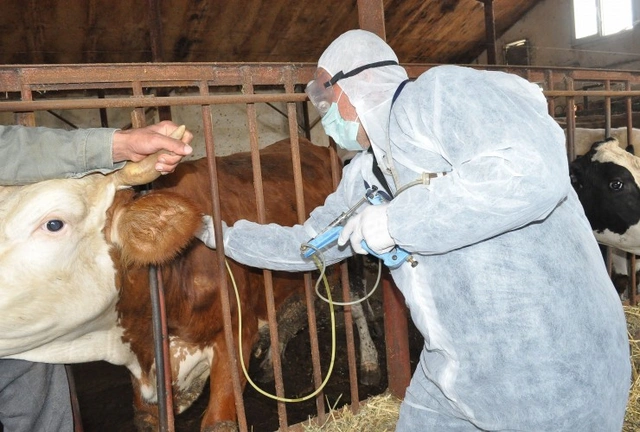
A growing outbreak of foot-and-mouth disease (FMD) has alarmed farmers across Azerbaijan, leaving many livestock owners struggling as the virus spreads rapidly among cattle and sheep.
As Oxu.az reports, social media discussions in recent days have highlighted mounting concern that the disease is “raging” in several rural regions.
“Animals have been infected for weeks and can barely eat. The local veterinary offices don’t seem to take the issue seriously, and no one explains what to do,” one farmer wrote online.
In response to a media inquiry, the Agrarian Services Agency under the Ministry of Agriculture confirmed that FMD is a highly contagious viral disease affecting cloven-hoofed animals – primarily cattle, sheep, and goats.
The virus causes painful sores in the mouth, on teats, and between hooves, leading to high fever, loss of appetite, and a sharp drop in milk and meat productivity.
“Infection occurs mainly through direct contact with sick animals or contaminated feed, water, equipment, and clothing,” the agency noted. “The virus can remain active in soil and manure for weeks and spreads through air, even across borders and over the sea with the wind.”
Officials added that Azerbaijan, like many countries, treats FMD as an endemic and transboundary disease. Imported animals, especially from countries without proper vaccination programs, may also carry the virus.
The Agency urged all farmers and livestock owners to report any suspicious symptoms immediately – such as blisters in the mouth, on the tongue, teats, or between hooves – to local veterinary services or regional offices of the Food Safety Agency (AQTA).
“Until veterinary teams arrive, farmers can disinfect affected areas using regular baking soda (sodium bicarbonate), a method recommended in international practice,” the statement added. “However, full veterinary intervention and symptomatic treatment must follow.”
Authorities emphasized that preventive vaccination campaigns are ongoing across regions, conducted twice a year in line with the national epizootic plan.
“Veterinary specialists respond to every call and provide on-site guidance. We urge all farmers to ensure their animals are vaccinated and to cooperate fully with veterinary officers,” the agency said.

