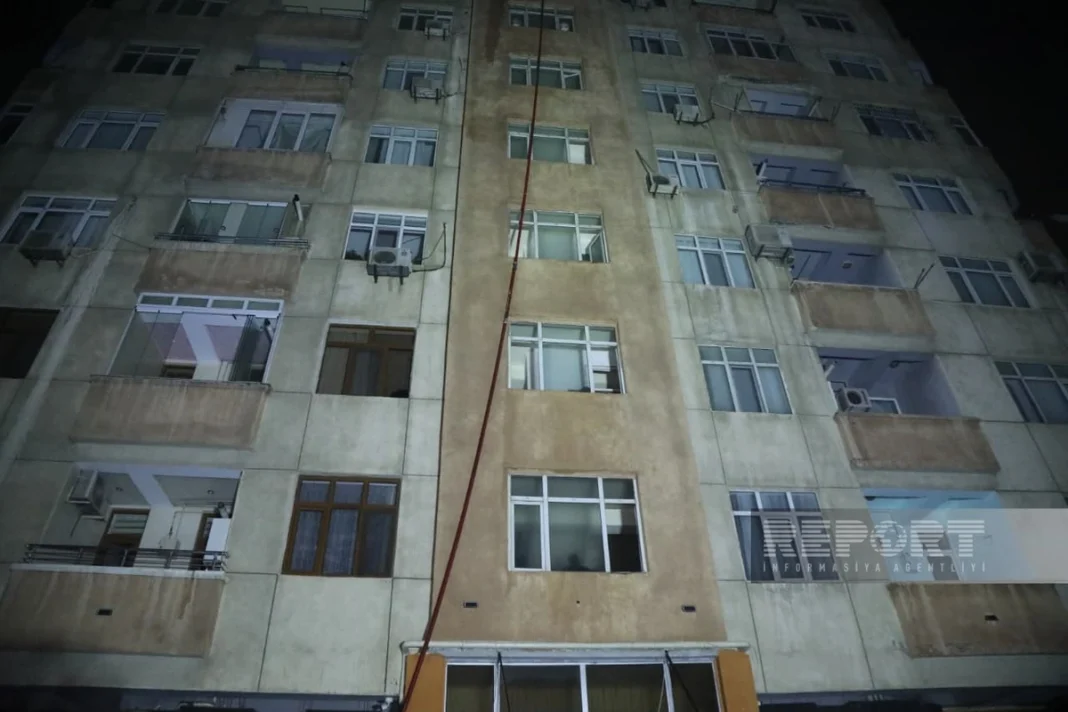
The deadly fire that swept through a residential building in Baku has triggered a wave of public outrage, with residents, urban experts, and civil activists arguing that the tragedy was not an accident but the result of years of unchecked corruption, lax oversight, and systemic failure within the Ministry of Emergency Situations (MES).
“This wasn’t an unforeseen tragedy – it was a disaster waiting to happen.”
Residents say the violations inside the building were too obvious to ignore.
The basement – officially a technical zone – had allegedly been converted into a restaurant, a dental clinic, and later a generator room for an electric-vehicle charging station installed just weeks ago. All of this was operating inside a densely populated residential block.
According to residents, the building technician was even prevented from entering the basement roughly 20 days before the fire and was allegedly assaulted by staff of the ground-floor establishment.
Locals insist they had raised concerns before, but nothing changed.
The conclusion many draw today is harsh:
If MES didn’t see these violations, it means they didn’t want to see them. And if they did see them – then the situation is even worse.
Public demands: “Reform is impossible without replacing the MES leadership.”
Across Azerbaijani social media, one message has become dominant:
attempting to reform the Ministry without changing its leadership is pointless.
Experts argue that the system is “rotten from the top,” and real change can only begin with new leadership – people not tied to old networks, old arrangements, and old obligations.
“As long as the same people remain in charge, nothing will change – except the number of victims,” many commenters warn.
MES leadership is now under intense scrutiny, with calls for the government to appoint a new minister capable of rebuilding the institution from the ground up.
Allegations of corruption: a systemic factor in every major fire
Residents and analysts say the Ministry has long been perceived as part of the problem.
The claims repeated in countless interviews and comments are stark:
safety inspections are often symbolic;
illegal renovations and commercial conversions in residential buildings are allegedly approved “for a fee”;
complaints from residents rarely lead to action;
hazardous electrical and ventilation setups operate unnoticed for years.
These concerns surged after residents revealed the number of violations inside the building — violations impossible to overlook during any serious inspection.
The shadow of 2015: a tragedy that produced no accountability
For many Baku residents, the incident brings painful memories of the 2015 high-rise fire that killed 16 people, including children.
Back then, the public demanded justice and systemic reform.
But no senior MES officials were ever held responsible.
Instead, only lower-level employees were punished – individuals with no power to influence policy or oversight.
A decade later, residents see the same pattern repeating:
superficial investigations, scapegoats, and no structural change.
A city built like a trap: chaotic construction and zero oversight
Urban planners have long warned that Baku has become extremely vulnerable due to:
chaotic new construction without unified planning;
illegal basement and first-floor conversions;
high-rise buildings lacking proper ventilation and fire exits;
blocked courtyards preventing fire trucks and ambulances from entering;
dangerous electrical wiring and improvised infrastructure;
minimal municipal or ministerial oversight.
Many residents now describe the capital as a “massive fire hazard created by years of negligence and pay-to-pass inspections.”
The public verdict is unforgiving
Across Azerbaijan, one sentiment has become impossible to ignore:
“Corruption within MES is killing people.”
“Unless the leadership changes, these tragedies will continue.”
“Baku will burn again – unless the system is rebuilt from the top.”
People are no longer asking for explanations.
They are demanding action – and demanding it now.