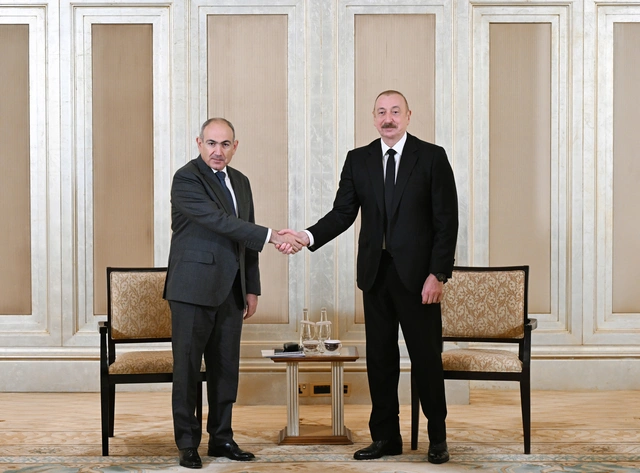
ABU DHABI — The presidents of Azerbaijan and Armenia met on July 10, 2025, in Abu Dhabi for what officials from both sides described as a “constructive and result-oriented” bilateral discussion on normalizing relations. In a rare move, both countries’ foreign ministries issued nearly identical statements, underscoring a shared commitment to de-escalation and forward momentum.
According to the statements, President Ilham Aliyev and Prime Minister Nikol Pashinyan discussed “various aspects” of interstate normalization and reaffirmed that direct bilateral dialogue remains the most effective framework for resolving lingering disputes. The leaders also instructed their respective border commissions to continue work on delimitation, referencing recent progress in contested areas such as Gazakh.
Crucially, both parties agreed to build trust through continued dialogue and “confidence-building measures,” signaling a rare alignment amid years of hostilities.
An Agreement Within Reach?
Azerbaijani lawmaker and foreign policy analyst Rasim Musabekov hailed the meeting as “historic,” emphasizing that all substantial breakthroughs — including the draft peace agreement and border demarcation progress — have occurred exclusively through bilateral channels, without mediation from outside actors.
Musabekov expects that the next milestone could be the foreign ministers jointly submitting a proposal to the OSCE to formally close the defunct Minsk Group. This move would help eliminate procedural roadblocks before the year-end OSCE ministerial summit in Helsinki, where final decisions on the group’s mandate and funding are expected.
He also suggested that the foreign ministers may simultaneously initial the peace agreement — a symbolic and practical step toward final ratification.
Beyond Diplomacy: Building Real Trust
Beyond high-level negotiations, Musabekov stressed the importance of grassroots confidence-building, including media collaboration, NGO exchanges, and even parliamentary visits. He argued that parliamentary engagement would be crucial given that both nations’ legislatures will eventually be required to ratify any peace treaty.
He further noted that incident-free borders, transparency around landmine maps, and progress on accounting for missing persons from past conflicts — estimated at 3,500 in Azerbaijan and over 1,000 in Armenia — are all vital elements of sustained trust.
The Zangezur Corridor Question
The broader regional dynamic hinges on practical decisions around transportation and connectivity, particularly the long-debated Zangezur Corridor, which would connect mainland Azerbaijan to its exclave Nakhchivan via southern Armenia and potentially offer access to Turkey.
Musabekov emphasized that Armenia must now secure funding and begin tendering construction projects for both road and rail infrastructure. Simultaneously, a clear legal framework must be created to guarantee the secure and uninterrupted movement of goods and people.
What’s Next?
While no peace deal is imminent, Musabekov remains cautiously optimistic. “If all elements of this process are managed efficiently,” he stated, “we may see not only the initialing but the signing of a peace agreement by late 2025 or early 2026.”
The road ahead remains complex, but Abu Dhabi may well be remembered as the setting where the long-frozen Armenia–Azerbaijan conflict began to thaw — through diplomacy, pragmatism, and a shared sense of urgency.

