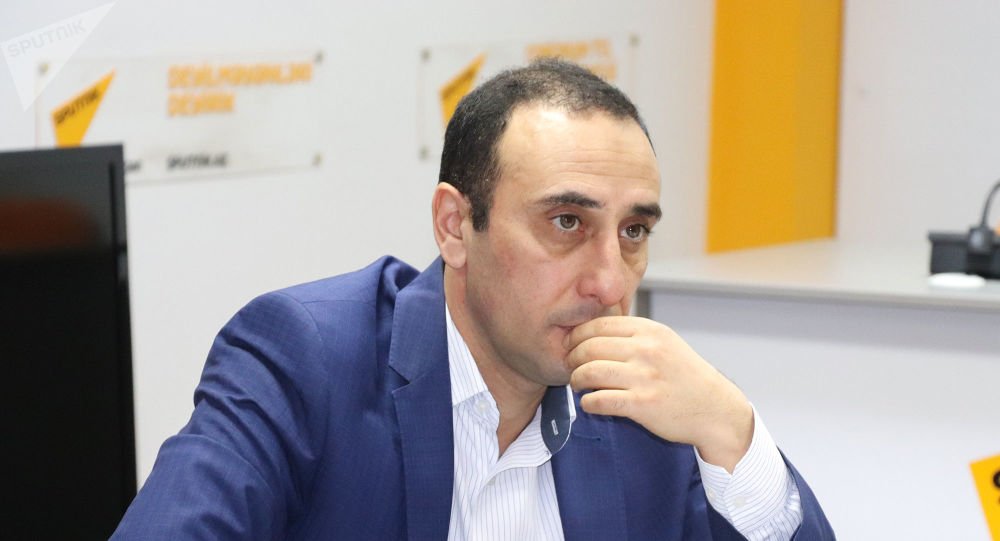
Azerbaijani political analyst Rizvan Huseynov discussed the shifting geopolitical landscape around Ukraine, Armenia–Azerbaijan relations, and Russia’s regional calculations during a wide-ranging interview on the Daily Europe Online YouTube channel.
Ukraine War: “Everyone Has Their Own Interests”
Huseynov opened by addressing the stalled negotiations on Ukraine, arguing that the failure of recent talks has less to do with Kyiv and more with competing interests among major global actors.
According to him, Russia’s demands toward Ukraine “have not changed in four years,” and Moscow is not applying any new pressure. Instead, he said, the geopolitical environment around the conflict is dominated by states with diverging incentives:
Britain and parts of Europe, he argued, prefer the war to continue, fearing that a sudden ceasefire could alter their security landscape.
China, meanwhile, benefits from Russia’s dependence on exporting cheap raw materials.
The Trump administration in Washington, he added, wants a quick settlement to extract concessions from Moscow.
Inside Russia, “different groups in the Kremlin” also have contradictory goals, with many reluctant to accelerate a transition of power.
“The majority of players who matter are interested in prolonging the war,” he said.
Armenia-Azerbaijan Process: Pashinyan’s Calculations
Turning to the South Caucasus, Huseynov commented on Armenian Prime Minister Nikol Pashinyan’s statement that expert visits between Yerevan and Baku are insufficient to overcome the deep distrust between the two societies.
Huseynov said reconciliation is largely a matter of generational change:
“Time heals-but only partly. Any external shock can reopen old wounds.”
He suggested that Yerevan may be strategically delaying the next phase of the peace process until after the 2026 U.S. congressional elections:
“If Democrats regain control, they will block Trump’s initiatives, including those agreed on 8 August in Washington between our leaders,” he said.
“Armenia is not entirely sincere in this context-Yerevan is playing its own game.”
Baku, он считает, будет “использовать свои ресурсы” для укрепления своих позиций и уменьшения зависимости Армении от внешних факторов.
Veneditkov’s Visit to Yerevan: “Not Independent of the Kremlin”
Huseynov was sharply critical of Russian journalist Alexei Venediktov’s recent trip to Armenia, calling it “clearly coordinated with the Kremlin.”
“Despite his image as an independent liberal, Venediktov still represents the interests of a particular part of the Russian elite,” he said, adding that many in Azerbaijan believe Sergey Kiriyenko-Putin’s influential deputy chief of staff-dispatched him to probe the political climate ahead of Armenian elections.
According to Huseynov, the timing of Venediktov’s visit-immediately after reciprocal expert exchanges between Azerbaijan and Armenia—was a deliberate attempt to inject “a conflict narrative” and undermine the emerging atmosphere of dialogue.
He suggested Venediktov’s remarks about “Karabakh separatists” were aimed at stirring fears and exploiting the issue for Russia’s internal and regional agenda.
CSTO Summit: An Alliance in Slow Decline
Commenting on the CSTO (ODKB) summit in Bishkek, Huseynov said the organization has been “dying slowly” for years, and the Second Karabakh War exposed its inability to uphold its own core security commitments.
“Structures created after the USSR’s collapse are decaying—some faster, some slower,” he said.
“For CSTO, the turning point was the 44-day war. It revealed that the alliance cannot enforce its founding obligations.”
He also criticized Kyrgyzstan for shielding the Ukrainian embassy with a large screen during Putin’s visit, calling the gesture “unpleasant” and saying Kyiv should formally protest.

