Azerbaijan.US
Hundreds of thousands of homes across Azerbaijan remain without legal property deeds, leaving owners unable to sell, mortgage, inherit, or fully protect their rights. In 2026, that long-standing issue may finally move toward a partial resolution.
The discussion has gained new momentum after 2026 was declared the Year of Urban Planning and Architecture, bringing informal housing back onto the government’s policy agenda. Experts say the move could open the door to issuing property deeds for a significant number of undocumented homes – though not all structures will qualify.
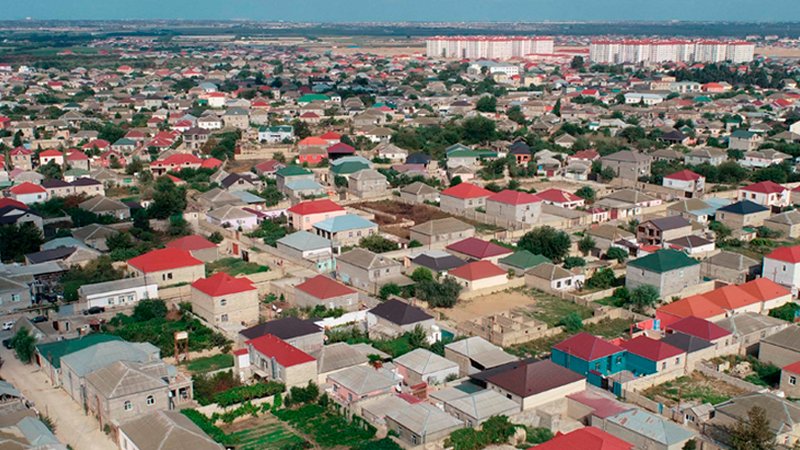
According to official and expert estimates, Azerbaijan has more than 500,000 undocumented or legally problematic residential buildings. The exact number is unknown, as the country still lacks a fully unified cadastral registry. Many of these homes were built without permits over the past decades, often on land with unclear legal status.
Why legalization matters
Real estate specialists argue that the absence of property deeds creates serious problems not only for homeowners but also for the broader economy. Homes without legal status cannot be used as collateral, excluded from mortgages, or formally transferred through inheritance or divorce proceedings. In urban redevelopment zones, undocumented houses also complicate compensation and resettlement processes.
If legalized, such properties could be brought into the formal market, expanding the tax base and increasing transparency in the real estate sector. Banks would be able to issue mortgages secured by these homes, potentially improving access to housing finance for low- and middle-income families.
Not all homes will qualify
Experts caution that legalization will not be universal. Homes built in restricted or high-risk areas – including zones prohibited for construction – are unlikely to receive deeds. Instead, officials are expected to apply a selective approach, reviewing cases individually.
Vugar Oruj, head of the Azerbaijan Society of Appraisers, said the designation of 2026 as a reform year has raised expectations that long-delayed decisions may finally be taken. He noted that a carefully designed property amnesty could resolve legal uncertainty for thousands of families while avoiding risks linked to unsafe or illegal development.
Broader economic impact
Analysts say formalizing undocumented housing could have ripple effects across the economy. Legalization would allow properties to enter credit circulation, enable sales and purchases through official channels, and reduce disputes over ownership. Increased supply could also help stabilize housing prices, particularly in urban areas.
However, specialists stress that success will depend on clear criteria, transparency, and coordination between planning authorities, municipalities, and land registries. Without that, the process risks creating new legal disputes rather than resolving old ones.
For now, the debate signals a shift in tone: undocumented housing, long treated as an intractable problem, is once again under serious consideration – with 2026 shaping up as a pivotal year.