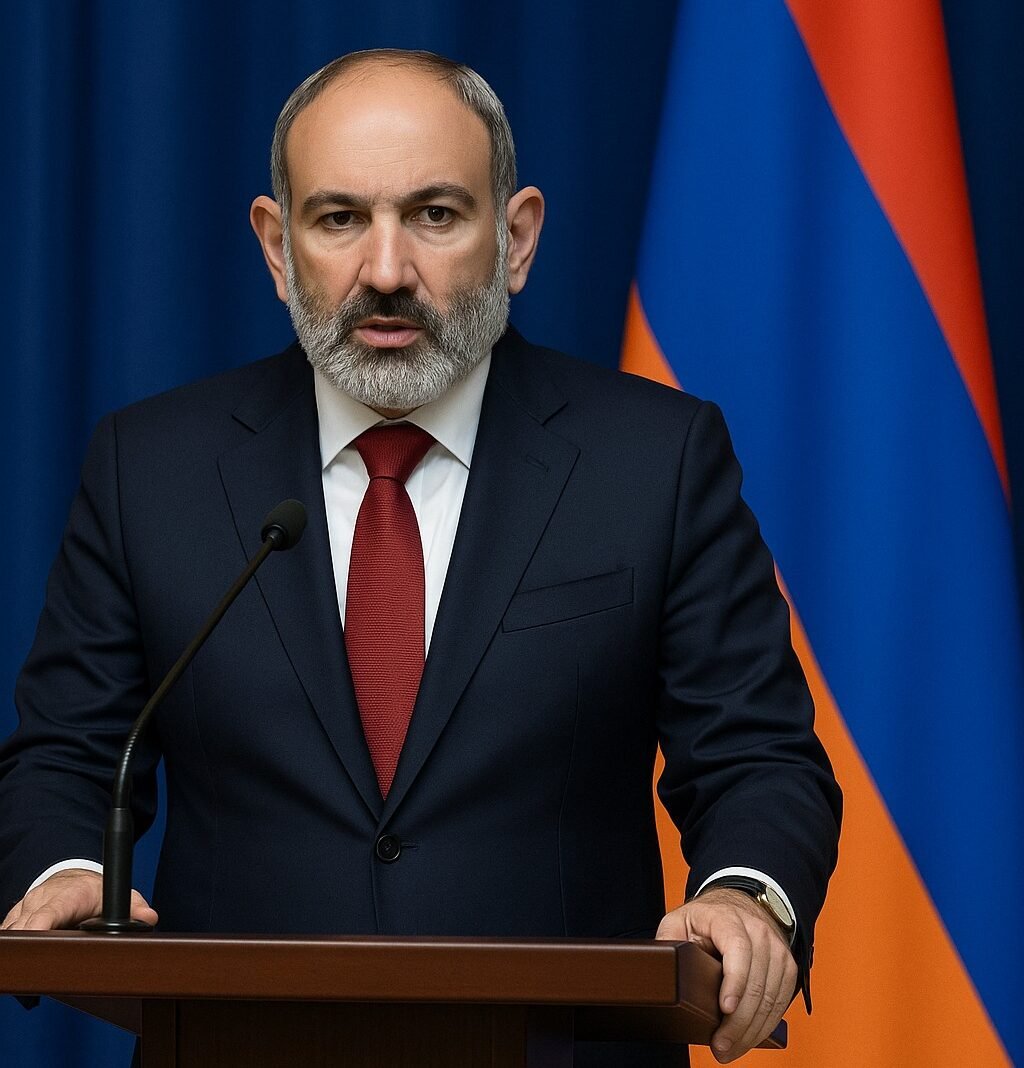
Azerbaijan’s decision to lift all restrictions on the transit of goods to Armenia marks what Armenian Prime Minister Nikol Pashinyan called “the beginning of the end of the blockade.”
Speaking at a government meeting in Yerevan on Thursday, Pashinyan said the move demonstrates that the Washington Declaration between the two countries is producing “tangible results.”
“This is a very important decision. It shows that the Washington agreements are not just declarations – they have brought concrete outcomes,” Pashinyan said.
Stay Ahead with Azerbaijan.usGet exclusive translations, top stories, and analysis — straight to your inbox.
He added that while “negative developments always make headlines,” positive shifts often go unnoticed.
“When there is a gunshot in a village, everyone talks about it. But when there is silence for a long time, no one mentions it. Those who claim Armenia is collapsing simply don’t know the country.”
Pashinyan also criticized opposition lawmakers for boycotting a recent parliamentary session, arguing that “rhetoric about Armenia’s collapse” remains a tool of those “whose political existence depends on chaos.”
The announcement followed remarks by Azerbaijani President Ilham Aliyev on October 21, who confirmed that Baku had fully lifted all restrictions on the transit of goods to Armenia.
“The first such transit was the shipment of Kazakh wheat to Armenia. This is a clear sign that peace between Azerbaijan and Armenia is no longer just on paper – it has practical meaning,” Aliyev said during a joint press conference with Kazakh President Kassym-Jomart Tokayev.
Yerevan welcomed the move. Government spokeswoman Nazeli Baghdasaryan called Aliyev’s statement “a positive and constructive signal,” while Economy Minister Gevorg Papoyan confirmed that the first shipment of Kazakh wheat will soon reach Armenia via Azerbaijani territory.
Observers see the development as a rare alignment of narratives between Baku and Yerevan – a sign of cautious optimism in the long-stalled normalization process.
A Step Toward a Connected South Caucasus
Analysts note that the decision also reflects Azerbaijan’s broader regional connectivity strategy, which aims to transform the South Caucasus into a transport and trade hub linking Asia and Europe.
By reopening transit channels, Baku strengthens its role in multiple corridors – including the Middle Corridor, the North-South International Transport Route, and the emerging Zangezur or “Trump Route” corridor framework under U.S. mediation.
For both Armenia and Azerbaijan, this marks not only a symbolic but a practical step toward regional reintegration – one in which economic interdependence could become the most durable form of peace.

