Baku, September 6, 2025
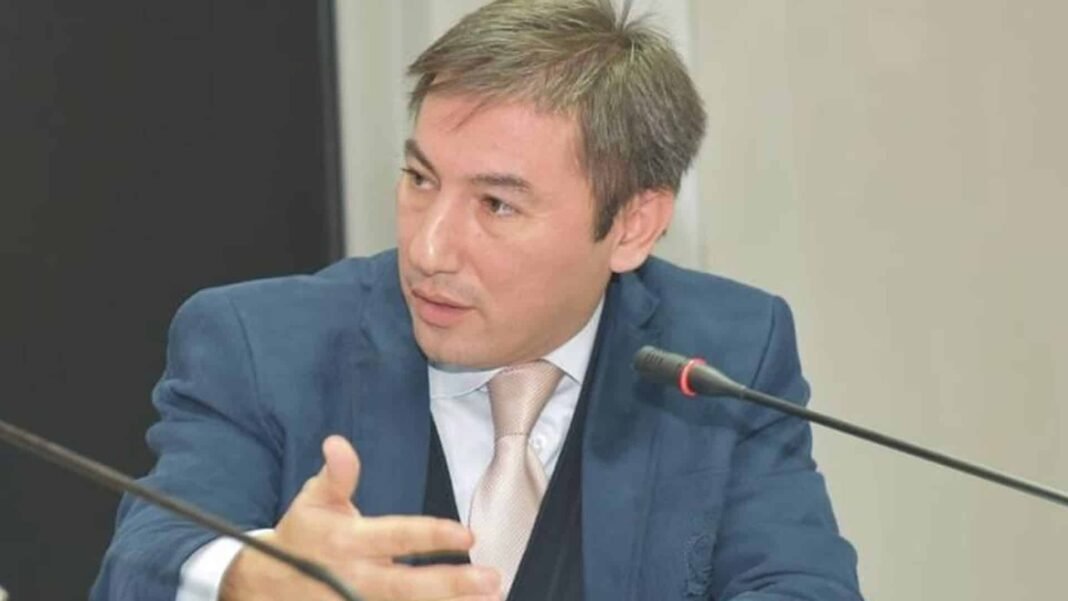
Azerbaijani political analyst Ilgar Velizade argues that the Shanghai Cooperation Organisation (SCO) is widely misread: it is neither a China-run “anti-West bloc” nor a proto-alliance with binding discipline.
Velizade speaking in an interview with Daily Europe Online, frames the SCO as a horizontal coordination forum—useful for optics and dialogue, limited for enforcement. That distinction, he says, is visible in plain sight: India, led by Narendra Modi amid open strategic rivalry with China, is a full SCO member and acts with complete autonomy. If the SCO were a Chinese vassal structure, New Delhi would not have joined – nor would it have stayed.
The Beijing military parade staged alongside the summit did matter, Velizade concedes. It was a carefully scripted demonstration of Chinese capability and convening power, designed to signal confidence to the “Global South” while reminding Washington and Brussels of Beijing’s staying power. But spectacle does not equal subordination. The SCO lacks the vertical integration of NATO’s command structure or the rule-making machinery of the European Commission. No collective defense, no acquis, no sanctions snap-backs—just a platform where states coordinate when interests align and ignore each other when they don’t.
That pragmatic lens also shapes Velizade’s reading of the Russia–Azerbaijan relationship after the AZAL flight tragedy. He sees a clear political freeze masked by a veneer of economic normality. On one track, trade and transit projects continue; vice-premiers and intergovernmental commissions keep the spreadsheets moving. On the other track, core political grievances remain unresolved. Moscow’s public references to insurance payouts, he stresses, should not be confused with government – level reparations. Baku’s position is explicit: an official apology, identified accountability for those responsible, and state compensation. Until those three boxes are checked, a leader-level thaw is unlikely to stick.
Velizade warns that this policy/economy split can’t be sustained indefinitely. As the first anniversary of the incident approaches, expectations harden. If preliminary findings and meaningful steps do not materialize by year-end, he expects the political track to grow more brittle – regardless of positive numbers in the trade ledger. In that context, he dismisses bellicose rhetoric in Russian media ecosystems – such as talk of “making the Caspian an internal sea again” – as “reckless noise,” but noise that still inflames public opinion and narrows room for de-escalation.
He also notes a mirrored pattern of pressure touching diaspora figures in both countries, arguing that such signals may be tactical but are ultimately corrosive. For policy stability, the incentives should run the other way: reduce performative hostility, elevate technical cooperation, and let concrete steps on the AZAL case reset the political ceiling.
What, then, is Baku’s strategy in a turbulent environment? Velizade’s answer is disciplined pragmatism. Azerbaijan will keep logistics and energy corridors humming, expand middle – corridor throughput, and capitalize on its geography without committing to any bloc logic – precisely because the SCO is a forum, not a harness. That approach complements Baku’s broader doctrine: deterrence through capable partnerships, but freedom of maneuver through multi-vector ties. It’s why India’s autonomy within the SCO matters for Azerbaijan too: the organization can convene, but it cannot conscript.
Velizade’s framing offers a useful test for headlines and markets alike. When leaders meet on SCO sidelines, the question is not “Who follows whose line?” but “Where do the interests briefly intersect?” When Russia and Azerbaijan shake hands, the question is not “Are relations normalized?” but “Has Moscow addressed Baku’s three concrete demands?” If the answer to the latter remains no, expect continued compartmentalization: busy rail yards and pipelines below, cold politics above.
Ultimately, the exit ramp is straightforward, if politically costly for Moscow: an apology, accountability, and state compensation, followed by a depoliticized return to structured cooperation. Short of that, the status quo persists—manageable, for now, but increasingly inefficient.
With the SCO more talk shop than bloc and Moscow–Baku politics still frozen by the AZAL case, Azerbaijan will keep trade and transit humming—but real de-escalation hinges on Russia meeting Baku’s explicit terms (apology, accountability, state compensation).