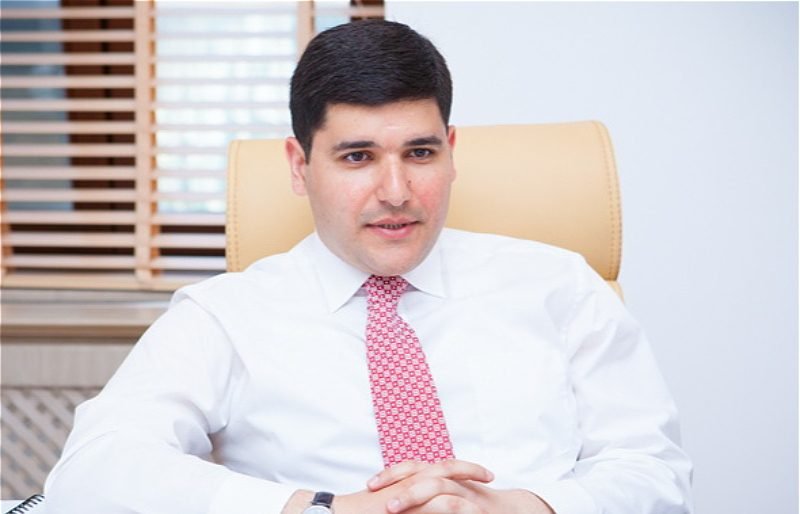
Azerbaijani political analyst Farhad Mammadov says the future of relations between Baku and Yerevan will be determined not by media leaks or political scandals, but by Armenia’s upcoming parliamentary elections.
Speaking to Daily Europe Online, Mammadov stressed that attempts to interpret every recent development through the lens of Armenia’s domestic political struggle are misleading. Nevertheless, he noted that renewed attention surrounding former Karabakh separatist leader Samvel Shahramanyan reflects deeper political dynamics.
Shahramanyan as a symbol of a failed project
According to Mammadov, Shahramanyan represents the political remnants of the Karabakh movement – a project that has lost both legitimacy and institutional foundations. His renewed activity in Armenia, including public statements and organizational efforts, has drawn attention in Baku after a long period of relative silence.
Mammadov believes the recent wave of investigations and information leaks is directly linked to these activities, rather than to electoral maneuvering alone.
Baku rejects any illegitimate change of power
The analyst recalled earlier Azerbaijani media reports warning of attempts to remove Prime Minister Nikol Pashinyan through non-democratic means, involving three main elements:
Russian-linked financial interests, the Armenian Church, and figures associated with the former Karabakh leadership.
“For Azerbaijan, only legitimate elections matter,” Mammadov said. “Any attempt to change power outside democratic procedures would increase the risk of escalation.”
Pashinyan’s peace agenda is clear – the opposition’s is not
Mammadov noted that Armenia’s current leadership has already outlined its position: abandoning the Karabakh movement, recognizing Azerbaijan’s territorial integrity, and initialing the text of a peace treaty.
What remains unclear, he said, is the position of Armenia’s opposition forces. Their programs, expected early next year, will be closely watched in Baku.
“The election results will be a powerful signal. If a political force supporting peace wins, the agenda can be expanded. If not, Azerbaijan will move toward a contingency plan to neutralize potential threats,” he stated.
Why the dissolution document mattered
Commenting on the document signed by Shahramanyan dissolving the so-called “Nagorno-Karabakh Republic,” Mammadov emphasized that its significance was political rather than legal.
Although the entity was never recognized internationally, the act of self-dissolution plays an important role in Armenia’s internal discourse. It has already been reflected in new Armenian history textbooks – a fact that has triggered legal and political disputes within Armenia itself.
“It is important for Armenian society to acknowledge that what was created illegally also ended illegally,” Mammadov said.
EU–Armenia framework raises concerns in Baku
Mammadov also criticized the EU-Armenia strategic framework document, calling it non-binding yet politically problematic. He pointed to vague language on “Armenian detainees” and references to “Karabakh Armenians,” which he said revive outdated narratives.
Such formulations, he argued, undermine trust and complicate the peace process rather than supporting it.
Russia and the “new normal”
Addressing Azerbaijan–Russia relations, Mammadov said the downing of an Azerbaijani civilian aircraft in Russian airspace marked a deep rupture that cannot be resolved through symbolic gestures alone.
“This is a new normal – defined by caution, unresolved grievances, and clear red lines,” he said.
The bottom line
According to Mammadov, the coming months will be decisive for the South Caucasus. Armenia’s elections, the fate of the peace treaty, and the role of external actors will determine whether the region moves toward lasting stability – or enters a new phase of strategic uncertainty.
For Azerbaijan, the message is clear: the choice now lies with Armenian voters.

