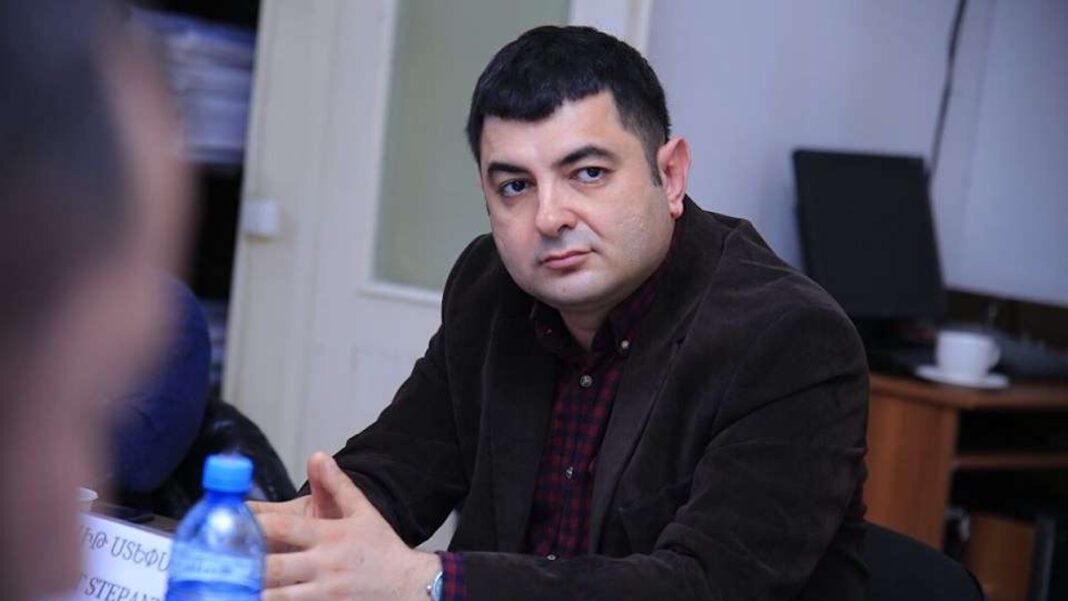
Armenian political commentator David Stepanyan says the current peace process between Armenia and Azerbaijan is advancing and anchored by a U.S.-backed transit initiative he calls the “Trump Route,” arguing it renders talk of a “Zangezur corridor” obsolete.
Speaking on Noyan Tapan, Stepanyan rejected claims that President Ilham Aliyev is “nullifying” Washington-brokered understandings. He said the United States has already allocated initial funding and technical teams have begun work, while border delimitation/demarcation is being prepared along the segment where a railway would run.
“The process is moving-slowly, but without interruption,” he noted, paraphrasing Prime Minister Nikol Pashinyan’s recent comments.
Stay Ahead with Azerbaijan.usGet exclusive translations, top stories, and analysis — straight to your inbox.
Stepanyan asserted that the “Zangezur corridor” will not materialize and that Aliyev’s references to it serve mainly domestic politics after the Karabakh war: “There is no national idea left to offer.”
By contrast, he described the U.S.-supported east-west route as a larger geo-economic project aimed at reconnecting the South Caucasus and drawing Central Asia closer to Western markets.
In his view, this makes any unilateral Azerbaijani move against Armenia unrealistic so long as Washington remains engaged.
On implementation, Stepanyan cautioned that terrain, routing and full border marking in Syunik are non-trivial engineering and legal tasks. He said the rail right-of-way exists, but road alignment may need to shift, possibly via the Sisian area, and substantial financing will be required.
Turning to regional actors, Stepanyan argued Russia long “parasitized” on the Karabakh status quo to keep the South Caucasus closed as a transit space, but now faces incentives to participate economically rather than obstruct, whether via concessions or rail connectivity.
He added that Iranian concerns have been addressed through steady contacts, and that Tehran is unlikely to try to block the project given its own priorities.
Domestically, Stepanyan framed Armenia’s pre-election landscape simply: the government promises peace, open borders and gradual institutional reform; the opposition offers criticism without a clear alternative.
He said a new constitution-if approved by referendum-would test Baku’s stated preconditions for a peace treaty. Above all, he argued, durable peace “is needed by both peoples,” and renewed war would be irrational and hazardous amid shifting regional risks.
Asked whether Prime Minister Pashinyan is aligning Armenia decisively with the EU, Stepanyan said the government seeks “good relations with all,” while building European-style institutions as a foundation-an approach he called pragmatic, if incremental.