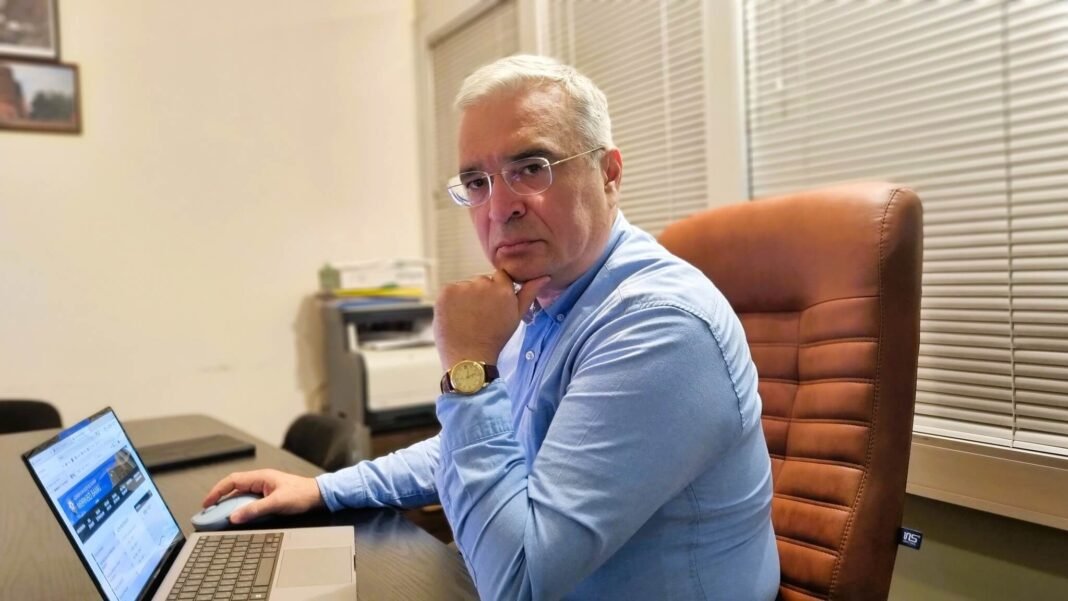
Azerbaijani politician and analyst Ilgar Mammadov published a detailed commentary on Facebook arguing that the United States has strong strategic economic motivations for pushing toward an early peace settlement between Russia and Ukraine. While political factors also play a role, he highlights one reason he considers the most decisive.
Mammadov draws a historical parallel with the Great Depression of 1929–1933, noting that many overlook its connection to the Soviet Union’s violent industrialization and collectivization campaigns.
.
As U.S. companies lost massive value during the crisis, he writes, Moscow saw an opportunity: it purchased American industrial equipment at deeply discounted prices and brought thousands of unemployed American specialists to the USSR.
According to Mammadov, this industrial transfer allowed the Soviet market to function as a partial shock absorber for the U.S. economy during the global downturn – a factor he believes is not sufficiently discussed in historical analysis.
Today, he argues, fears of overvalued global stock markets and a potential major correction – possibly around 2027–2028 – are widespread. Governments appear to have exhausted their ability to print money to keep markets afloat.
In such a scenario, Mammadov suggests, major powers will search for ways to offset the collapse in asset values. In his view, Russia’s vast resource base – still not fully integrated into global dollar markets and further isolated by sanctions – appears to be the most realistic candidate for such a stabilizing role.
He notes that a sudden visit of a large Hungarian business delegation to Moscow may also be linked to this anticipation.
According to Mammadov, Washington sees two theoretical scenarios:
Russia collapses after a military defeat, and its fragmented resource wealth becomes a buffer for Western economies.
Russia remains intact, and the U.S. enters a post-conflict economic arrangement with Moscow to stabilize global markets.
Mammadov believes Donald Trump does not expect Russia to collapse before a potential upcoming global financial crisis, and therefore prefers to secure peace in Ukraine quickly and establish closer economic cooperation with Moscow after an agreement is signed.
“Trump is right that the war could have been prevented in time,” Mammadov concludes. “But across the vast space from Brussels to Moscow, no one had the wisdom to do so.”

