Tbilisi / Baku / Yerevan
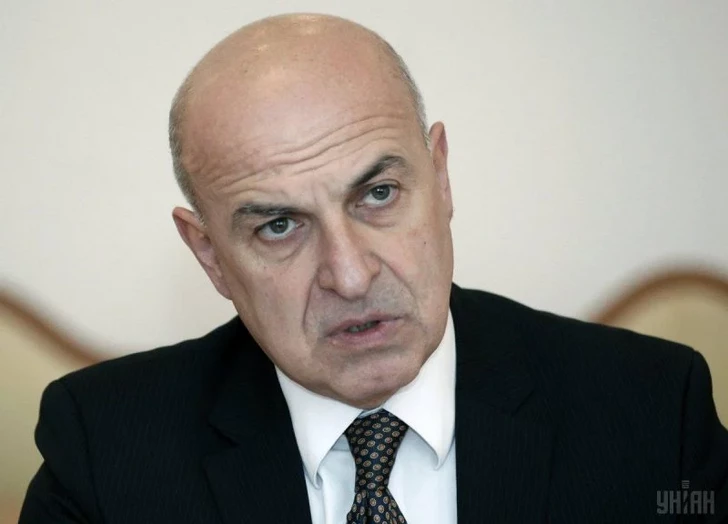
The recent face-to-face meeting between the leaders of Azerbaijan and Armenia—held without intermediaries in the United Arab Emirates—marks a potentially transformative moment for the South Caucasus, according to Valeri Chechelashvili, head of Georgia’s Center for Strategic Studies.
Chechelashvili emphasized that the direct nature of the talks between President Ilham Aliyev and Prime Minister Nikol Pashinyan, along with the presence of deputy prime ministers, foreign ministers, and other senior officials, underscores a new level of political maturity and readiness on both sides.
“The most important aspect of the meeting is that it was held without any mediators. This shows both the willingness and the capability of the parties to negotiate directly,” he said. “In many cases, third-party mediators—however well-intentioned—have slowed down the peace process or complicated dialogue. Now, they’re no longer necessary.”
Toward Regional Unity?
Chechelashvili also pointed to the strategic significance of the UAE meeting for broader regional cooperation, particularly in the potential development of a South Caucasus trilateral format involving Azerbaijan, Armenia, and Georgia.
“There is no alternative to such a format. The strength of our region lies in unity,” he stressed. “Working together would greatly enhance the South Caucasus’s attractiveness—economically, politically, and strategically.”
While the idea of a trilateral partnership has long been discussed, tangible political alignment among the three countries has often been hindered by bilateral conflicts and competing geopolitical interests. The shift to direct, mediator-free dialogue, however, could pave the way for new frameworks of regional integration, Chechelashvili suggested.
A Rare Window of Opportunity
The high-level talks in Abu Dhabi are widely seen as a sign that Yerevan and Baku are seeking regional solutions to regional problems, with less dependence on outside powers.
Analysts say this moment offers a rare opportunity to move beyond frozen conflict and forge sustainable cooperation—particularly on issues like transport connectivity, security, and economic development.
“If this process continues,” Chechelashvili concluded, “the South Caucasus could emerge not as a zone of confrontation, but as a hub of collaboration.”