Azerbaijan.US
The cancellation of Azerbaijani President Ilham Aliyev’s planned visit to St. Petersburg, where a meeting with Russian President Vladimir Putin was expected to take place, was driven by the lack of concrete steps taken by Russia following the tragedy involving an Azerbaijani aircraft.
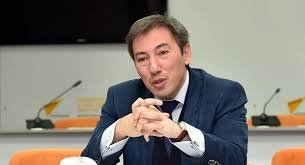
This was stated by political analyst Dr. Ilgar Valiyev, head of the South Caucasus Political Scientists Club, speaking on the YouTube channel ITON.TV-INTER.
According to Valiyev, the official explanation for the canceled visit – the president’s heavy schedule – remains valid. However, he noted that experts are increasingly focusing on a broader political context. As he explained, Baku had expected specific actions from Moscow, including compensation, identification of those responsible, and accountability measures.
“These commitments were voiced back in early October, yet more than two months later, no tangible results have been delivered on any of these points,” the analyst said.
Valiyev pointed out that shortly before the anticipated visit, Russia’s Investigative Committee informed Azerbaijan of the effective termination of the investigation without holding any individuals criminally accountable.
Under such circumstances, he argued, a visit by the Azerbaijani president to St. Petersburg would have carried serious reputational risks.
He also emphasized that investigations are continuing in both Azerbaijan and Kazakhstan – the country on whose territory the crash occurred and which, according to Valiyev, acts as a neutral party in the process.
“This raises a logical question: why does the investigation remain relevant for Azerbaijan and Kazakhstan, but is considered closed for Russia?” he said.
Commenting on the diplomatic implications, Valiyev stated that such actions significantly undermine trust in statements made by the Russian side. He did not rule out the possibility that Baku could consider turning to international judicial mechanisms, a move that could further cool bilateral relations.
The analyst also noted that Azerbaijan and Armenia are now capable of maintaining direct dialogue without intermediaries. According to him, earlier mediation formats – including those involving Russia – have failed to produce sustainable results over decades.
“Today, there are direct communication channels between Baku and Yerevan. This format is far more productive, as it excludes the interests of third parties,” Valiyev stressed.
Looking ahead, he suggested that Azerbaijan’s response is likely to be calculated and asymmetrical.
“Azerbaijan is not interested in escalation, but it will make clear that on a number of issues it is capable of acting without Russia’s involvement,” he concluded.

