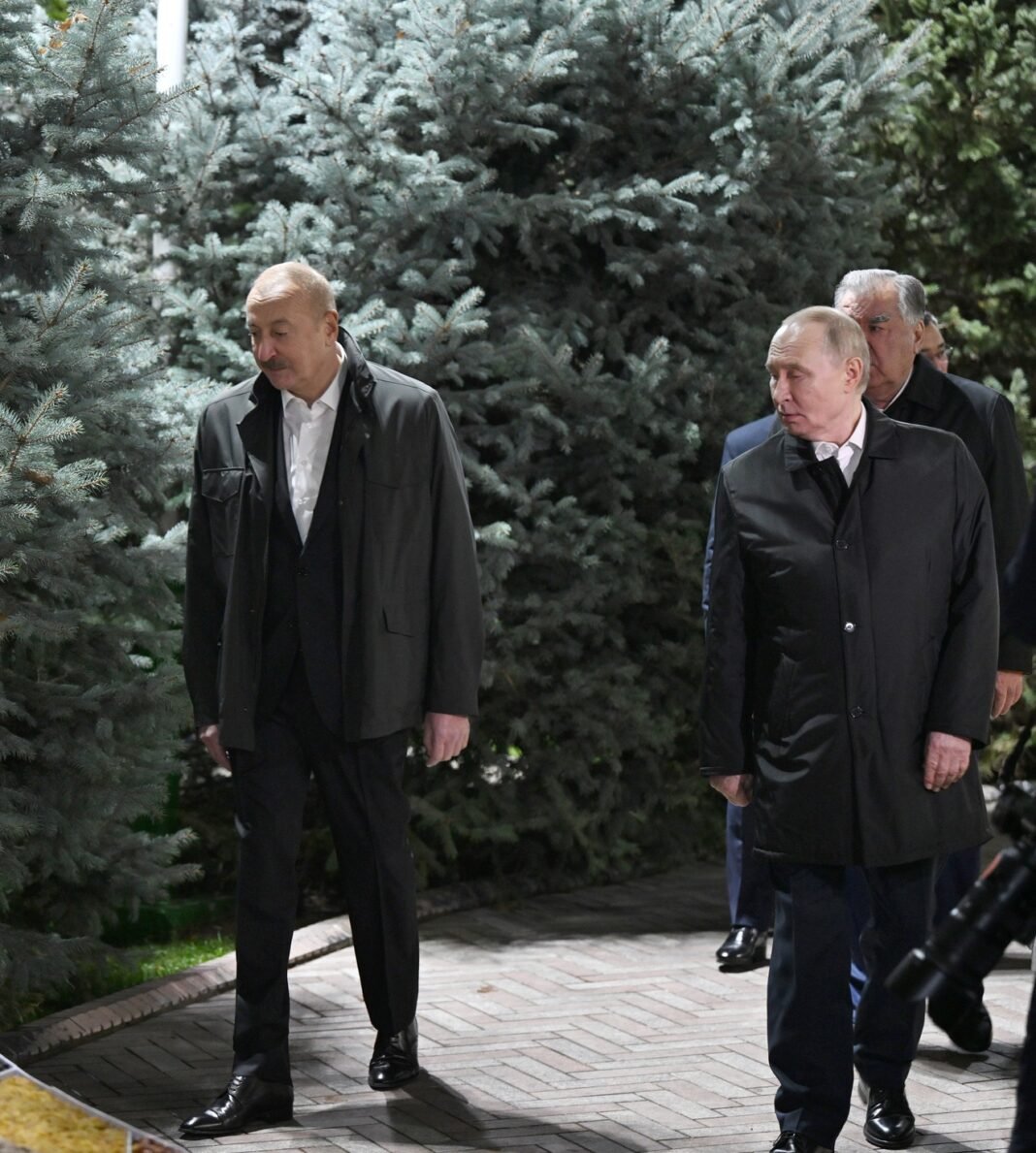
The long-awaited meeting between Azerbaijani President Ilham Aliyev and Russian President Vladimir Putin in Dushanbe has become a turning point in bilateral relations strained since the December 2024 AZAL plane crash.
According to political analysts, Putin’s decision to personally open the discussion with the air disaster was widely seen as a gesture toward acknowledgment of responsibility – and a response to Baku’s demand for clarity.
“If the crisis began with the plane crash, the normalization had to start with it as well,” said Farhad Mammadov, head of the Center for South Caucasus Studies, in an interview with Minval Politika.
Stay Ahead with Azerbaijan.usGet exclusive translations, top stories, and analysis — straight to your inbox.
Mammadov emphasized that the format and protocol of the meeting underscored equality between the two sides: neither appeared as the host or the petitioner. “This was a meeting of mutual consent,” he noted.
Putin’s tone, according to the analyst, met Azerbaijan’s core expectations. The Russian leader outlined technical and operational causes of the tragedy and signaled that the final report – expected by December under ICAO procedures – will reflect those findings.
Signs of Humanitarian De-escalation
Following the Dushanbe talks, Moscow and Baku moved to ease tensions in the humanitarian domain. In Russia, former Moscow Satire Theatre director Mamedali Agayev, an Azerbaijani national, was released from custody. In Azerbaijan, Sputnik Azerbaijan executive Igor Kartavykh was transferred to house arrest.
“These steps show that both sides are moving away from confrontation and back to dialogue,” Mammadov said. He also noted the importance of resolving the case of the family of Shakhin Shikhlinkski, a key figure in the Azerbaijani diaspora in the Urals, calling it a humanitarian priority.
Strategic Realignment and the ‘Trump Route’
Mammadov stressed that Baku resisted Western attempts to politicize the AZAL tragedy. “Azerbaijan declined offers of assistance from the U.S., the U.K., and the EU, choosing instead to handle the investigation domestically – to prevent the issue from being weaponized against Russia,” he said.
This, he argued, has strengthened Azerbaijan’s international positioning as an independent actor capable of defending its interests both vis-à-vis Moscow and the West.
Touching on the ‘Trump Route’ peace roadmap, Mammadov predicted that the coming 18–24 months will bring “structural shifts” in the South Caucasus – including a peace deal between Baku and Yerevan, Armenia–Turkey normalization, and the opening of regional transport corridors.
Russia’s Calculated Timing
Why did Putin wait nearly a year to address the issue publicly?
“Russia had to adjust to new regional realities,” Mammadov said. “Processes were unfolding without its participation. This meeting reflects Moscow’s recognition that the South Caucasus is transforming – and that it must redefine its role within it.”