Tbilisi — September 3, 2025.
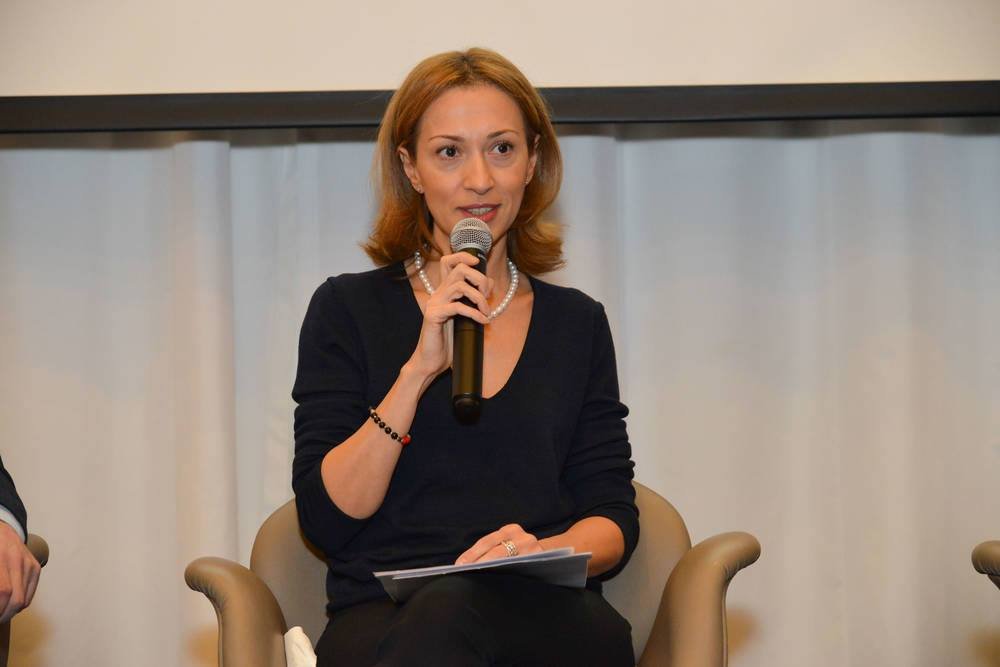
The latest summit of the Shanghai Cooperation Organization (SCO) in Beijing and the accompanying military parade marking the 80th anniversary of the end of World War II have reignited debates over Georgia’s regional positioning. In a program on Novosti Kavkaza, veteran journalist Gela Vasadze and former Reuters correspondent Margarita Antidze, now editor of the independent platform Project 64, offered stark assessments of Russia, China, and Georgia’s uneasy place between them.
“Not With Russia, Not Against Russia”
Asked directly on whose side Georgia stands, Antidze replied:
“To say Georgia is on Russia’s side would be wrong. But to say Georgia is against Russia would be an even bigger mistake. The truth is, the country has lost subjectivity and stands somewhere in between.”
She described the moment as “a unique opportunity since the collapse of the Soviet Union” — one that Georgia is failing to seize due to political paralysis and the dominance of oligarch Bidzina Ivanishvili at home.
Moscow’s Limits, Beijing’s Calculations
The SCO summit itself, Antidze argued, was more symbolism than substance.
“What we saw were memorandums of intent, not binding deals. Even the much-touted ‘Power of Siberia-2’ pipeline remains only a vague promise.”
She noted that while Russia portrays the summit as proof it is not isolated, the real balance tilts toward China: “Moscow still profits from energy exports, but the terms are far more favorable to Beijing than to the Kremlin.”
The meeting between Presidents Ilham Aliyev of Azerbaijan and Vladimir Putin in Beijing — a brief handshake caught on camera — was read as another sign of shifting dynamics. “The tone from Baku toward Moscow has changed,” Antidze said. “Aliyev now speaks as an equal, backed by both victory on the battlefield and partnership with Turkey.”
Domestic Repression Shadows Foreign Policy
Midway through the broadcast, news broke from Tbilisi’s courts: several young activists received two-year prison sentences in a case linked to protests. Antidze called the verdict “a copy-paste of Russian scenarios” and said it underscored how far Georgia has drifted from its once-celebrated democratic trajectory.
“This is exactly the moment when Georgia should be projecting leadership in the region,” she warned, “but instead we are shrinking into silence abroad and repression at home.”
A Regional “Battle for the Caucasus”
Vasa framed the wider picture as an “epic battle for the Caucasus,” with Russia’s imperial legacy colliding against Turkey’s ambitions and Western interests. For Georgia, he said, the danger lies in self-isolation:
“For decades, Georgia tried to peel itself away from Moscow’s orbit. Today, with the stars aligned, we are wasting a historic chance.”
Both journalists agreed the outcome of this struggle will not be decided in Beijing or Washington alone but in whether South Caucasus states can forge stronger regional formats — from transport corridors to collective security.
Outlook
The hosts closed on a cautious note: history is cyclical, Antidze said, and no regime lasts forever. But absent external shocks, Georgia’s internal stagnation may continue. “Thirteen years of one political course is too much,” she said. “This government must go — only then can Georgia reclaim its place in the Caucasus.”
Source: Novosti Kavkaza (in Russian). Full video here
Read More on Azerbaijan.us:

