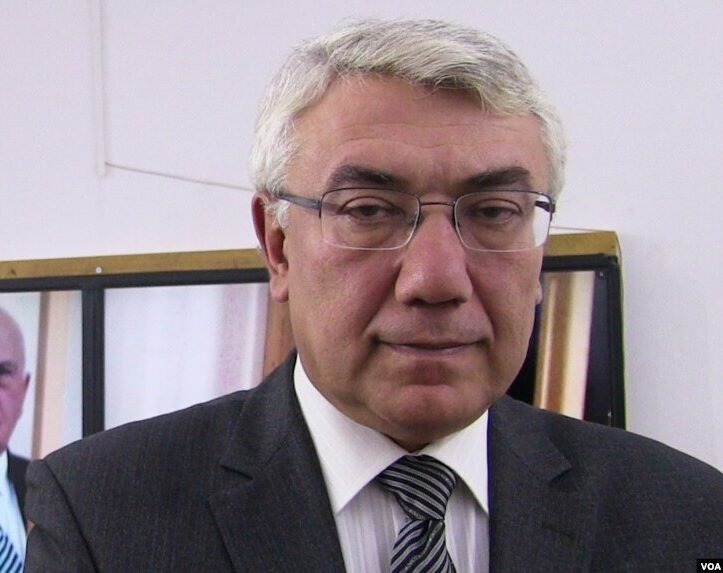
BAKU — September 2, 2025
In a wide-ranging conversation with Novosti Kavkaza, Eldar Namazov – former presidential aide and political adviser to Heydar Aliyev — argues that Russia’s behavior toward Baku has shifted from clumsy pressure to deliberate escalation, and that the Kremlin risks lighting a fuse it cannot control.
The timing of his warning is not accidental. With the OSCE Ministerial Council shuttering the Minsk process and its affiliated structures, Namazov calls the move “historic,” because it signals that Karabakh is no longer an international bargaining chip. “The page is turned not only for Baku and Yerevan,” he says, “but for major organizations that once hosted the file.” In his reading, that decision slams the door on attempts by “revanchists” to resurrect the issue at the OSCE or the UN (which long deferred to the OSCE’s lead on Karabakh).
Against that backdrop, he notes what didn’t happen at the SCO gathering in Tianjin: there was no Aliyev–Putin meeting, despite visible interest from Moscow. Namazov links the non-meeting to President Ilham Aliyev’s pre-summit interview with Al Arabiya, which he describes as a public drawing of “red lines” that Russia must respect before relations can stabilize. “Nothing we’ve asked has been taken off the table,” Namazov says, framing Baku’s stance as firm and methodical rather than theatrical.
From there his critique sharpens. He accuses Russian state media and a chorus of “approved experts” of running an intimidation campaign against Azerbaijan — “the same crude playbook of divide-and-rule” — and he advances a far more serious charge: that recent shocks were not random. Namazov suggests the downing of an AZAL passenger jet by Russian air defenses may have been intentional, pointing to reports of two missile shots, and he connects that to ugly attacks on Azerbaijanis inside Russia. He presents these episodes as a chain of provocations designed to inflame opinion in Baku and raise the temperature. To be clear, these are Namazov’s assessments; investigations and courts, not commentators, will ultimately adjudicate facts. But his conclusion is blunt: “The Kremlin is playing with fire.”
Why would Moscow escalate with Azerbaijan now? Namazov offers two strategic motives.
First, the Middle Corridor. However the China–Central Asia–Europe route is threaded on the eastern shore of the Caspian, he argues, it pinches into a single hinge on the west: Azerbaijan. “It’s the one segment without a true duplicate,” he says. “Hit Baku and you can kink the entire chain.” In other words, a coercive squeeze on Azerbaijan is the most efficient way to obstruct a trans-Eurasian logistics system that competes with Russian land bridges.
Second, fear of a Turkic renaissance. Since the Soviet collapse, five independent Turkic republics plus Türkiye now stretch from China’s borders to Europe’s. Namazov sees a clear trend line: Ankara’s broader reach, Baku’s consolidated gains, Kazakhstan’s and Uzbekistan’s rising weight, and even historically cautious Turkmenistan knitting itself into regional projects. That arc, he argues, unnerves an empire in decline. “Imperial cycles are real,” he says. “Russia is in visible dusk; the Turkic world is in a new dawn.”
Layered atop those motives is what he calls Moscow’s “zugzwang” in Ukraine — a position where every move makes things worse. Prolonging the war drains resources and stature; blinking first carries its own domestic risks. Either way, Russia’s leverage shrinks in the South Caucasus and Central Asia, while Beijing’s patience is tested by a conflict that complicates China’s ties with Europe. The result, Namazov contends, is a Kremlin more tempted to manufacture leverage elsewhere — including on Azerbaijan’s doorstep.
His message to Moscow is as much caution as criticism. Any attempt to “teach Baku a lesson,” he says, would backfire beyond the diplomatic theater. It would deepen alienation across the Muslim and Turkic communities inside Russia, risk blowback in the North Caucasus — “South and North Caucasus are communicating vessels,” he reminds — and accelerate Russia’s internal economic and social strains. “Play this out and you are digging your own hole,” he says. “People who once packed parade uniforms for a three-day war in Kyiv are not famous for sound foresight.”
Namazov’s advice to Baku tracks with his years beside Heydar Aliyev: plan for the worst, then be pleasantly surprised. He praises the current leadership’s “precise, jeweler’s diplomacy” — securing outcomes on the ground, drawing clear lines in public, and refusing to be baited into performative spats. Preparation, not panic, is the point: “Assume the harsh scenario and build to prevent it. If events evolve benignly, so much the better.”
Taken together, Namazov’s analysis is neither triumphalism nor fatalism. It is a diagnosis of a shifting chessboard: an international system that has finally certified the end of one conflict; a logistics map where Azerbaijan is indispensable; a Turkic world gaining confidence; and a Russia that, in his view, is testing dangerous tools as its old ones fail. His closing warning is simple enough for any capital to parse: pressure on Azerbaijan will not reopen closed pages — it will only write new ones, and not to Moscow’s benefit.
Source: Novosti Kavkaza (in Russian). Full video here

