Moscow — August 27, 2025
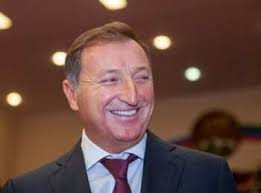
Araz Mehdiyev, the Azerbaijani entrepreneur once behind Russia’s largest duty free networks, is no longer the owner of Travel Retail Sheremetyevo, the main duty free operator at Moscow’s Sheremetyevo Airport. Corporate filings show that on August 25 the company shifted to Vitaly Bavin, its CEO for the past two years.
The transfer marks more than just a boardroom change. Analysts in Baku view it as part of a broader pattern: Moscow forcibly pushing Azerbaijani businessmen out of strategic Russian assets amid escalating political tensions between the two countries.
Over the past year, relations between Baku and Moscow have sharply deteriorated. The notorious incident in Yekaterinburg, when Russian riot police targeted Azerbaijani businesspeople, became a flashpoint. Combined with hostile rhetoric from Russian state media and Azerbaijan’s growing alignment with the U.S. and Turkey, the rift has now spilled into the economic sphere. Azerbaijani-origin businessmen in Russia are increasingly vulnerable.
Duty Free Empire Unraveled
Travel Retail Sheremetyevo, created in 2022, quickly became the airport’s dominant duty free operator, running luxury outlets from Max Mara and Hugo Boss to Swarovski. The company doubled revenues in 2024 to ₽12.4 billion (≈ $137 million). Mehdiyev also expanded into Domodedovo Airport through Cyprus-based Rubis Holdings Limited, managing Russia’s largest walk-through duty free shop (4,500 sq. m).
By mid-2025, however, Mehdiyev had lost control of all these assets. Ownership shifted into opaque offshore structures registered in the Marshall Islands. Sources in Baku suggest this was not voluntary but the result of pressure orchestrated by Russian power circles.
Past Partnerships
Mehdiyev was also known for his earlier connections with God Nisanov and Zarakh Iliev, the powerful Moscow developers behind the Kievskaya Ploshchad group. In 2018, he acquired minority stakes (12–15%) in several of their companies, including the Radisson Collection Hotel Moscow (formerly Hotel Ukraina), the “Sadovod” market, and major shopping complexes.
However, according to Russian corporate filings, Mehdiyev exited these holdings by 2019. The shares reverted to Azerbaijani businessman Ilham Ragimov, a longtime associate of Nisanov. His involvement in the group was brief, and he is no longer listed as a co-owner of its assets.
History of Confrontation
The economic squeeze comes against the backdrop of a long and bitter history. In the 1990s, relations between Azerbaijan and Russia plummeted after Moscow’s role in the Karabakh conflict and, most infamously, the shooting down of an Azerbaijan Airlines (AZAL) passenger plane by Russian forces — an incident that left deep scars in Azerbaijani society and poisoned public perceptions of Moscow.
Although business ties recovered in the 2000s, trust never fully returned. Today, as Azerbaijan asserts itself as a regional power independent of Russian influence, the Kremlin appears determined to remind Azerbaijani elites of the risks of crossing Moscow — even through economic coercion.
Symbol Beyond Business
For many in Azerbaijan, Mehdiyev’s fall from the Russian duty free empire is more than a business story. It is a signal that the Kremlin is weaponizing economic levers against Azerbaijani nationals as part of a broader geopolitical confrontation.
Neither Mehdiyev nor Bavin has commented publicly on the transfer. But in Baku, the message is already clear: Russia is no longer a safe arena for Azerbaijani capital.