By Marrahim Nasib
In recent months, the world has witnessed a string of localized clashes and short-term wars — from the ongoing crisis in Gaza and tensions between India and Pakistan, to provocations by the France-Armenia alliance in the South Caucasus and the Iran-Israel conflict. Each of these events has drawn significant global attention.
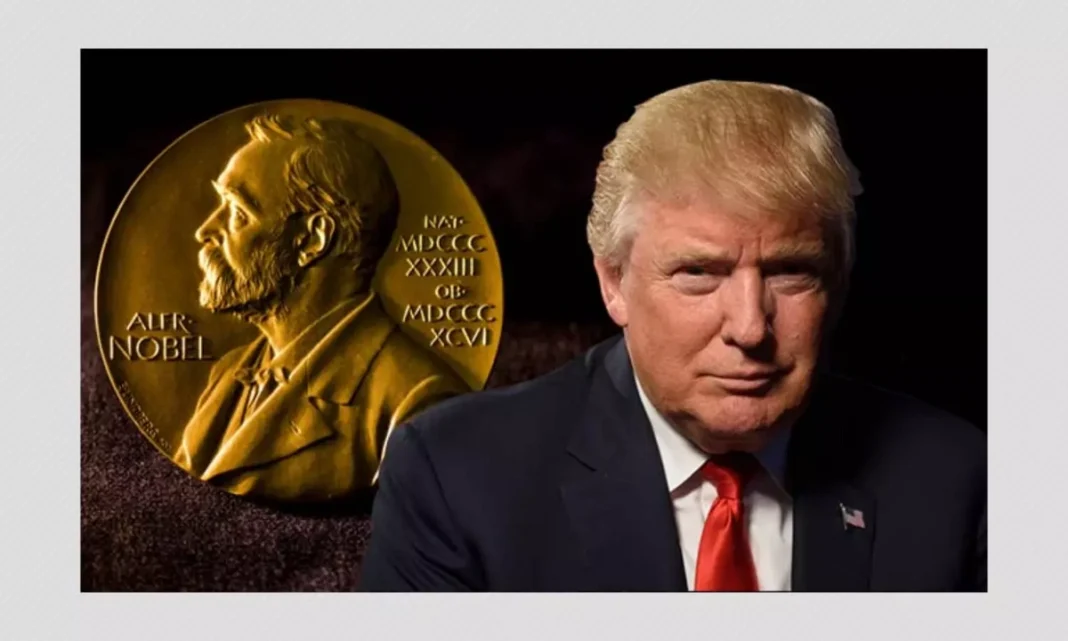
Amid this backdrop, one striking development has been former U.S. President Donald Trump re-entering the stage — this time positioning himself as a global peacemaker and putting forward his name for the Nobel Peace Prize. Notably, even during his previous campaign, Trump repeatedly claimed that had he been in office, the Russia-Ukraine war “would never have started.” He’s since doubled down on this message, insisting he could end the war within “24 hours,” “a year,” or even “10 days.” Despite these bold assertions, he has yet to make a meaningful impact on the conflict.
Now, it appears Trump may be stepping back from the complex Russia-Ukraine war and turning his focus to smaller, more easily solvable disputes — a shift that seems to reflect a calculated political strategy.

A New Approach: Easier Wins, Greater Rewards
Trump makes no secret of his desire to win the Nobel Peace Prize. His emerging strategy leans toward conflicts that offer quick, tangible results. Rather than engaging in prolonged diplomacy, he is positioning himself as a mediator in short-term, high-visibility crises — ones where success is more immediately measurable. The formula is clear: fast impact, heavy media coverage, and political capital both at home and abroad.
Can Trump Broker Peace — and a Nobel?
In today’s volatile world, the need for peace has never been greater. But real peace requires more than words — it demands responsibility and long-term commitment. Whether Trump’s pursuit of the Nobel Peace Prize is driven by genuine intent or political optics is something only time will tell.
What’s clear, however, is that the Russia-Ukraine war — the world’s deadliest and most protracted conflict in recent history — no longer appears to be on Trump’s active agenda. Far from being a peacemaker in that crisis, he’s been criticized for his passive stance.

Unlike regional skirmishes, the Russia-Ukraine war involves deeply rooted geopolitical dynamics — from energy politics and NATO strategy to European security. These are not issues resolved through social media soundbites but through serious, sustained diplomacy.
Trump’s apparent pivot to “easier” conflicts suggests a shift in focus: if he cannot claim victory in complex wars, perhaps he can secure credit — and potentially a Nobel — by resolving more limited confrontations.
In short, the Russia-Ukraine war no longer serves Trump’s political interests. It has become, in his eyes, a war he cannot win. The Nobel Peace Prize, however, remains a prize he still hopes to claim. And for that, he appears to be chasing after “simpler peaces” with strategic precision.