Azerbaijan.US
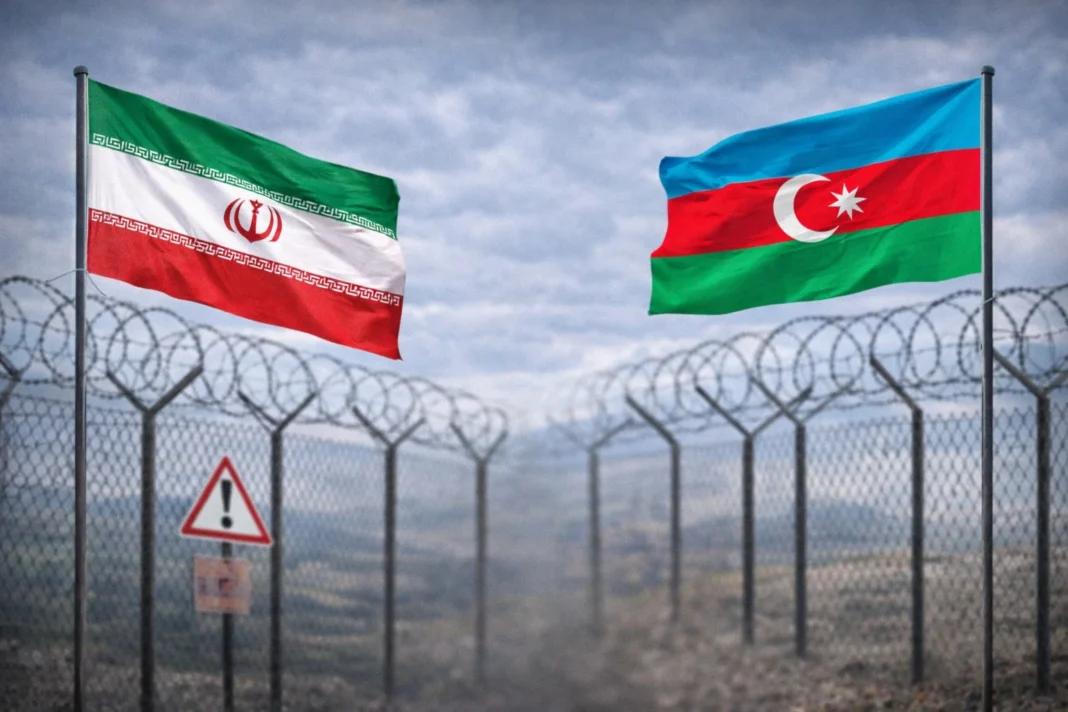
A debate has resurfaced in Azerbaijan over the continued closure of its land borders, as some lawmakers and officials argue that regional instability – particularly around Iran – justifies maintaining strict restrictions.
Supporters of the policy claim that a potential deterioration of the situation in Iran could trigger a large-scale refugee influx, posing security and humanitarian challenges for Azerbaijan.
However, economist and public commentator Natig Jafarli has challenged this reasoning, calling it flawed and disconnected from how humanitarian crises unfold in practice.
In a public commentary, Jafarli argued that in the event of a serious humanitarian emergency, displaced civilians would not wait at official checkpoints with documents. Instead, people fleeing for their lives would seek any possible route to safety, including informal crossings along the Araz River.
He also pointed to historical precedent. During the early 1990s conflict, residents fleeing violence in Karabakh and Eastern Zangezur crossed into Iran to escape hostilities. At the time, Iranian authorities did not block their passage, allowing civilians to move across the border on humanitarian grounds.
According to Jafarli, this example illustrates a broader principle of international humanitarian law: in cases of genuine humanitarian crisis, states are expected to prioritize human safety over rigid border regimes.
From this perspective, he argues, the claim that “the situation around Iran proves that borders must remain closed” does not constitute a convincing policy argument.
Jafarli further emphasized that border management and national security should not be conflated with complete isolation. In his view, Azerbaijan, as a functioning and capable state, possesses the institutional capacity to safeguard its security even under a controlled open-border regime.
The discussion highlights a broader policy dilemma facing Azerbaijan: how to balance security concerns with humanitarian obligations in an increasingly volatile regional environment. While officials stress precaution and risk prevention, critics argue that long-term border closures require clearer legal, humanitarian, and strategic justification.
As regional tensions persist, the issue of land borders is likely to remain part of Azerbaijan’s internal policy debate – particularly as it intersects with questions of international law, historical experience, and state capacity.

