Azerbaijan.US
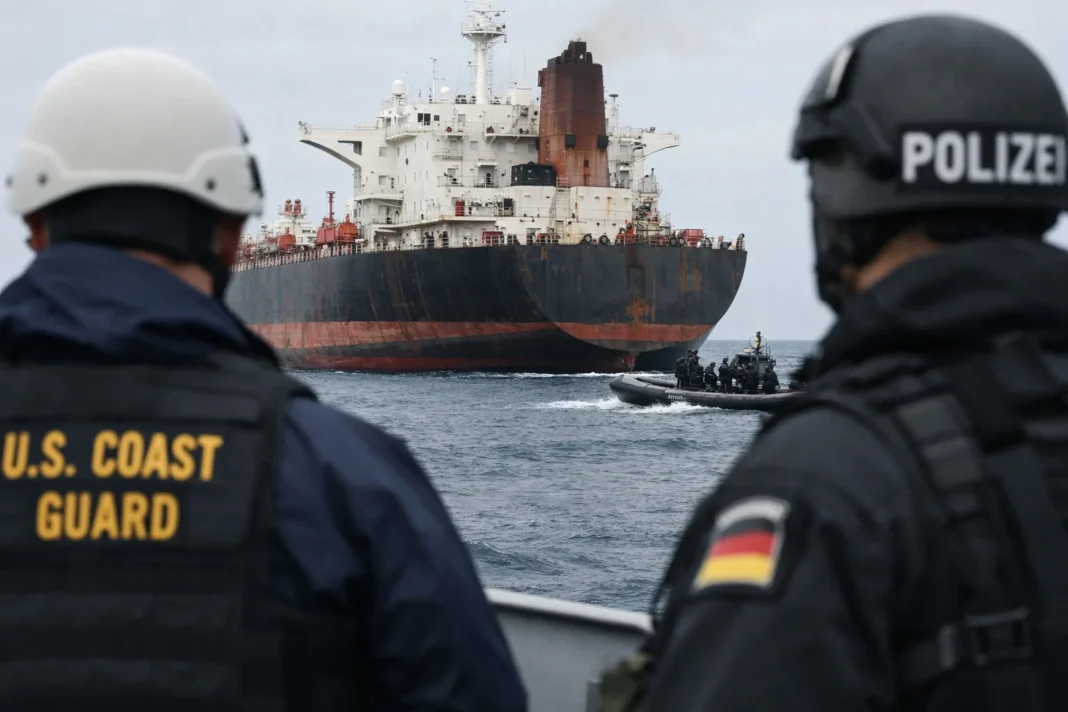
The United States has played a central role in rallying European countries to intensify measures against Russia’s so-called “shadow fleet” – a network of oil tankers used to evade international sanctions.
In the Baltic and North Sea regions, 14 countries, including the United Kingdom, Germany, France, Poland, the Netherlands, the Nordic states, the Baltics and Iceland, have signed a joint agreement aimed at tightening control over maritime oil shipments. NATO also took part in the coordination, signaling a higher level of political and security involvement.
Under the new framework, tankers are expected to operate under a single national flag. Vessels sailing under multiple flags or frequently changing registration may be classified as stateless and detained. Western governments say such practices have been widely used by Russia to keep oil exports flowing despite sanctions.
A significant portion of Russia’s seaborne oil exports passes through the territorial waters of these countries. In recent months, several European states have moved from rhetoric to enforcement. Estonia has closed its ports to Russian vessels, France has detained tankers suspected of sanctions violations, and the United Kingdom – previously cautious – has joined the tougher approach.
Analysts note that U.S. pressure has been decisive. Washington has demonstrated its readiness to detain not only Russian vessels, but also tankers linked to Iran and Venezuela, setting a precedent that European allies are now following.
The measures are consistent with the sanctions regime imposed after Russia’s full-scale invasion of Ukraine in 2022. The European Union has adopted 19 sanctions packages, with maritime enforcement emerging as one of the most effective tools.
According to the International Energy Agency, Russia earned $13.1 billion from crude oil and petroleum product exports in October 2025 alone, making tanker traffic a critical target. Western officials argue that “shadow fleet” vessels pose risks beyond sanctions evasion, including threats to maritime safety and allegations of interference with navigation systems.
Moscow rejects these claims, describing the actions as “state-level piracy.” However, Bloomberg estimates that Russia’s shadow fleet consists of at least 900 vessels, primarily transporting discounted Russian oil to China and India.
As Europe moves away from Russian pipeline oil and gas, the pressure on seaborne exports raises a broader question: how sustainable Russia’s energy-driven revenue model will be under increasingly aggressive enforcement at sea.