Azerbaijan.US
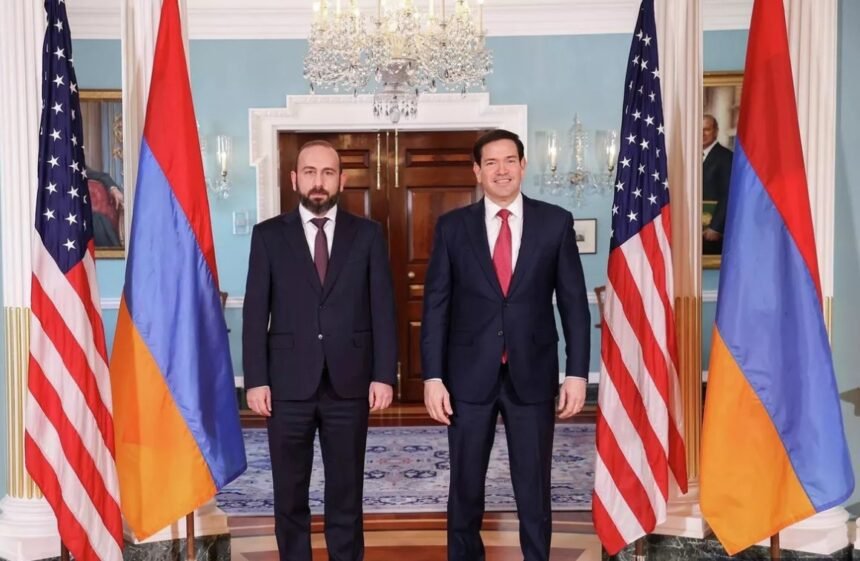
The long-discussed restoration of a land connection between mainland Azerbaijan and the Nakhchivan Autonomous Republic has entered a new phase with the publication of the TRIPP (Trump Route for International Peace and Prosperity) implementation framework by the United States and Armenia.
For Baku, the issue goes far beyond building a road or railway. Direct access to Nakhchivan is seen as a practical guarantee of territorial integrity, freedom of movement for the state, and a key element of long-term security planning.
From political statements to mechanisms
Unlike previous declarations, the TRIPP framework focuses on concrete mechanisms, governance models, and long-term execution. The document explicitly calls for unimpeded multimodal transit through Armenian territory, a phrase that implies continuous, real-time movement of goods and transport rather than symbolic connectivity.
Within TRIPP, the planned route linking mainland Azerbaijan with Nakhchivan is presented as part of the broader Trans-Caspian trade corridor. This places the project not only in a bilateral context, but within a wider logistics chain stretching from Central Asia and the Caspian region to Türkiye and Europe.
Governance and control
A central feature of the framework is the creation of a dedicated development company to implement the project. Under the proposed model, the United States would hold a controlling stake, while Armenia would participate as a partner. The company would initially receive development rights for 49 years, with the option of extension.
From Azerbaijan’s perspective, this structure suggests that TRIPP is designed as a long-term, institutionalized arrangement rather than a temporary political compromise.
Border and customs procedures remain the most sensitive element. The proposed “front office – back office” model assigns technical and service functions to private operators, while decision-making and oversight would remain with Armenian state authorities. How this balance works in practice will be central to the project’s credibility.
The political message
Washington presents TRIPP as a tool to strengthen peace in the South Caucasus through economic interdependence. In a broader sense, the initiative reflects an attempt to anchor the region more firmly within global trade and transit networks, influencing the emerging balance of power.
For Azerbaijan, however, the issue is primarily practical. Years without a direct land connection to Nakhchivan have created logistical vulnerabilities and security risks, including dependence on alternative routes and limited flexibility in crisis situations. A reliable corridor is therefore viewed as a matter of strategic stability.
What comes next
In Baku, officials stress that the key question is not the existence of a framework document, but its implementation. If TRIPP functions as described, it could expand Azerbaijan’s economic options, strengthen its regional position, and reshape connectivity across the South Caucasus.
The Zangezur corridor – or the TRIPP format – may ultimately become one of the defining mechanisms shaping the region’s future transit architecture and geopolitical dynamics.