By Azerbaijan.US Editorial Board
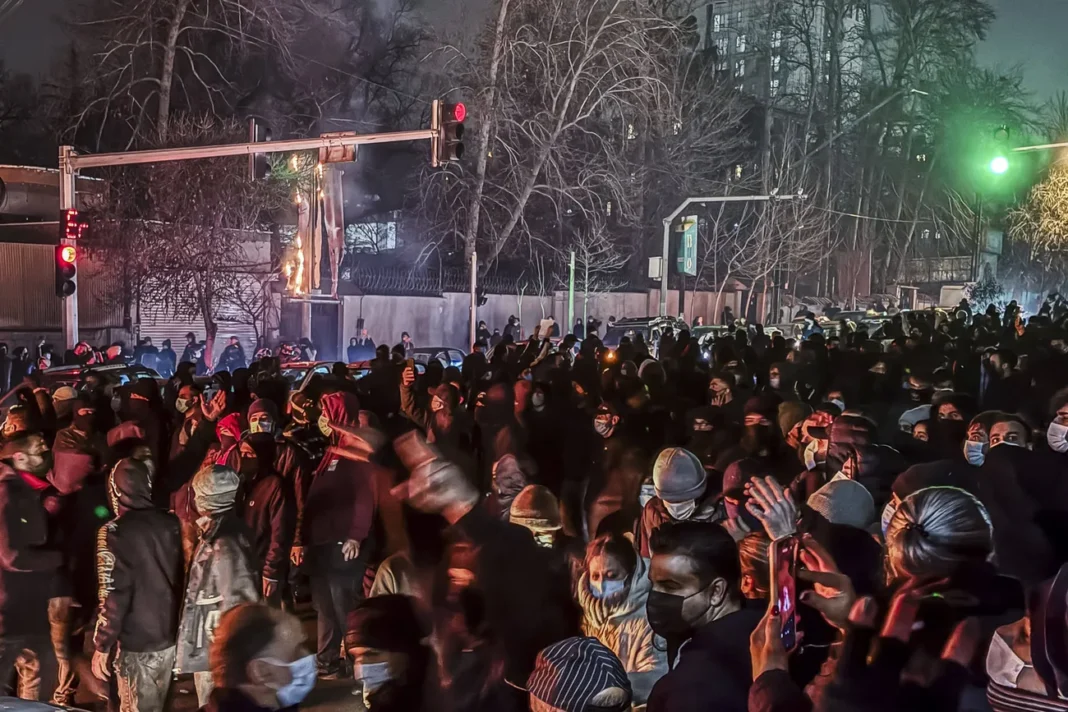
Iran is living through a paradox that many outside observers still struggle to grasp. The scale of public anger is undeniable. Streets fill with protesters, internet access is repeatedly cut, security forces respond with force, and casualties continue to mount. Yet despite this intensity, the protest movement remains unable to cross the line from resistance to regime change.
The core reason is simple and uncomfortable: Iran’s protest has no command center.
This is not a metaphor. It is a structural reality. What Iran lacks today is not courage, numbers, or motivation, but something far more decisive in moments of political rupture – an organized political actor capable of steering events beyond the street.
In 1979, when the monarchy collapsed, Iran was saturated with political infrastructure. Dozens of parties, unions, ideological movements, and underground networks operated across the country. There were organizers who knew how to mobilize tens of thousands, paralyze state institutions, and seize control of strategic points. That ecosystem no longer exists.
Today’s protest movement is largely spontaneous and leaderless. Crowds gather, chant familiar slogans, confront security forces, disperse, and then reappear elsewhere. But when the most important question arises – what happens next? – there is no clear answer and no one authorized to give it.
Leadership from abroad does not solve this problem. Symbols can inspire, but symbols do not run transitions. Emotional appeals and calls to action, no matter how widely shared, cannot substitute for coordination, discipline, and operational planning. Revolutions, even in the digital age, are not managed from livestreams.
One of the most dangerous illusions shaping public expectations is the belief that removing the top of the pyramid will cause the entire system to collapse. Iran’s political structure is not a loose arrangement held together by one individual. It is a system designed to survive shocks. Remove the apex without preparing an alternative, and the result is not freedom but uncertainty – or worse, chaos.
This is precisely what makes external actors cautious. A country of nearly 100 million people cannot be left in a political vacuum. From the perspective of foreign governments, the absence of a viable successor framework is not an abstract concern – it is a red line.
Iran’s protest movement has not failed. But it has reached a ceiling. Without internal organization, recognized leadership, and a credible plan for the day after, mass mobilization alone cannot deliver systemic change.
History offers many examples where bravery on the streets eventually gave way not to defeat, but to exhaustion – not because people stopped caring, but because there was no roadmap forward. Iran today stands uncomfortably close to that moment.

