By Azerbaijan.US Editorial Board
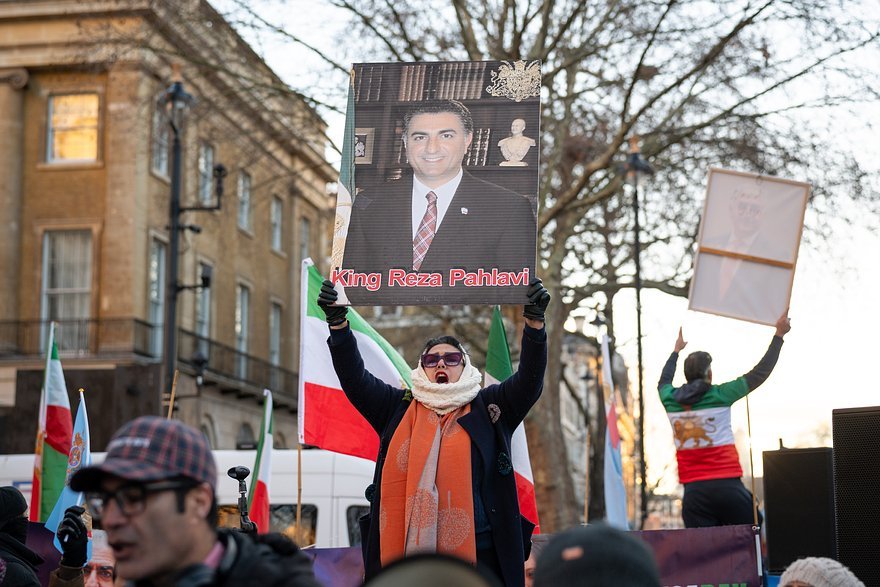
The protests currently unfolding across Iran are not merely another episode of domestic unrest. They reflect deeper, long-standing tensions between society and the state, driven by economic hardship, social frustration, and a weakening of effective dialogue. In such moments, the consequences rarely remain confined within national borders.
For countries in the region, the challenge is to avoid two equally risky extremes: emotional rhetoric on the one hand, and calculated silence on the other. In this context, restraint and responsibility matter more than loud positioning.
For Azerbaijan, developments in Iran carry particular sensitivity. Millions of ethnic Azerbaijanis live in Iran, giving the situation not only a political but also a humanitarian dimension. This is not a question of interference in internal affairs. It is about basic principles: human security, social stability, and respect for fundamental rights.
Regional context and state responsibility
Relations between Iran and Azerbaijan have been shaped by history, geography, and shifting regional realities. They have passed through periods of tension as well as pragmatic cooperation. That history makes one thing clear: policy responses to Iran’s internal turmoil must be guided by long-term regional stability, not short-term emotion.
Every state has a responsibility to address internal crises through dialogue and legal mechanisms. When those tools weaken, the risk of violence increases – and that risk inevitably spills across borders. Iran’s current unrest underscores how fragile regional security becomes when social conflict remains unresolved.
Iranian Azerbaijanis: facts, not slogans
Iranian Azerbaijanis are an integral part of the Azerbaijani people in historical and cultural terms. This is not an emotional claim, but a factual reality. Concern for their safety, social well-being, and cultural rights is both natural and legitimate.
At the same time, raising these concerns requires careful judgment. The goal should not be confrontation, but risk reduction – avoiding further escalation and ensuring that ethnic communities are not exposed to additional pressure. Responsibility begins with precision, not provocation.
What should Azerbaijan’s position be?
Azerbaijan’s stance cannot be built on fear-driven silence, nor on emotional or moralizing rhetoric. State interest demands balance:
preserving regional stability,
promoting respect for human rights,
and remaining attentive to the fate of ethnic kin.
This does not require confrontational statements or political escalation. It requires a principled humanitarian approach, one in which violence is rejected and human life remains the highest priority.
Rethinking “state interest”
State interest extends beyond borders and security doctrines. It also encompasses moral responsibility, regional credibility, and long-term legitimacy. The Azerbaijani people, wherever they live, are bound by shared history and cultural memory.
From this perspective, the situation of Azerbaijanis in Iran is neither peripheral nor purely emotional. It is an issue that should remain on the agenda – addressed carefully, within legal frameworks, and in line with international norms.
Conclusion
Iran’s protests once again demonstrate that lasting stability cannot be achieved through force alone. Where dialogue is absent, uncertainty grows – and that uncertainty rarely respects national boundaries.
In this environment, Azerbaijan cannot afford either performative moralizing or complete disengagement. A responsible position means condemning violence, prioritizing human security, remaining attentive to the fate of ethnic Azerbaijanis, and at the same time contributing to regional stability.
Such an approach is not a sign of weakness, but of political maturity.

