Azerbaijan.US
The global order based on international law and complex diplomacy is giving way to a harsher, power-driven system reminiscent of the 19th century, according to sociologist Georgi Derluguian.
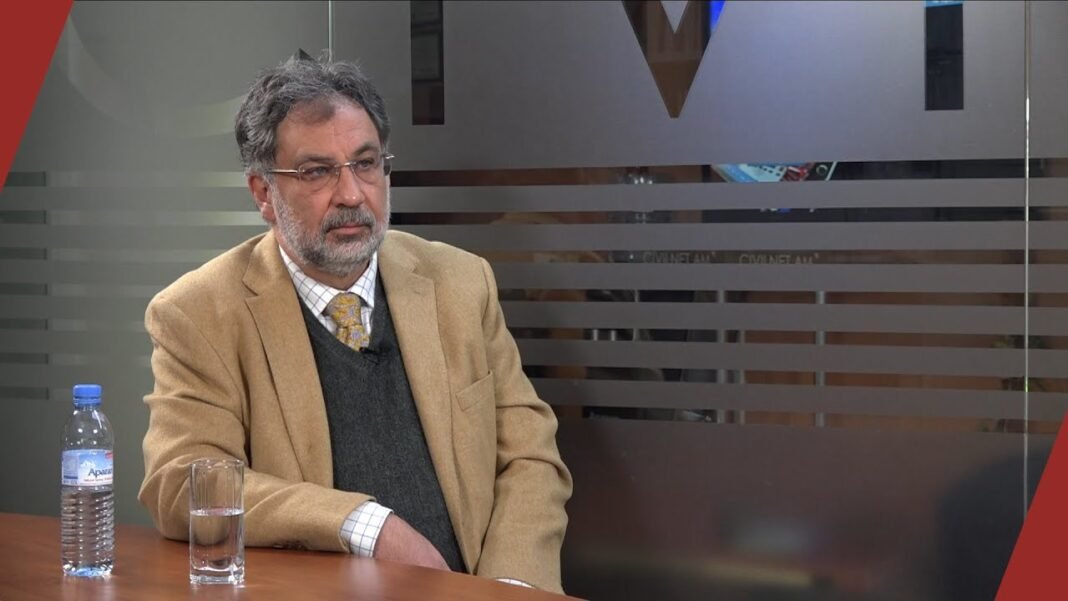
Speaking in an interview with CivilNet, Derluguian said recent geopolitical developments – from U.S. pressure on Iran and Venezuela to renewed rhetoric over Greenland – signal a broader breakdown of the post-World War II international architecture.
“Periods of cooperation in world politics are always followed by periods of collapse,” Derluguian said. “When markets become saturated and power balances shift, rules stop working. Force replaces diplomacy.”
End of the familiar global order
Derluguian argues that the world is entering a phase where major powers act intuitively, prioritizing control over resources, trade corridors, and strategic territories rather than rules or institutions.
He compares current dynamics to earlier imperial cycles, noting that globalization itself is not disappearing, but fragmenting into closed blocs and spheres of influence.
“This is not the end of globalization,” he said. “It is the end of the version of globalization we became used to.”
What this means for Armenia
For small states like Armenia, Derluguian warns that passivity is no longer an option.
His recommendations focus on three pillars:
Defense first.
Armenia must invest seriously in deterrence, including static defenses, modern surveillance, and drone-based systems. Internal political legitimacy, he stressed, is just as important as military capability.
Strategic maneuvering.
Rather than relying on formal alliances alone, Armenia should remain flexible, maintaining working relations with multiple global and regional actors.
Economic relevance.
Derluguian emphasized that security is inseparable from economic value. Armenia must offer access – to markets, logistics, technology, or skilled labor – rather than merely asking for protection.
“Small countries survive not by asking, but by offering,” he said. “You have to convince larger players that you are useful.”
Diplomacy beyond paper agreements
While Armenia has signed or discussed strategic documents with the U.S., Europe, Russia, Iran, and China, Derluguian cautioned that treaties matter only when backed by real economic and strategic substance.
Access to markets, technology transfers, and integration into global production chains, he argued, matter far more than symbolic partnerships.
A dangerous but navigable era
Derluguian concluded that the current period is unpredictable but not hopeless. Countries that adapt quickly, invest in resilience, and understand how power actually operates can still protect their sovereignty.
“When giants collide, the grass suffers,” he said. “But even grass can survive – if it grows in the right place.”

