Following reciprocal visits by representatives of Azerbaijani and Armenian civil society under the “Peace Bridge” initiative, the issue of a peace agenda between the two countries has re-emerged in public debate. Reactions in both societies have ranged from cautious support to sharp criticism and accusations of betrayal.
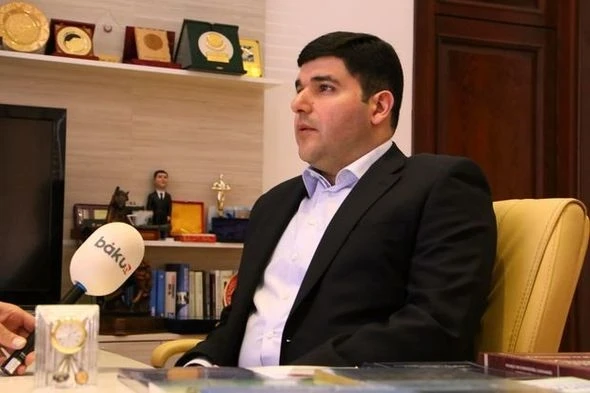
Farhad Mammadov, chairman of the South Caucasus Studies Center, addressed the issue in a commentary published on Telegram channel mneniyefm.
According to Mammadov, such mixed reactions are unsurprising given the nature of the conflict.
Territorial Issues Resolved, Ethnic Dimension Remains
“The conflict between Azerbaijan and Armenia was ethno-territorial,” Mammadov wrote. “The territorial component has been resolved: a Joint Declaration has been signed, and the text of a peace treaty has been initialed.”
He stressed, however, that the next phase of the process depends heavily on Armenia’s upcoming parliamentary elections, after which governments on both sides may be able to take more confident steps in the medium term.
At the same time, Mammadov noted that the ethnic and societal dimension of peace remains unresolved and requires careful reflection.
Memory of War Shapes Public Perception
Mammadov pointed out that skepticism remains strong in Azerbaijani society, while in Armenia negative sentiment is being amplified by the pre-election environment. The memory of war continues to shape perceptions on both sides.
“Thousands of war victims cannot and will not be forgotten,” he wrote, citing the ongoing discovery and burial of remains from the First Karabakh War, casualties caused by landmines in liberated territories, and visual reminders such as posters with photographs of fallen soldiers at the entrances to towns and villages.
“These realities create the boundaries within which peace between societies must be built,” Mammadov said.
No Return to Soviet-Era or ‘Neighborly’ Peace
Based on extensive dialogue with different social groups over the past two months, Mammadov outlined what peace between Azerbaijan and Armenia will not look like.
For the older generation, peace is often associated with memories of the Soviet period. “That model will not return,” he said, noting that there is no third party today capable or willing to forcibly reconcile societies after conflict, as was the case during the USSR.
He also emphasized that Azerbaijan and Armenia are now independent states, not part of a single political or economic system, and that there are no compact Armenian communities in Azerbaijan or Azerbaijani communities in Armenia.
For younger generations shaped by independence, peace is often imagined as normal relations similar to those Azerbaijan maintains with other neighbors. “That model will not materialize in the medium term either,” Mammadov argued.
Unlike relations with Russia, Georgia, Türkiye, Iran, or Central Asian neighbors, there will be no near-term prospect of free travel, tourism, education, business, or labor mobility between Azerbaijan and Armenia.
A “Narrow” but Realistic Peace
So what kind of peace is possible?
According to Mammadov, the most realistic outcome is a “peace in a narrow sense,” whose main contours are already visible.
These include a diplomatic framework in which all issues are addressed exclusively through political and diplomatic channels, intergovernmental mechanisms of cooperation, participation in joint projects at both state and private levels, and dialogue among civil society actors who support a peace agenda.
In the triangle of “state institutions – civil society – individuals,” Mammadov stressed that government-to-government dialogue will remain decisive for a long time. The scope of interaction between societies and people will depend on the conditions created at the state level.
No Forced Reconciliation
Mammadov emphasized that the Azerbaijani government does not intend to artificially push society toward peace.
“Everything will proceed naturally,” he wrote. “If certain steps require years, then years will be needed for the situation to mature.”
Civil society and citizens, he added, will be given a choice – to make use of the conditions created by the governmental track or not.
“The peace agenda has many layers and dimensions,” Mammadov concluded. “As never before, the phrase ‘everything in its own time’ is relevant here.”

