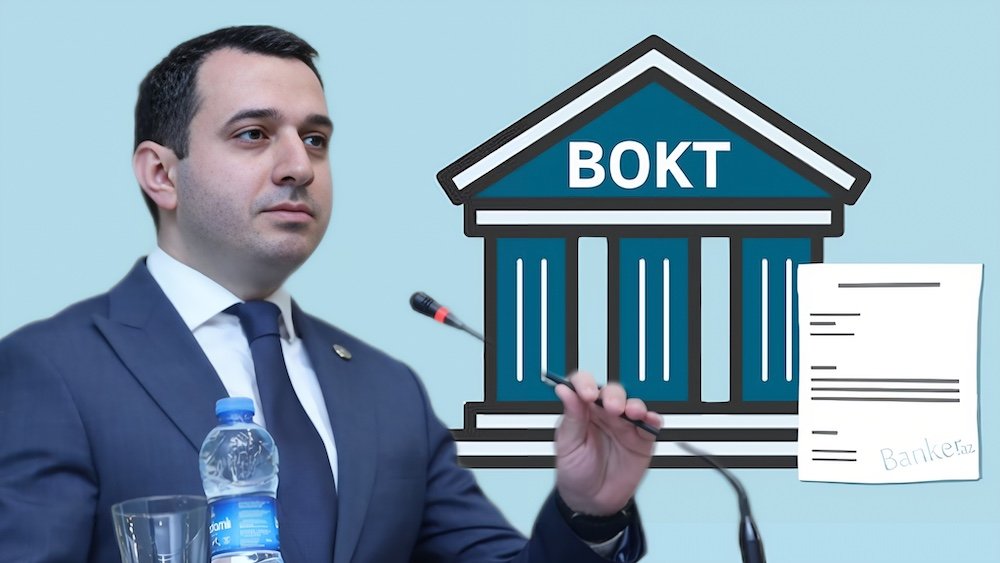
As more Azerbaijanis turn to non-bank credit organizations (NCOs) for fast, paperwork-free loans, complaints are rising about aggressive debt-collection tactics.
Borrowers say some NCOs send threatening messages, pressure them by phone, or attempt to “collect” debt without ever taking the case to court – a practice that has sparked heated public debate.
Legal expert Roman Garashov told Patrul.az that such behavior is explicitly illegal and can amount to a criminal offense.
What NCOs Are Allowed to Do – and What They Cannot
According to the Law on Non-Bank Credit Organizations, an NCO’s authority is limited to issuing loans and pursuing civil-law debt recovery.
They cannot:
act as enforcement officers,
apply psychological or reputational pressure,
use force or intimidation,
engage in any form of compulsory collection.
The only lawful way to recover unpaid debt is through a court decision. Any threats directed at a borrower or their family members fall outside civil dispute and constitute a clear violation of the law.
When Debt Collection Becomes a Crime
Garashov notes that Article 182 of Azerbaijan’s Criminal Code defines such actions as extortion.
Penalties include:
3–5 years of imprisonment (Art. 182.1);
5–10 years, if repeated or accompanied by violence (Art. 182.2);
10–15 years, if committed by an organized group (Art. 182.3);
13–17 years, in cases involving particularly large sums (Art. 182.4).
Importantly, the crime is considered complete the moment the threat is communicated, regardless of whether the borrower repays the debt – a principle affirmed by a 1998 Plenum decision of the Supreme Court.
Why the Problem Is Growing
Many electronics and appliance retail chains have recently established their own NCOs, rapidly expanding the consumer-credit market. But the lawyer stresses that a rising number of organizations does not give them license to operate outside the law.
NCOs are required to:
function transparently,
properly inform clients,
use only civil-procedural mechanisms for debt recovery.
“Any psychological or physical pressure is not just unethical — it creates legal responsibility,” Garashov said.
What Borrowers Should Do
Garashov advises citizens to immediately contact local prosecutors if they receive threats or unlawful demands:
“Threats are not a debt-collection method. They are a criminal act that requires intervention by law enforcement.”